The tricky way Allied Insurance hit me with late fees for paying early, and what should be done about it
I have been a happy customer of Allied Insurance for years.
As of today, I am not happy, because I have learned they have been in essence stealing from me without my knowledge. Once I pointed this out to them, they refused to fix the issue. I plan to write to the CEO, but first, I am writing to you my readers.
I pay Allied Insurance using the reliable and free Bill Pay service from San Francisco Fire Credit Union. I instruct that the checks are to be mailed on the first of the month, as my due date is on the 10th of the month.
I live in San Francisco and the checks are mailed to a post office box in Los Angeles. That means the checks should arrive at Allied on the 3rd or 4th of the month. My April 2012 check was printed and presumably mailed on Saturday March 31, 2012. It should have arrived in Los Angeles on Tuesday, April 3rd, 7 days before the payment was due. But Allied did not cash the check until April 19, 2012. They put a USD $10.00 reinstatement charge on my bill.
Amy H. in customer support waived this fee, and I thank her for that. She recommended I reference my account number rather than my policy number on my checks. She said it can slow down check cashing by one day if you reference the policy number only. My concern is that 20 days elapsed between check mailing and check cashing. Ms. H. could not explain why my checks have been routinely held past the due date. It turns out this has happened on an unknown number of past occasions. I have seen these late charges on past bills, but I didn’t study what was happening other than verifying my checks went out 10 days before the due date. I should have been more inquisitive, I acknowledge.
But now that I have gotten to the bottom of the story, I believe the only acceptable resolution is for Allied to refund the late fees it collected from me on every occasion it was in possession of my check before the due date. I don’t know how many times this has happened, as Ms. H. did not tell me, even though I asked her to. She said she can only refund one late fee per 12 month period. I patiently and repeatedly reminded her I paid early each month and had irrefutable proof since my credit union scans the front and back of all cashed checks. I offered to send her all the checks for her to review. She did not take me up on the offer. She flat out refused to make an adjustment, even when I made it clear I considered Allied’s behavior to be exceptionally improper.
Recognizing I would get no further with Ms. H., I asked for the name and address of the CEO. She refused and instead provided me with the address to The Office of Customer Advocacy, at 3 Nationwide Plaza, Columbus, OH 43215. I told her that was not what I asked for. I asked her if she was refusing to give me the name of the CEO, and she said she was refusing. I asked Ms. H. for her name, and she told me her first and last name. I asked if there is an identification or reference number that she could provide me for her that would mask her identity, and she said there is not. So I omitted all but the first initial of her last name on this post, because my concern is not with Ms. H., but with the policies of her employer, which I explained to her several times. Ms. H. was pleasant throughout the conversation. Her statement that Allied would keep the money it took from me for paying early is what I have a big problem with.
I predict that I will receive a credit for all the past occurrences, but that it will take months for me to get it.
I advised Ms. H. that if a check is held for account number lookup that once the account number is found that the check should be credited as of the day it was received, not the day the account number was found. My name and correct address were on the checks, as were all the digits of my policy number. Ms. H. said I should have included the bill stub with my check. I explained that millions of people use bill payment services from the financial institutions, and that there is no way to include the bill stub as the check is printed and mailed automatically each month.
Allied needs to update its procedures, as I am certain I am not the only one being hit with improper late fees caused by Allied holding checks for days or weeks. I spoke with Ms. H. at about 8:30pm the evening of April 25, 2012.
Berkeley Startup Competition finalists, including Back to the Roots and Modify, are announced
 HARBO Technologies
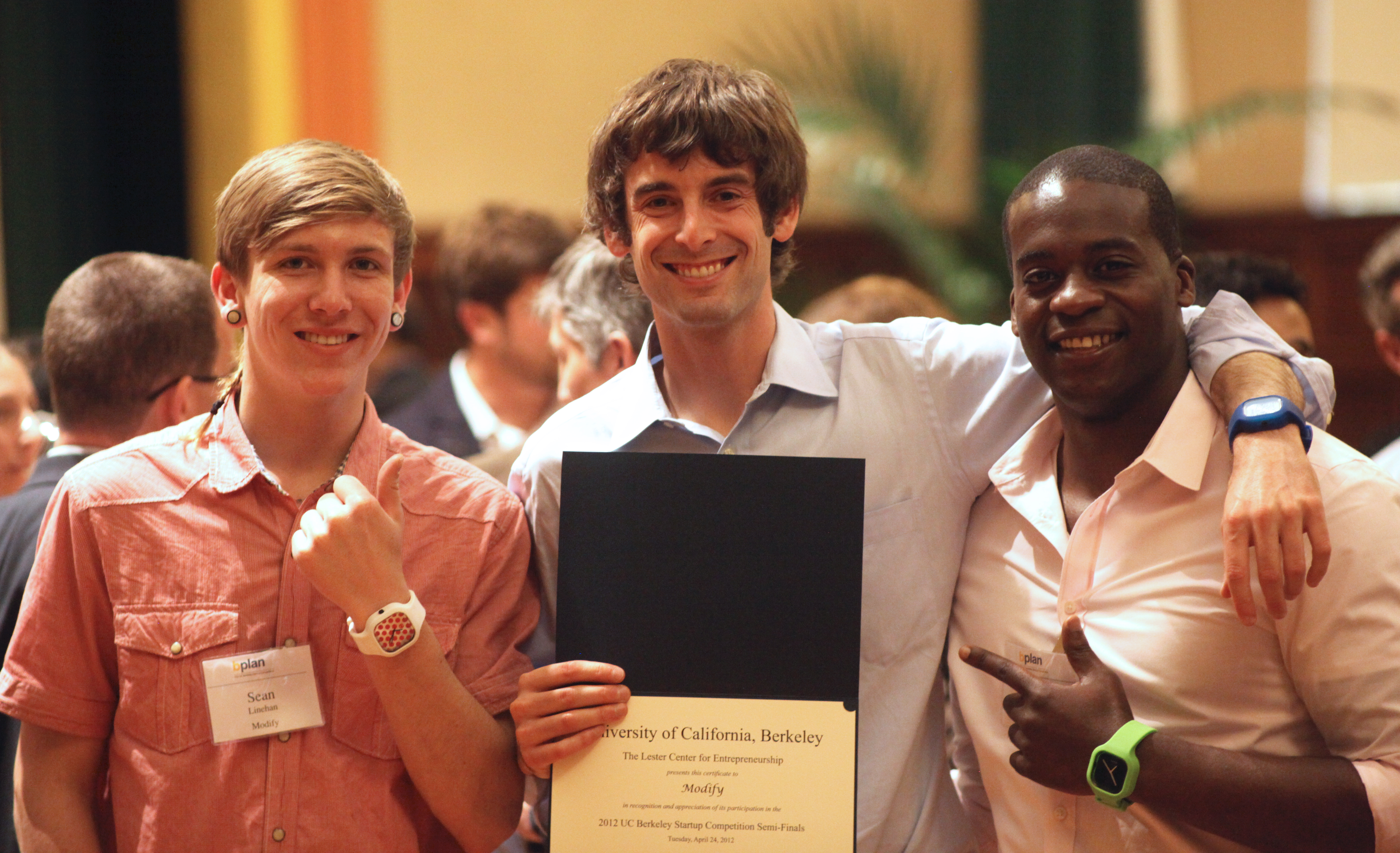
Sean Linehan, Aaron Schwartz and Ayo Oluwole of Modify, April 24, 2012. Modify is a finalist in the 2012 Berkeley Startup Competition.
Last night, on April 24, 2012, I attended a reception at the University of California Berkeley Clark Kerr Campus. The reception was held to announce the finalists for the 2012 Berkeley Startup Competition. This event used to be called the Berkeley Business Plan Competition. I competed in the finals of this competition in its inaugural year, and have sponsored the competition every year since, including in 2012.

Dorian Walder and Julian Riediger of University Gateway, April 24, 2012. Kevin Warnock mentored this team this year.
This year I was a mentor to semi-finalist team University Gateway, lead by Dorian Walden. I got to know Walden over four meetings, some of them stretching to 3 hours around my dining room table. Sadly, University Gateway did not progress to the finals, but it was easy for Walden to understand why.

Zachary Apte of EvolveMol, April 24, 2012. Apte is at the Berkeley Startup Competition finalists announcement reception.
Two teams I know personally were in the same judging category as University Gateway — Products and Services. University Gateway is an Internet company, but the track for Internet companies apparently was filled up already. This meant University Gateway was competing with companies that make and sell physical goods.

Scott Ahn of J2P International, April 24 2012. Ahn is at the Berkeley Startup Competition finalists announcement reception.
The teams I know that competed in the Products and Services track both were advanced to the finals. I was 99.9% confident that this would be the result, even though I knew nothing about the other competing teams. I was so confident because the teams I know are so strong, and I have been a judge for this competition for the past 8 years or so. I know from experience that teams this strong always make it to the finals.

Les Polgar of CalSolAgua, April 24, 2012. Polgar is at the Berkeley Startup Competition finalists announcement reception.
I also know that teams this strong are very rare, so it was unlikely that the Products and Services track had any other teams so strong. I have never gone home from judging thinking that a third team from my judging track should have gone on to the finals.

Larry Pier of Berkeley Startup Competition, April 24 2012. Pier is at the Berkeley Startup Competition finalists announcement reception.
University Gateway has a good idea, and I hope that Dorian Walder and Julian Riediger make their venture a success. The company is still in stealth mode, so I won’t tell you what they do yet.
The Products and Services teams that advanced to the finals are Modify and Back to the Roots. Both are unusual companies for this Berkeley competition.

Kelly Karns at Berkeley Startup Competition finalists announcement, April 24, 2012.
Modify makes wrist watches that you can change easily to suit your tastes. The straps are made from silicone, similar to what silicone bake ware is made from. One can pop the time piece out of the strap/case in just a second, with no tools or special skills required. The straps are available in bright colors, and I describe them as chunky chic. The team from Modify are each wearing a Modfiy watch in the photograph I took at the top of this post. I am friends with Modify founder Aaron Schwartz. We see each other most months at the Haas Founders group I wrote about March 11, 2012.
Schwartz is a likeable and modest guy — only when researching this blog post did I discover he’s been profiled in a blog published by The New York Times newspaper. The New York Times is worth tens of millions of dollars less than photo sharing smart phone application Instagram, but I’d much prefer to be written about in a blog by The New York Times than in a blog by Instagram.

John Steuart of Claremont Creek Ventures, April 24, 2012. Steuart is a judge for the Berkeley Startup Competition.
Back to the Roots makes and sells affordable oyster mushroom growing kits. I’ve written about Back to the Roots when I saw their CEO Nikhil Arora speak on a panel at a Food Startups Meetup run by my friend Matthew Wise, the co-founder of both Founderly and Tableslice. Back to the Roots has 20 full time employees, or so I was told when I interviewed a staff member at their booth at the San Francisco Flower and Garden Show on March 24, 2012.
Back to the Roots has received lots of press coverage, including two minutes and forty seconds on the national CBS Evening News in the United States on March 15, 2012. The newscast says that Back to the Roots sells its products in over 1,000 stores and has 28 employees. Impressive.

John Servaites of S2E Energy, April 24, 2012.
Both Modify and Back to the Roots have businesses that are well along. Modify has sold _____ of thousands of watches to companies as well known as _____ and _____. [I’m waiting to hear from Schwartz to fill in the blanks in the last sentence. I know the values, but I want to verify the numbers and names I know are meant to be public information.] Back to the Roots sells its kits at Whole Foods Market and Home Depot. While Modfiy and Back to the Roots are still startups, they are making big strides and are companies to watch.

Erik Krogh-Jespersen of Aurinko, April 24, 2012.
The reception was well attended and busy. I got to talk with my fellow judges from past years of this competition. I captured video. I took hundreds of pictures. I didn’t eat until the event was technically over. What I didn’t get to do, sadly, was interview the finalist teams that I didn’t know. If they are reading this and would like to be the subject of a future blog post, I invite them to contact me. I’ll meet you for coffee and you can give me your pitch and I’ll write about your venture.

Anthony Franco of Better Cater, April 24, 2012.
Here is a list of the 2012 finalists for the Berkeley Startup Competition. The descriptive text that follows was provided by the teams themselves.
- Kloudless, Inc.
Kloudless is a free service that helps you manage all the things you put in the cloud. We enable users to search for, access, and manage their information that is spread across the Internet. We’re starting with email attachments, the black hole of cloud services, and will expand to other cloud services in the near future. Our solution addresses an increasingly large problem as more and more information moves into the cloud.
- Traverie
Traverie is an explorer focused startup that leverages the emotional, personal and inherently social aspects of travel discovery to make the process visual, fun and trustworthy. We bring structure to the current ad hoc and offline model of discovering and selecting destinations. We blend user-generated content, professional content and advertising to deliver a compelling user experience. Our founding team comprises a designer, engineer and product manager from MIT, Harvard and Berkeley-Haas, respectively.
- AdrenaRx
AdrenaRx is a biopharmaceutical company focused on the prevention and treatment of heart failure due to toxicity from cancer chemotherapy. Each year, 1.6 million Americans are affected by cancer, and a third of these patients receive chemotherapy that can damage their heart. AdrenaRx has identified a new therapeutic target and a potent, selective drug that can protect the heart from damage by chemotherapy, and reduce a patient’s risk of developing heart failure after surviving cancer.
- Calcula Technologies
Calcula Technologies is developing a novel urological medical device for the removal of kidney stones outside of the operating room. Our patent pending technology will treat 4M patients/year in the US and EU. With clear FDA predicates and existing CPT reimbursement codes Calcula will be a major disruption in the field of Urology.
- Claro Energy
Claro Energy provides solar-powered water pumping solutions to meet irrigation needs of farmers in remote power-deficit agriculture areas in India where costly diesel generated power is the default choice. Claro Energy’s solar-powered pumps have near zero operating costs, are longer lasting and highly reliable when compared to dieselpowered pumps. In combination with sales, marketing and business development competencies, Claro Energy has also developed in-house integration and implementation expertise in remote rural regions of India.
- HARBO Technologies
During the first critical hours, oil-spills spread, split, and create escalating irreversible damage. HARBO develops the only emergency oil-spill containment solution for immediate response. HARBO’s Zero Time to Spill system is at standby position on-board oil-tankers/rigs and other ships and deploys a boom (floating barrier) within minutes to contain spills. HARBO’s advantage: Minimizing environmental damage, avoiding large containment/cleanup expenses, offering superb costefficiency and preventing a PR nightmare. “Containing oil-spills when they’re small, preventing big disasters.”
- Back to the Roots
Back to the Roots, started by two Haas Business School undergrads, promotes sustainability and zero-waste, while reconnecting people to food through its grow-at-home mushroom kit. Our gourmet mushroom kits are made with 100% recycled coffee grounds, and produce 2 pounds of fresh oyster mushrooms in just 10 days! People of all ages can actually grow and eat their own mushrooms all at home, a unique experience in today’s urban lifestyle.
- Modify
Modify is a brand built on freedom of expression. Customizable for individual style, Modify’s interchangeable watches offer dope design for anyday wear. Available in two different sizes and over 250 combinations, Modify is a brand made for anyone—anytime, anyplace. A proponent of exceptional personalized service, we engage organizations and fans to help create (and name!) watches. Modify Watches are available for corporate gifting and licensing.

Berkeley Startup Competition finalists announced, April 24, 2012.

Nikhil Arora, the CEO of Back to the Roots. This was taken by Kevin Warnock on November 16, 2011, not at the Berkeley Startup Competition event.
Here’s the handheld video I captured of the finalist teams learning of their advancement and collecting their certificates documenting their achievements. Andre Marquis, the Executive Director of The Lester Center for Entrepreneurship & Innovation, delivers the opening remarks. John Steuart, Managing Director at Claremont Creek Ventures, comments on the judging process. Steuart’s firm is a financial sponsor of the competition, and Steuart is one of the judges.
—–
Anthony Franco of Better Cater, pictured above, contacted me and asked me to link to his startup’s website. Sorry for the delay in creating the link — I just saw your Facebook message from April 25th a few minutes ago. Kevin — May 3, 2012 @ 12:47am.
KevinWarnock.com breaks into the top million websites in the world, per Alexa.com

Alexa.com rank for KevinWarnock.com, as of April 18 2012
Today is an exciting day for this blog. For the first time, this blog, KevinWarnock.com, is among the most popular million websites in the world. I achieved this by posting just 312 blog posts.

KevinWarnock.com site statistics from inception in November 2009 through March 2012
I started blogging in November 2009. I present my WordPress site statistics visitor graph above. There is an initial surge in traffic until March 2010. That traffic is due to my framing my blog temporarily on another website that had more traffic, so that part of the graph is misleading. You should only pay attention to the graph from March, 2010 onward. I did almost no blogging until January, 2011. Once I started writing more regularly, the traffic went up quickly, particularly in the last few months. This blog had 14,383 views in March, 2012.
The Alexa ranking for KevinWarnock today is at 971,695. Interestingly, the United States only rank is not shown. Instead the rank in Mexico is shown. I almost can’t believe it, but this blog is ranked at 24,550 in Mexico.
According to Alexa, there are 63 websites that link to this blog.
I enjoy writing and taking positions on issues that I care about.
Thank you for reading.
AT&T’s iPhone data billing is irritating
I love my Apple iPhone.
I have an 850 Anytime minute plan, which is just about right. I have the basic 200MB data plan, which is also just about right. I’ve gone over on the data plan just once, and I’m very careful to not go over, which doubles the cost for data that month.
On March 26, 2012 at 7:04am I received a text message from AT&T saying I had used 90% of my data plan for the month, which is the calendar month for my account. That meant I needed to consume less than 20 megabytes in the next five days. I was careful to limit my usage, staying on WiFi as much as possible and not checking my email in line at the grocery store, for example.
Thus I was upset when my bill arrived and it showed I had used 201 megabytes of data in March. That extra one megabyte cost me USD $15.00. I called to complain. I reviewed my data usage online during the support call with Brandon Hillhouse. I added up all the data I used on March 26-31, 2012, starting at 12:01am on March 26th. The total came to 17,970 KB or 17.548 MB. So I did not go over the 20MB that AT&T’s own text message said I had left as of March 26th.
Hillhouse told me that iPhone applications started on 3G stay on 3G even if you roam into WiFi coverage. He said the only way to force using WiFi is to shut down all apps explicitly via a menu I can not find on my phone. I have never heard of this, so I asked him if he was certain. He said he was. I then told him I was a journalist and planned to write about this and name him, so I wanted to be certain he was certain. He said he was certain, and he further said he deals with this issue on a daily basis. I advised him to write good notes on my account so that if he’s approached by his boss later he will remember our call well. He said he would write good notes.
I am wildly skeptical that Hillhouse has his information correct. I just don’t believe it. What’s the point of roaming into a WiFi area if you have to shut down everything to take advantage of the ‘free’ data on WiFi?
However, if Hillhouse is correct, this is news I think many people don’t know, which is why I am writing about it here. Let’s get a discussion going in the comments about this.
Hillhouse removed the USD $15.00 charge for going over. Thank you, I think. I told him charging me for an extra megabyte when their own bill shows 17.548 MB used after the text message looks like fraud to me. What’s probably happening is that text message was slightly incorrect, and probably should have not said 90% but the exact, precise value to several decimal points. According to the bill, I used 200.1924 megabytes in March. How nice for AT&T to round up rather than to the nearest megabyte. AT&T should send out accurate text messages that state exactly how much data remains. I suspect their messages are rounded to the nearest 10%, which caused this problem for me, because they probably rounded down. My long call with Hillhouse today must have cost AT&T at least USD $30 — a big waste.
I know I can buy 3 gigs of data for the price of 400 megs of data if I go over on my 200 meg plan. But I don’t want or need 3 gigs of data, and the data networks are already overtaxed, so I feel my frugality is bandwidth conservation, not cheapness. Also, I have a Verizon MiFi WiFi hotspot with 5 gigs of data per month, which I can use if I need to really consume a lot of data on the road from my iPhone. I justified getting that device and accompanying bill by cutting out my unlimited IPhone data plan that I had since I bought the original iPhone on launch day July 7, 2007.
Here’s my actual billing detail from the last charge on March 25, 2012, the day before the AT&T 90% consumed email. You can add up the numbers in the 6th column and learn that I did not use more than 20 megabytes of data during the rest of the month of March. But you can see in the 7th column on March 31, 2012 where AT&T decided to charge me USD $15.00 for going over 200 megabytes for the month.
| 177 | 03/25/2012 | 09:46PM | phone | Data Transfer | 1,757 KB | 0.00 | |
| 178 | 03/26/2012 | 09:58AM | phone | Data Transfer | 29 KB | 0.00 | |
| 179 | 03/26/2012 | 10:43AM | phone | Data Transfer | 39 KB | 0.00 | |
| 180 | 03/26/2012 | 12:20PM | phone | Data Transfer | 48 KB | 0.00 | |
| 181 | 03/26/2012 | 02:35PM | phone | Data Transfer | 35 KB | 0.00 | |
| 182 | 03/26/2012 | 03:20PM | phone | Data Transfer | 328 KB | 0.00 | |
| 183 | 03/26/2012 | 07:45PM | phone | Data Transfer | 16 KB | 0.00 | |
| 184 | 03/26/2012 | 08:10PM | phone | Data Transfer | 7 KB | 0.00 | |
| 185 | 03/26/2012 | 08:19PM | phone | Data Transfer | 44 KB | 0.00 | |
| 186 | 03/26/2012 | 09:19PM | phone | Data Transfer | 236 KB | 0.00 | |
| 187 | 03/27/2012 | 10:13AM | phone | Data Transfer | 1 KB | 0.00 | |
| 188 | 03/27/2012 | 10:13AM | phone | Data Transfer | 1 KB | 0.00 | |
| 189 | 03/27/2012 | 10:25AM | phone | Data Transfer | 67 KB | 0.00 | |
| 190 | 03/27/2012 | 01:14PM | phone | Data Transfer | 418 KB | 0.00 | |
| 191 | 03/27/2012 | 09:17PM | phone | Data Transfer | 21 KB | 0.00 | |
| 192 | 03/27/2012 | 10:22PM | phone | Data Transfer | 3,791 KB | 0.00 | |
| 193 | 03/28/2012 | 04:15PM | phone | Data Transfer | 5 KB | 0.00 | |
| 194 | 03/28/2012 | 04:25PM | phone | Data Transfer | 14 KB | 0.00 | |
| 195 | 03/28/2012 | 05:08PM | phone | Data Transfer | 90 KB | 0.00 | |
| 196 | 03/28/2012 | 09:08PM | phone | Data Transfer | 911 KB | 0.00 | |
| 197 | 03/29/2012 | 03:46PM | phone | Data Transfer | 7 KB | 0.00 | |
| 198 | 03/29/2012 | 03:58PM | phone | Data Transfer | 184 KB | 0.00 | |
| 199 | 03/29/2012 | 09:38PM | phone | Data Transfer | 1,148 KB | 0.00 | |
| 200 | 03/30/2012 | 01:26PM | phone | Data Transfer | 7 KB | 0.00 | |
| 201 | 03/30/2012 | 01:51PM | phone | Data Transfer | 32 KB | 0.00 | |
| 202 | 03/30/2012 | 03:37PM | phone | Data Transfer | 8 KB | 0.00 | |
| 203 | 03/30/2012 | 04:24PM | phone | Data Transfer | 296 KB | 0.00 | |
| 204 | 03/30/2012 | 09:43PM | phone | Data Transfer | 2 KB | 0.00 | |
| 205 | 03/31/2012 | 01:27AM | phone | Data Transfer | 10,088 KB | 15.00 | |
| 206 | 03/31/2012 | 07:32PM | phone | Data Transfer | 97 KB | 0.00 |
mexican.vc Demo Day startup pitches, March 16, 2012
On March 16, 2012 I attended the first Demo Day for Internet startups funded by the new venture capital firm mexican.vc. I wrote a blog post that night about the very exciting event. I also wrote a separate post about ClasesD, the only one of the seven startups that I missed interviewing on Demo Day. Finally, I wrote a post showing the very impressive demo Manolo Diaz gave me of Trash Chaos, one of the top educational games on the Apple iPhone and iPad App Store.
Today I present what will likely be my final post on this Demo Day.
I captured video at Demo Day of the startup pitches. Prior to the start of the pitches, I had asked for and received permission from mexican.vc General Partner Santiago Zavala to take pictures and blog about the event.
I forgot to explicitly ask for permission to capture video, so I have been reluctant to publish this video.
Thankfully, yesterday, I asked another General Partner, David Weekly, if it would be alright to publish this video, and happily, he gave me permission, with enthusiasm.
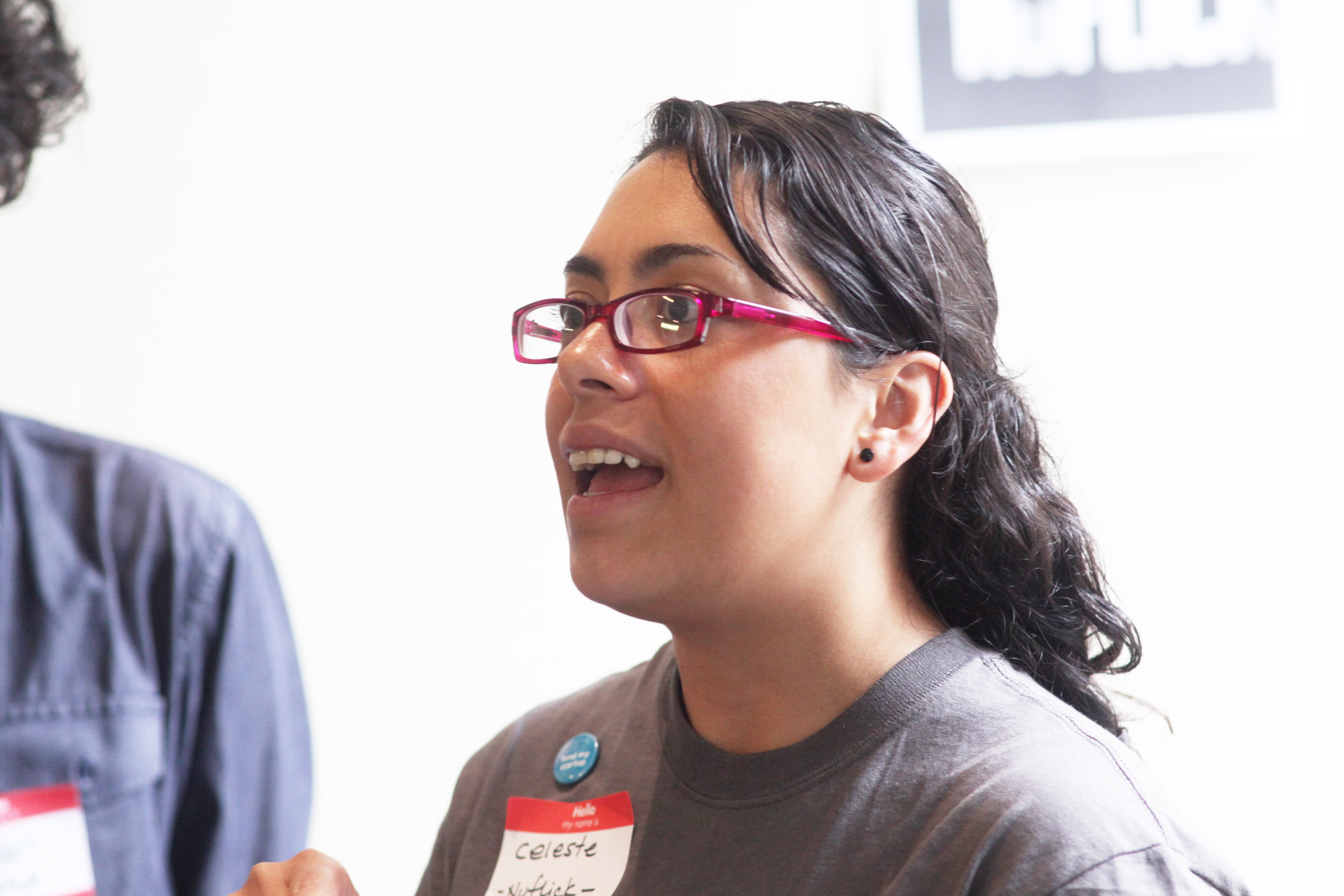
Celeste North, co-founder of NuFlick.com, at mexican.vc Demo Day, March 16, 2012

Lisa Seeman (left), General Partner at mexican.vc, at mexican.vc Demo Day March 16 2012
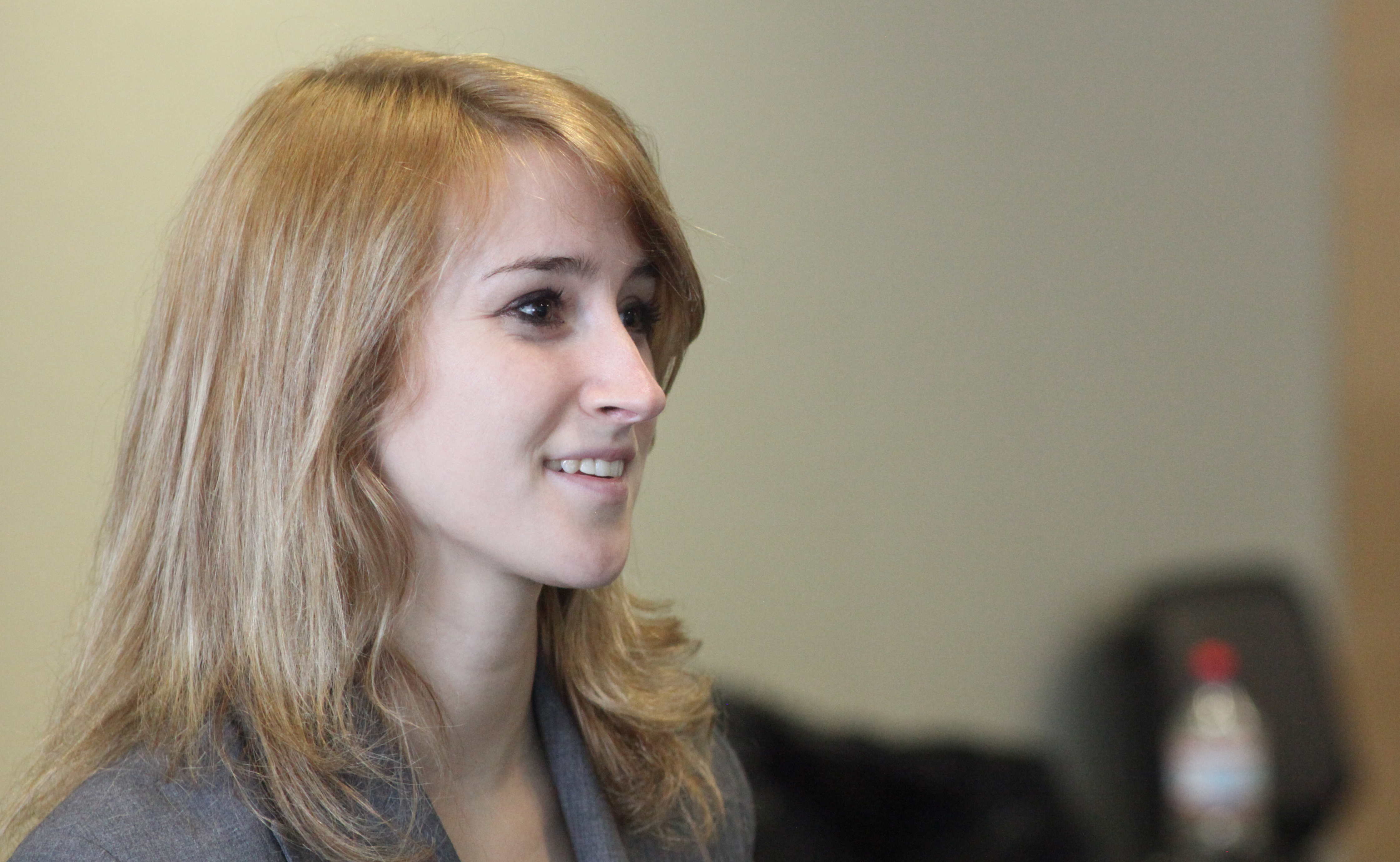
Cristina Randall, co-founder of Conekta.mx, at Mexican VC Demo Day March 16 2012

Dave McClure and Lisa Seeman at Mexican VC Demo Day, March 16, 2012
San Francisco Flower & Garden Show, March 24, 2012
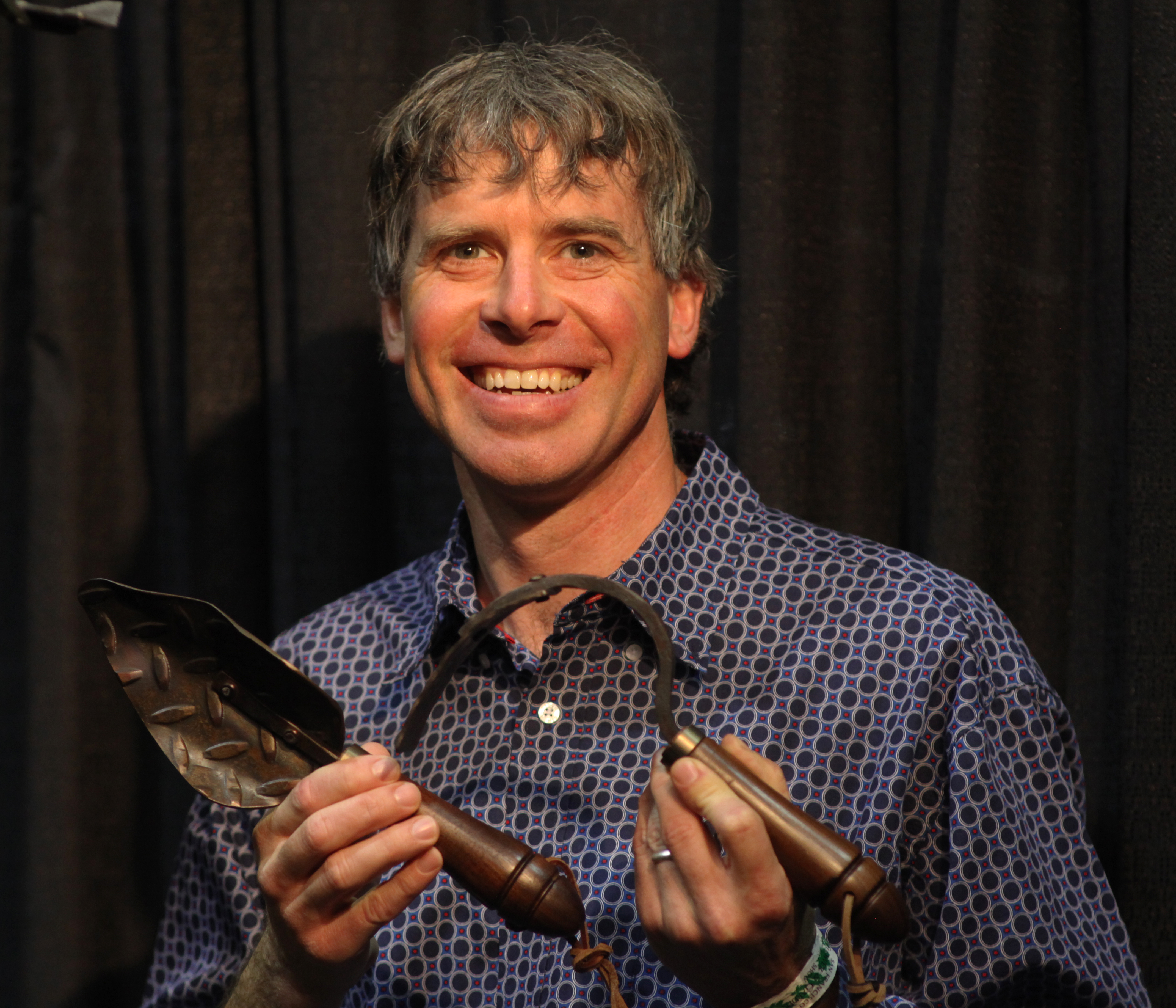
Tuli Fisher, owner of FisherBlacksmithing.com, March 24 2012, at San Francisco Flower & Garden Show
On Saturday, March 24, 2012, I attended the San Francisco Flower & Garden Show at the San Mateo Event Center in San Mateo, California USA.
I met Tuli Fisher, the owner of Fisher Blacksmithing at 409 South Fifth Avenue in Bozeman, Montana 59715 USA. Fisher personally crafts the nicest hand garden tools I have ever seen. That’s right, he hand-forges the iron parts for the hoes, trowels, rakes. He turns the handles on a lathe. He occupies the booth at various shows, where he personally sells his quality product. Fisher graciously posed holding two of his fine creations, above. I photographed three examples of his work, immediately below.
Here’s a piece about Fisher Blacksmithing that appeared on Forbes.com. In 2009, Fisher Blacksmithing was featured on the cover of Bozeman Magazine, the city in Montana where Fisher lives.

Fisher Blacksmithing handcrafted garden tools, March 24, 2012

San Francisco Flower and Garden Show, March 24 2012

San Francisco Flower and Garden Show, March 24, 2012

San Francisco Flower and Garden Show, March 24, 2012

Fiesta Roses from FiestaRoses.com, on display at the San Francisco Flower and Garden Show, March 24 2012
These roses are ‘real’ in that they were living before being cut. They are called Rainbow Roses, and you can order them at FiestaRoses. I had never seen these before, so I inquired about the process. Here’s what the website of the manufacturer says:
1. Fresh long stem [white I was told] roses are hand picked from our farms to make our Rainbow Roses
2. A trained horticulturist prepares the roses for “fiesta-ization”.
3. The roses are placed in a unique substance, which is a combination of water and various dyes. The roses slowly absorb the dyed water the same way as they would naturally absorb water. Our unique process allows the horticulturist to pinpoint which petals receive each color of dye. This results in the various colors being diffused throughout upwards of 60 of the rose petals thus resulting in rainbow roses, blue roses, purple roses.
4.Rainbow roses, Blue roses, Purple roses are carefully packed and shipped throughout the United States.

San Francisco Flower and Garden Show, March 24 2012

San Francisco Flower and Garden Show, March 24 2012

San Francisco Flower and Garden Show, March 24 2012
Here’s a video clip I shot that shows the main building for the show. These exhibits were elaborate, and at least one had a fish pond with large live fish in it.
I posted these pictures at full camera resolution of 21 megapixels. Click on them to see the full size versions.
Trash Chaos iPad and iPhone children’s educational game demonstrated by Yogome.com co-founder Manolo Diaz
When I was at the Demo Day a week ago for the first graduating class for mexican.vc, I got to meet Manolo Diaz, a co-founder of Yogome.
mexican.vc is a seed stage venture capital firm that invested in Yogome. I was at the Demo Day because I know one of the people at mexican.vc.
Yogome makes educational software for the Apple iPad device and the Apple iPhone smartphone. Yogome apps are games that educate. They are fun, beautiful and engaging. If I had an iPad I would download them.
Diaz was kind enough to demonstrate the game Trash Chaos, which requires students to sort trash they see on the ground into the proper recycling bins. As students get faster and more accurate, more trash appears, as do more recycling bins.
I put Diaz on the spot by proposing he demonstrate Trash Chaos while I captured video. The room was filled with people talking, but Diaz still put on a great demo that’s articulate and approachable. I present the full unedited demo above.
Diaz gave me a Yogome large size t-shirt to give to a lucky reader of my blog.
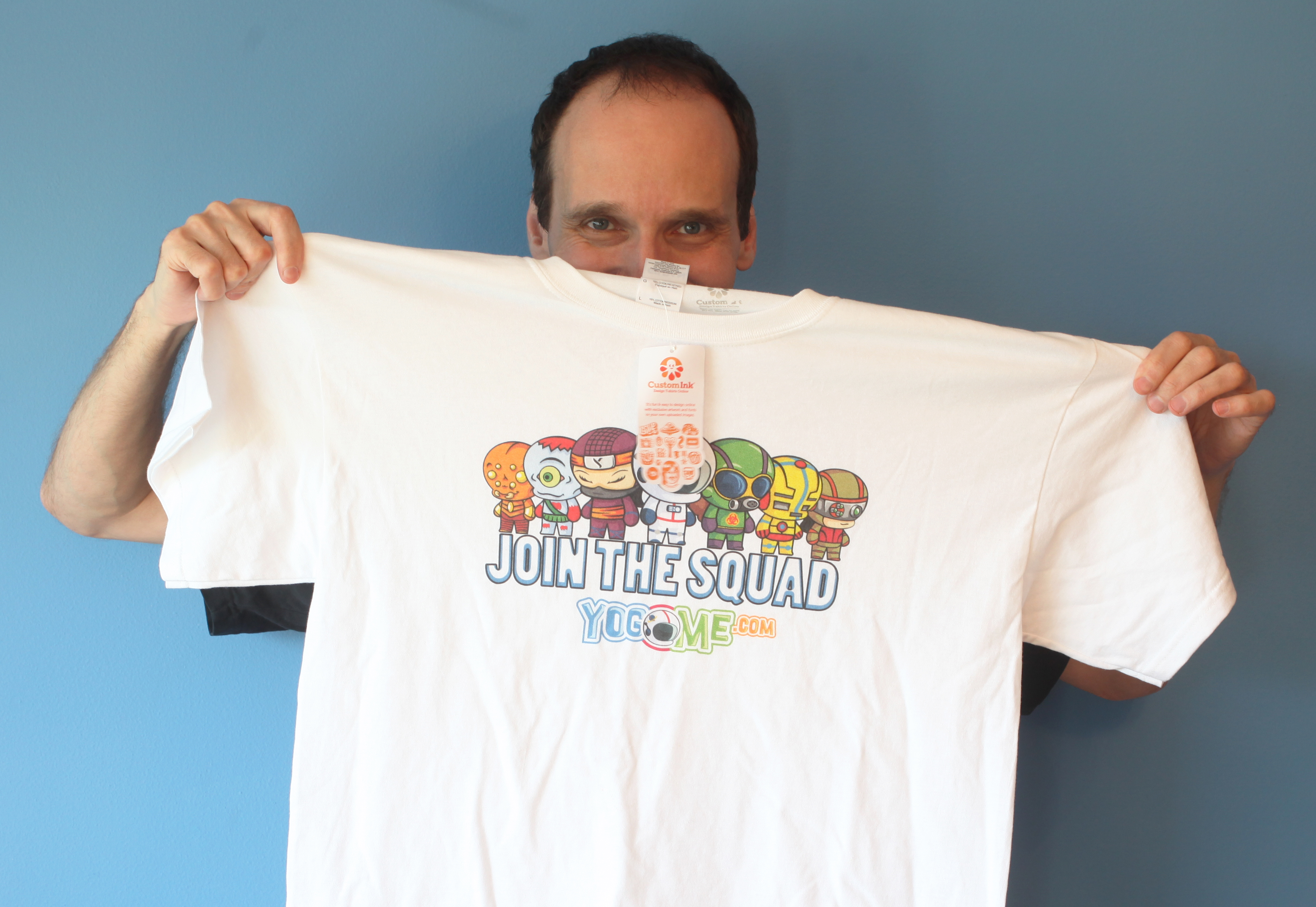
Yogome.com t-shirt that I will send to a lucky winner!
I haven’t given anything away on my blog before, so this is exciting.
What I’m going to do is mail the brand new shirt with the tags still attached to the first person to Tweet this blog post to at least 100 of their followers. Alert me that you have done this by leaving me a comment here with your Twitter handle. You can be anywhere in the world, and I will pay the postage to send the shirt to you. Remember, it’s a men’s size large, not a children’s shirt.
Trash Chaos was the number 10 Apple App Store app in its category of free educational software on March 16, 2012, the day I made the accompanying video.
Great job Yogome!
ClasesD is SkillShare.com for Mexico

Enrique Aguilera and Eduardo González, founders of ClasesD.com, San Francisco, California USA
On Friday, March 16, 2012, I attended the first ‘graduation’ of the first ‘class’ of companies funded by the new seed stage venture capital firm mexican.vc. mexican.vc is run by four sharp General Partners — David Weekly, Santiago Zavala, Lisa Seeman and César Salazar.
mexican.vc has signed up prominent mentors to help, including Dave McClure, the founding partner of 500 Startups.
After the presentations, the teams dispersed around the conference room at Microsoft’s office at 835 Market Street in San Francisco, California USA. There were seven teams altogether. Three of the teams were set up along the left wall and three of the teams were set up against the right wall.
I introduced myself to and interviewed all those teams on Friday, and I wrote a long blog post about them that night.
What I didn’t know at the time was that the seventh team had set up their station up front in the room, where there was not a table, but a podium. That arrangement never registered with me that day, even though I had several lengthy conversations with people by that podium after the presentations. I didn’t know a team was there engaging with attendees. So that team, ClasesD, missed out on the commentary I wrote for my Friday blog post.
I was upset that I missed a team, so I wrote in that Friday post that I was willing to meet with the team I overlooked. The team found my blog post and reached out to me via my Facebook page.
I met the team yesterday afternoon, March 18, 2012, and we had an enjoyable meeting at the San Francisco Main Branch library at Civic Center in the City. I signed out one of the glass work rooms on the 4th floor so that we could talk without disturbing others.
Luis Enrique Aguilera and José Eduardo González described their company to me, and I had time to ask questions.
Before I get into my remarks, here is what the website for mexican.vc has to say about ClasesD:
“Interested in learning Spanish? Want to take yoga during your lunch break? You are in the right place! ClasesD is a marketplace for in-person lessons taught by independent professionals. Earlier this year when founder Eduardo was looking for dance lessons for his sister, he realized there must be a better way to advertise classes than flyers tacked on corkboards around town. Now, his team is helping people craving for knowledge find the right tutor in their city.”
Here are my comments about ClasesD:
ClasesD is SkillShare for Mexico. This is my observation, not something I heard from Aguilera or González. SkillShare is based in New York City, USA, and they have raised millions of dollars to pursue their business.
Although comparisons to airbnb have grown somewhat tiresome, such a comparison to ClasesD is inevitable. airbnb turned everyone that’s not homeless into a potential operator of a bed and breakfast. SkillShare and ClasesD turn everyone into a potential operator of a one teacher school.
If you’re a good cook, musician, painter, photographer, writer or mathematician, you can list your qualifications on ClasesD by creating a profile. Potential students can browse listings and read about the widely varied offerings. Of course, classes can be about anything, not just the example subjects I listed in this paragraph. Teachers set their own prices.
Students indicate their interest in a class and then the ClasesD website connects teacher and student together by telephone. This gives the teacher an opportunity to sell themselves to the student to increase the chances that prospects become customers. This highly personalized sales process might be unwieldy at scale, but I think it’s preferable in these early stages where the parties are still getting used to having an online marketplace to find each other in Mexico.
ClasesD makes money by charging a fee, currently 100 pesos (USD $7.93 at today’s exchange rate), to the teacher for providing the lead. Teachers keep all of the fee that they charge to attend their classes.

Eduardo González and Enrique Aguilera, founders of ClasesD.com, San Francisco, California USA
mexican.vc graduated 7 teams on Friday, including Fontacto. As I wrote in Friday’s post, Fontacto is Ring Central for Mexico. Fontacto helps small organizations appear big by offering a virtualized phone system that in its physical version is generally too costly to purchase and install at the organization. In a bit of portfolio company collaboration that would make any investor proud, ClasesD is a savvy consumer of Fontacto’s impressive telephony services.
One of the many impressive features offered by Fontacto is the ability to set up apparently numerous extensions on one physical telephone number.
ClasesD publishes a Fontacto powered phone number for students to call teachers on. Each teacher has an assigned extension number in the Fontacto system. Student’s calls are routed to the teacher, who can answer on whatever phone is most convenient at the time, including their mobile phone or their Skype connection. All the teacher’s assigned devices ring simultaneously, I presume, since that’s one of the features offered by Fontacto, and it makes sense to enable it for this application, where the students are probably most likely to become paying students if they reach the teacher on the first attempt.
ClasesD has a chicken and egg dilema — they need lots of teachers before they can get lots of students, but it’s tough to get lots of teachers until they have lots of students.
Marketplaces such as SkillShare and ClasesD are compelling to me. The operator of the marketplace does not have to stock and finance inventory. People expect to pay for services delivered through such marketplaces. The margins can be attractive given what needs to be done to operate the marketplace.
Aguilera and González struck me as passionate and determined. They’re learning quickly, and have tested several business models already on their search for the best model for Mexico. Their enthusiasm was evident from the moment they contacted me. I am not running TechCrunch, GigaOm or VentureBeat. I’m writing a personal blog. I will get perhaps 12,000 visitors to this site this month (I had 10,321 visitors in February, 2012). I still haven’t cracked the top million sites on Alexa. This is easy for others to check out. That Aguilera and González tracked me down and patiently explained their business to me to get a tiny amount of press shows to me that they are really trying to make ClasesD a success. They are well spoken and likable guys, and I wish them all the best.
My advice to them is to find a prove a business model that works, and then raise a million or more US dollars immediately to accelerate populating the site with more teachers and students. If you don’t solve the chicken and egg problem, a competitor will spring forth to do it for themselves, using your research to move more quickly.
Here are the biographical introductions for Aguilera and González, again from the mexican.vc website:
“Luis Enrique Aguilera graduated from ITESM Guadalajara with a B.S. in Business Administration. He is an entrepreneur, creative mind, and music aficionado. He is passionate about web marketing and SEO. He previously worked as a marketing and business consultant, which taught him to create powerful and innovative business models that he is eager to apply to his own startup.
José Eduardo González graduated from ITESM with a B.S. in Computer Science. Before founding ClasesD, he worked for 2 years as a Ruby on Rails developer in a startup called Inovaz (now a 500 startups company with their product Ovia), where he got his first taste of entrepreneurship and learned agile development practices.”
Aguilera and González graciously posed for pictures at the end of our meeting. I used the photogenic interior of the San Francisco Main Branch library as the backdrop. It was fun showing Aguilera and González around the library as this was their first visit. I attended the grand opening of the library on April 18, 1996, which featured a dramatic special delivery of the door key by skydiver Carl Prigee to Mayor Willie Brown after Prigee jumped from a biplane and landed right on target in front of the library, to the applause of the thousands gathered in attendance.
mexican.vc Demo Day, March 16, 2012 in San Francisco, California USA
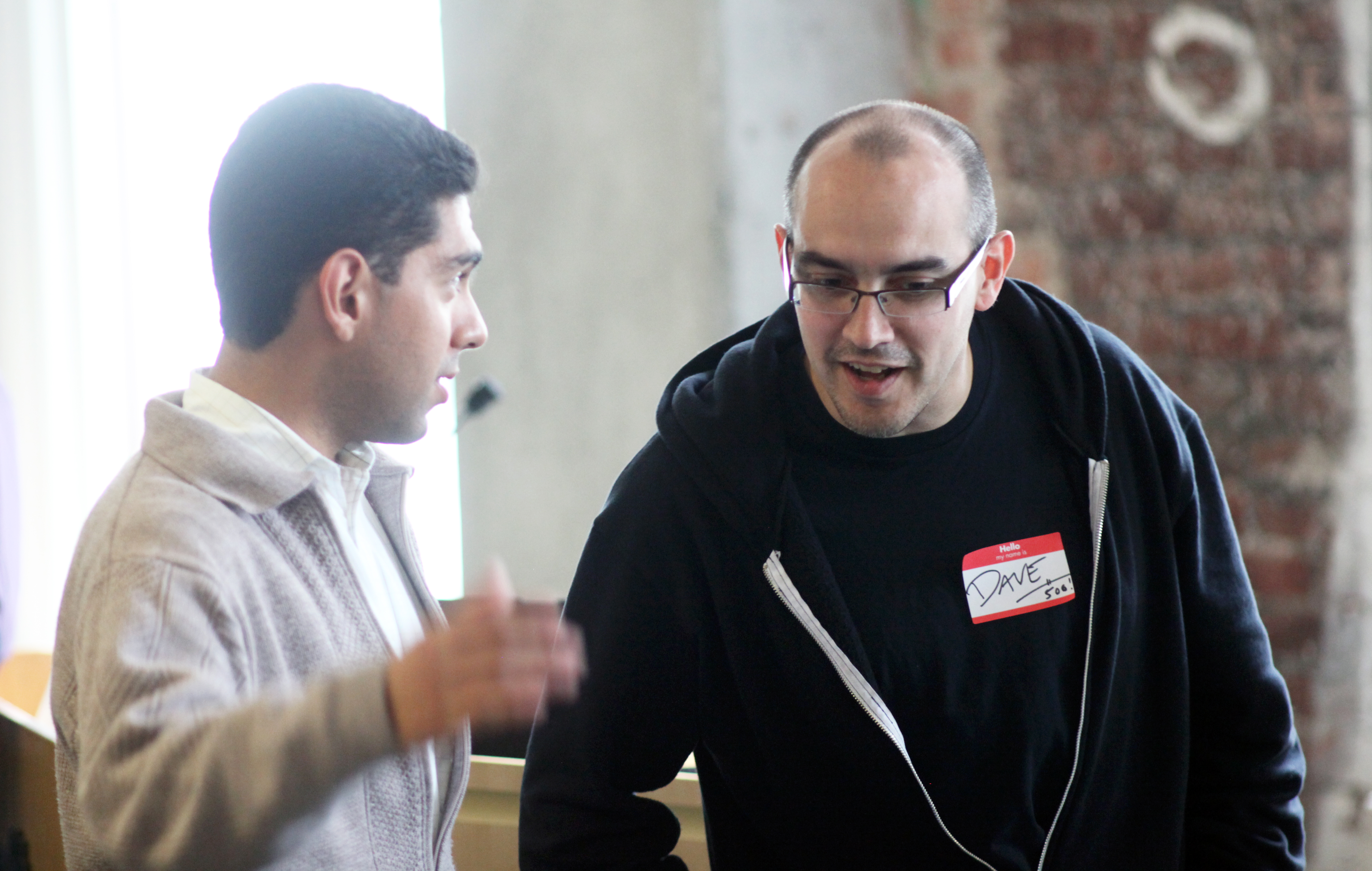
Ricardo Cacique and Dave McClure at Mexican VC Demo Day, March 16, 2012
This afternoon, March 16, 2012, I attended the Demo Day for the first graduating class of Internet startups funded by mexican.vc.
mexican.vc is a new seed stage venture capital firm based in Silicon Valley.
mexican.vc invests only in Internet companies that reside in Mexico.
mexican.vc currently invests USD $20,000 for 15% of the startups it accepts into its highly competitive program that includes mentorship, legal work and investor introductions.

David Weekly at Mexican VC Demo Day, March 16, 2012
mexican.vc is not an incubator and physical space is not provided to portfolio companies.
Portfolio companies are scattered throughout Mexico, which was a surprise to the general partners that run the brand new firm.
Some 75 teams applied for funding, but only seven firms were admitted to the first ‘class.’
Today’s ‘graduation’ of the first ‘class’ was an exciting thing to watch.
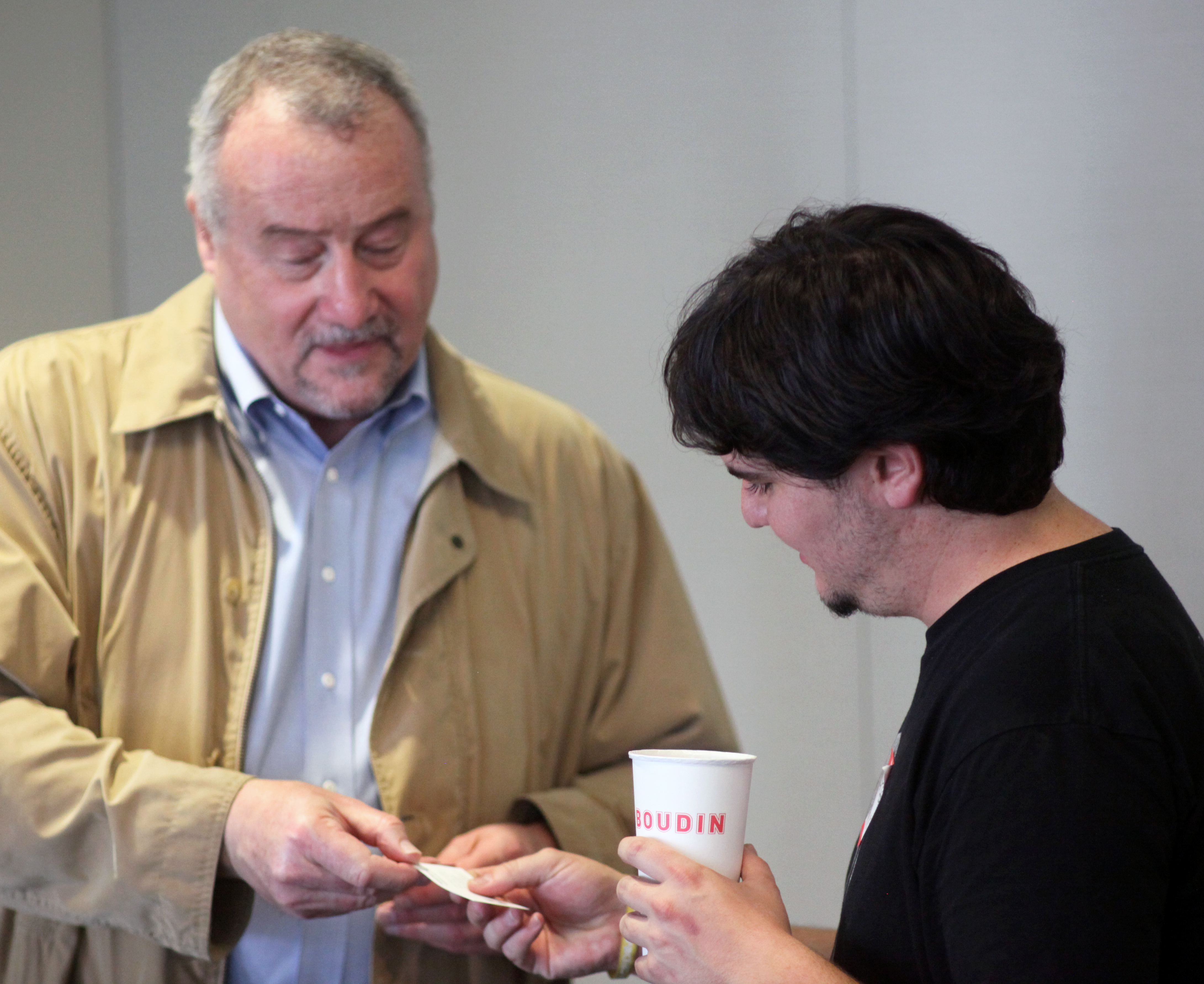
Santiago Zavala (right) at Mexican VC Demo Day, March 16, 2012
I attended because I am (barely) friends with David Weekly, one of the founders of mexico.vc, and via Facebook Weekly invited his friends to attend. I signed up as a blogger and brought my Canon 5D Mark II and a tripod to the event, held at Microsoft’s San Francisco office at 835 Market Street.
As a side note, I met Weekly soon after he co-founded Hacker Dojo in Mountain View, California. Weekly is a well known and well connected entrepreneur who writes a quality blog. While I was researching this story, I discovered that on March 8, 2012 Weekly advised non-technical Internet company startup founders to learn to program. Weekly said it’s essentially impossible to recruit a good technical cofounder to your company for no pay. I wrote a strongly worded blog post on March 11, 2012 giving the same advice to learn to program. I did not see Weekly’s outstanding post until today.
In part, Weekly writes:
“Napster was Shawn Fanning’s first Windows program – he was teaching himself how to code on his uncle’s couch so the early betas had lots of atrocious bugs. The company didn’t need a longstanding Windows expert to put the tech together, it needed someone who was willing to put in the elbow grease to figure out how to do it. In other words if you’re looking for a technical cofounder consider becoming one. It’s just too hard to find random technical people who don’t know you, are highly competent, and are happy to work for no pay and very little equity on your idea. (surprise!)”
I know I am writing a post about mexican.vc and not startups generally, but this is such a great quote and such a great opportunity to print it that I couldn’t resist. Napster was one of the most significant programs of the Internet age, and I learned from David Weekly tonight that the creator of Napster was not a Windows programmer before he coded the Windows version of Napster! I don’t know if Fanning was a programmer of other languages prior to this effort. But even so, my advice and Weekly’s advice is worth listening to. Learn to program, even if you plan to be the Barista, CFO, Janitor, CEO, Office Manager or Administrative Assistant.
Your life will only improve if you can also program.

Santiago Zavala and Lisa Seeman at Mexican VC Demo Day, March 16, 2012
Now back to mexican.vc’s Demo Day.
Here are the summaries word for word from the mexican.vc website of the companies I saw present today.
I will indent the official summaries. Then I will write my comments on that team and their product.

Santiago Zavala and Dave McClure at Mexican VC Demo Day, March 16, 2012
What mexican.vc says on its website about Yogome:
“This small team of brilliant hackers and designers is building better educational games for K-12 children mainly on the iOS (iPhone & iPad) platform. They are partnering with educational institutions to build fun, educational adventures that help kids learn more effectively. The characters in the game are superheroes fighting against the Queen Ignorantia.”
My comments on Yogome.com:
Yogome is my favorite of the companies I saw today. Their iPhone and iPad game is gorgeous. It looks like it was designed by a large game company, not three people that have been at it just a few months. Amazingly, this game today was the 10th most popular free educational downloadable application in the Apple App Store. It’s been zooming up in the rankings, jumping over 24,000% in the last week, according to a genuine hockey stick graph the team showed during their pitch. Even crazier, their app is number one in Thailand today in the same category.
Yogome plans to continue to give their apps away for free. They will make money by offering so-called ‘in app’ purchases where an existing player can upgrade after they have already discovered how wonderful the free app is. I like this strategy.
I persuaded Manolo Diaz of Yogome to show me one of Yogome’s games while I captured HD video. He narrates as he shows how to play the game, which teaches children to recycle by having them pickup apple cores, banana peels, bottles and cups and drop them in the correct recycle bin. Speed and accuracy are rewarded, and there is educational text at the end alerting players to what they learned and why it matters. The graphics in this game are lush, polished and delightful. Students play about half an hour per session, according to Diaz, indicating the games are engaging and fun.
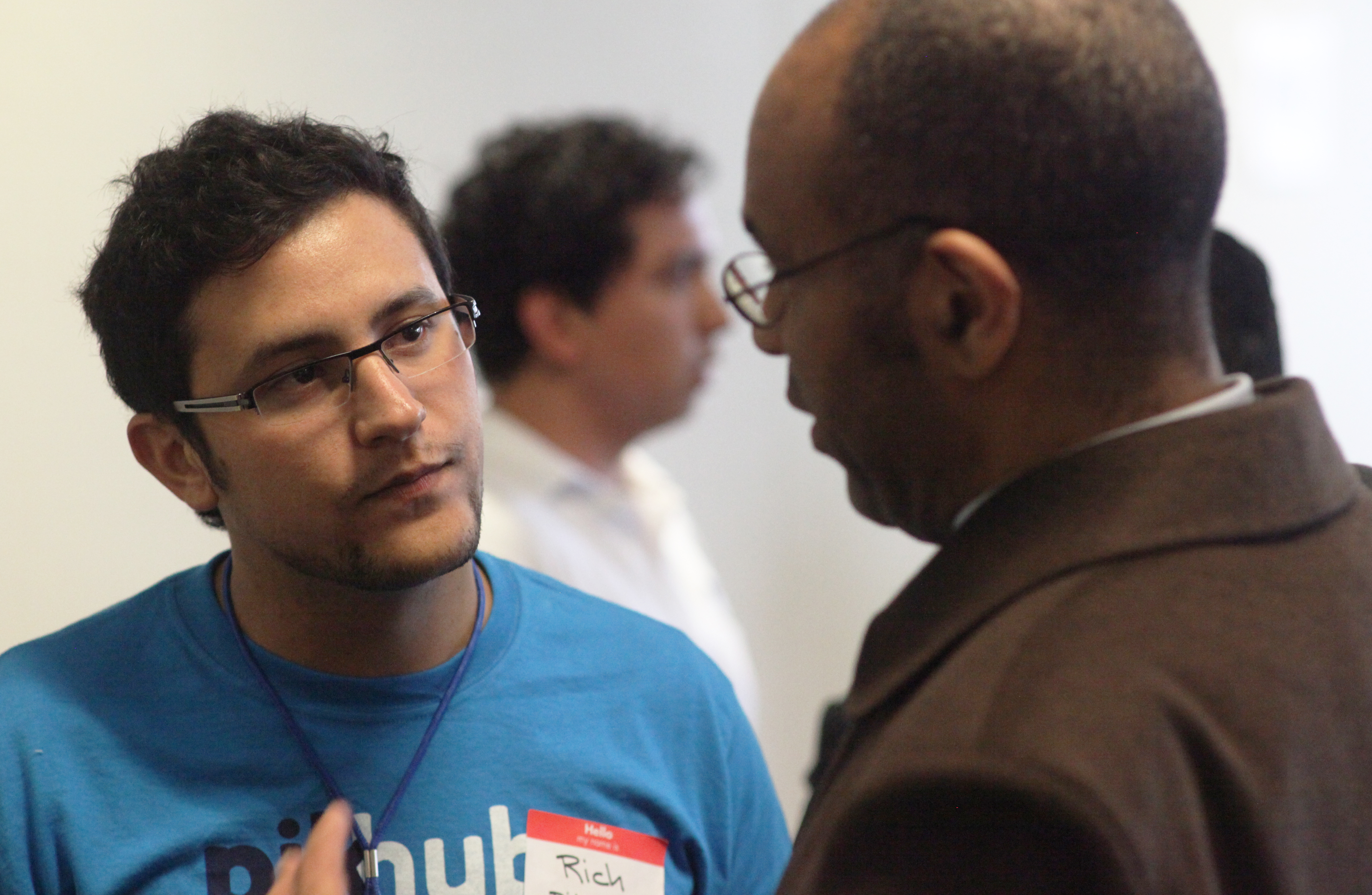
Rich Peniche at Mexican VC Demo Day, March 16, 2012
What mexican.vc says on its website about Cactus:
“Through their initial startup experience, the team learned the ins and outs of the restaurant industry, both from the vendor and consumer perspectives. Cactus now offers a geo-aware mobile app that grants access to discounts in a growing network of restaurants. The basic app is free, giving users instant access to thousands of discounts. Moreover, users can upgrade to a premium subscription and enjoy substantially larger savings on every affiliated restaurant.”
My comments on Cactus:
This iPhone app looks well designed and smart. It’s not a Groupon like loser. Instead, it’s a phone enabled price discount system that gives restauranteurs real time analytics at the point of sale. A customer searches through a list of nearby eateries on their iPhone. When they find one they like, they show their phone screen to the cashier or waitperson, who enters the unique code on the screen into the Cactus website. The Cactus website then immediately tells the restaurant how many times the customer has eaten there via the Cactus system.
This personalization strikes me as very smart, and I can see restaurants being able to provide better service with this data so easily accessible. I predict such analytics will go a long way towards enticing reluctant restaurants to give Cactus a try.
I neglected to ask why they named their startup Cactus.
Free users of Cactus receive about a 10% discount and paid users receive about a 20% discount. Not bad.

César Salazar at Mexican VC Demo Day, March 16, 2012
What mexican.vc says on its website about ClassesD:
“Interested in learning Spanish? Want to take yoga during your lunch break? You are in the right place! ClasesD is a marketplace for in-person lessons taught by independent professionals. Earlier this year when founder Eduardo was looking for dance lessons for his sister, he realized there must be a better way to advertise classes than flyers tacked on corkboards around town. Now, his team is helping people craving for knowledge find the right tutor in their city.”
My comments on ClassesD:
I didn’t have a chance to visit with this team after their presentation. I simply didn’t see their table. I’m sorry about this, as I intended to and had time to see every team. If the team is still in town, I’d be happy to meet them to interview them so I can cover them as well.

Rebecca Lipon at Mexican VC Demo Day, March 16, 2012
What mexican.vc says on its website about Conekta:
“Conekta is a local business directory that allows users to find and share information about any type of business across Mexico, through both mobile and web platforms. Conekta focuses on making its information accurate and up to date to ensure users find what they are looking for.”
My comments on Conekta:
I love the premise of Conekta, which is to be a recommendation engine similar to Yelp, but tailored for the culture I was told is prevalent in Mexico. Apparently people in Mexico routinely friend on Facebook people they don’t know directly, but that their immediate friends do know. This means people have large friends lists. I was told people in Mexico distrust reviews written by complete strangers, but pay attention to reviews written by their Facebook friends, even if they don’t know them personally.
The clever approach by Conekta given the above is that the reviews are distributed within the loose confines of the Facebook friends system. Reviews are public so they can be found by search engines for purposes of search engine optimization. But reviews are filtered when viewed through the Conekta website so that users see just the reviews of their friends. This is brilliant I think. Conekta can attract new users because reviews will show up in Google search results. But once users are also Conekta customers, the list of reviews shrinks to those written by your friends. Users can follow reviewers that are not their friends, which allows for prolific and respected reviewers to build an audience and fan base. This is likely very helpful for people that don’t have many friends in their social networks.
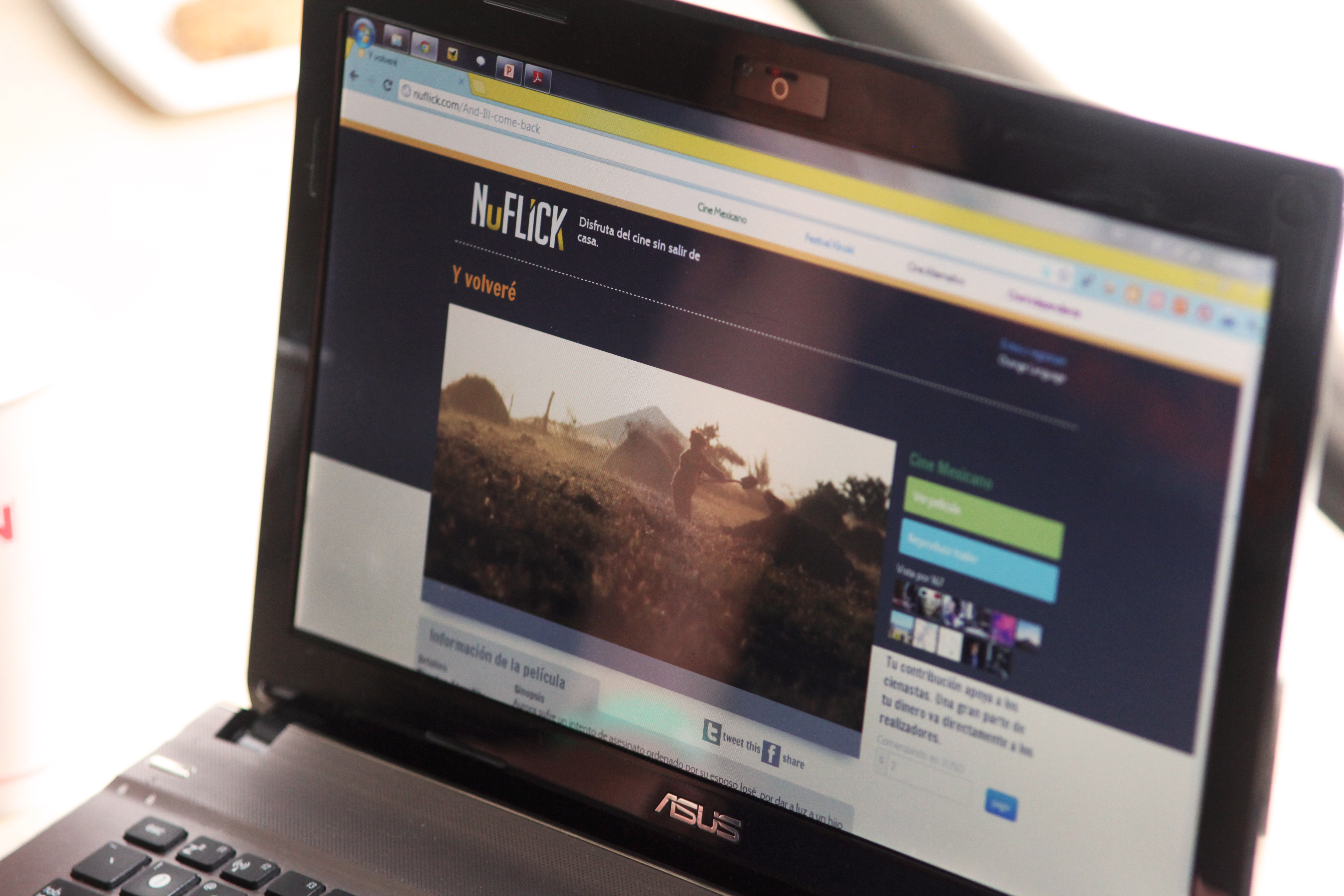
NuFlick website at Mexican VC Demo Day, March 16, 2012
What mexican.vc says on its website about NuFlick:
“Founded by hackers passionate about the independent movie industry (the primary founder was a filmmaker herself), Nuflick is trying to solve how independent movies are distributed on the Internet by building a platform to connect independent producers and films with viewers worldwide. Having been in the industry, the team understands the incentives of filmmakers and the limitations of conventional distributors, and we feel they have a real shot at disrupting the current system.”
My comments on NuFlick:
NuFlick is taking on an almost crazy challenge. They want to be the Netflix of independent movies. They are on track to have 500 movies available for streaming by May 2012. They are in Microsoft’s BizSpark program, and apparently Microsoft offers video streaming for free as part of their offerings to help young companies grow. This is a luxury and very generous of Microsoft. What gives me hope is the founders are passionate and are making progress. Their site is attractive, and their business cards are supremely clever. Their cards resemble old school tear apart movie tickets, before the industry went to custom printed tickets for each customer.
NuFlick is making enough waves that groups with catalogs of movies are now approaching them asking to distribute via their platform. This is flattering, and I hope NuFlick recognizes how lucky they are to have that happen at such an early stage in their development.
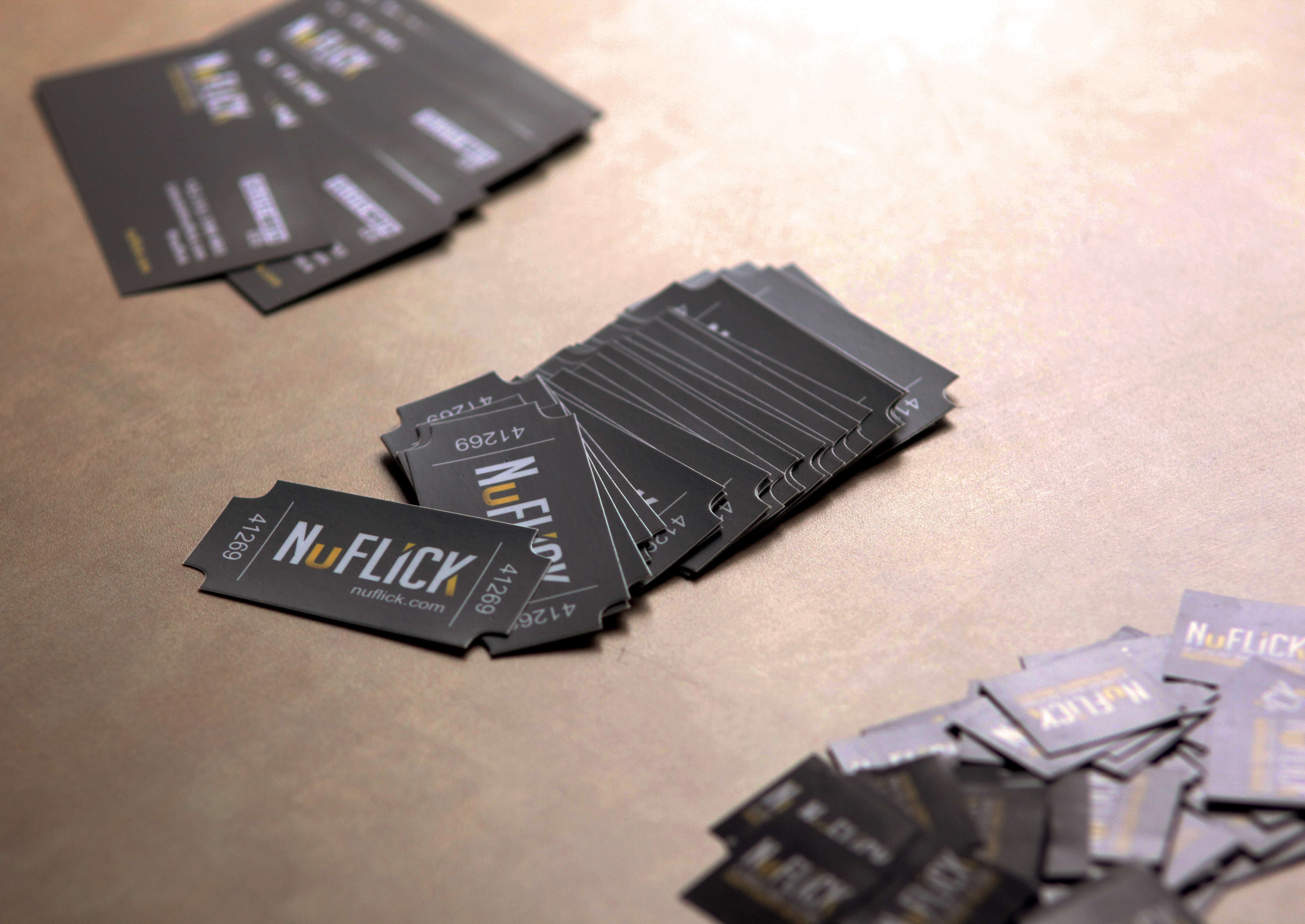
NuFlick business cards at Mexican VC Demo Day, March 16, 2012
What mexican.vc says on its website about Fontacto:
“Intrigued by how to measure conversions on advertising that displays phone numbers, the Fontacto team started working on generating analytics around phone calls. In the processed they learned how these metrics show clients different ways to improve their marketing messages, their conversation rates and their phone sales/support process. Now, they’re bringing the power of VoIP to the long tail of small business entrepreneurs and independent professionals.”
My comments on Fontacto:
Fontacto is another exceptionally ambitious company, like NuFlick. Fontacto wants to be RingCentral for Mexico. Fontacto has built a working system and I am pretty certain they have customers already. I got a demo of the website, and it looks classy and smart. Users can choose their phone number and sign up entirely online. When calls come in to that number, Fontacto can ring multiple destination phones all at once. Skype is one of the supported destination phone types.
The most captivating feature for me was the ability for a recipient of a Fontacto call to transfer it to another Fontacto extension from the keypad.
Fontacto is not trying to be Google Voice, which is about individual users. I am a Google Voice user.
Fontacto is designed to allow small organizations to set up a big company sounding phone system, with mailboxes, auto attendant and routing of calls.
One nice touch is that you can elect to have Fontacto’s real human voice actors record your greetings so you don’t have to use your own voice. Right now this is included in the base price, though I learned this feature may become a premium feature.
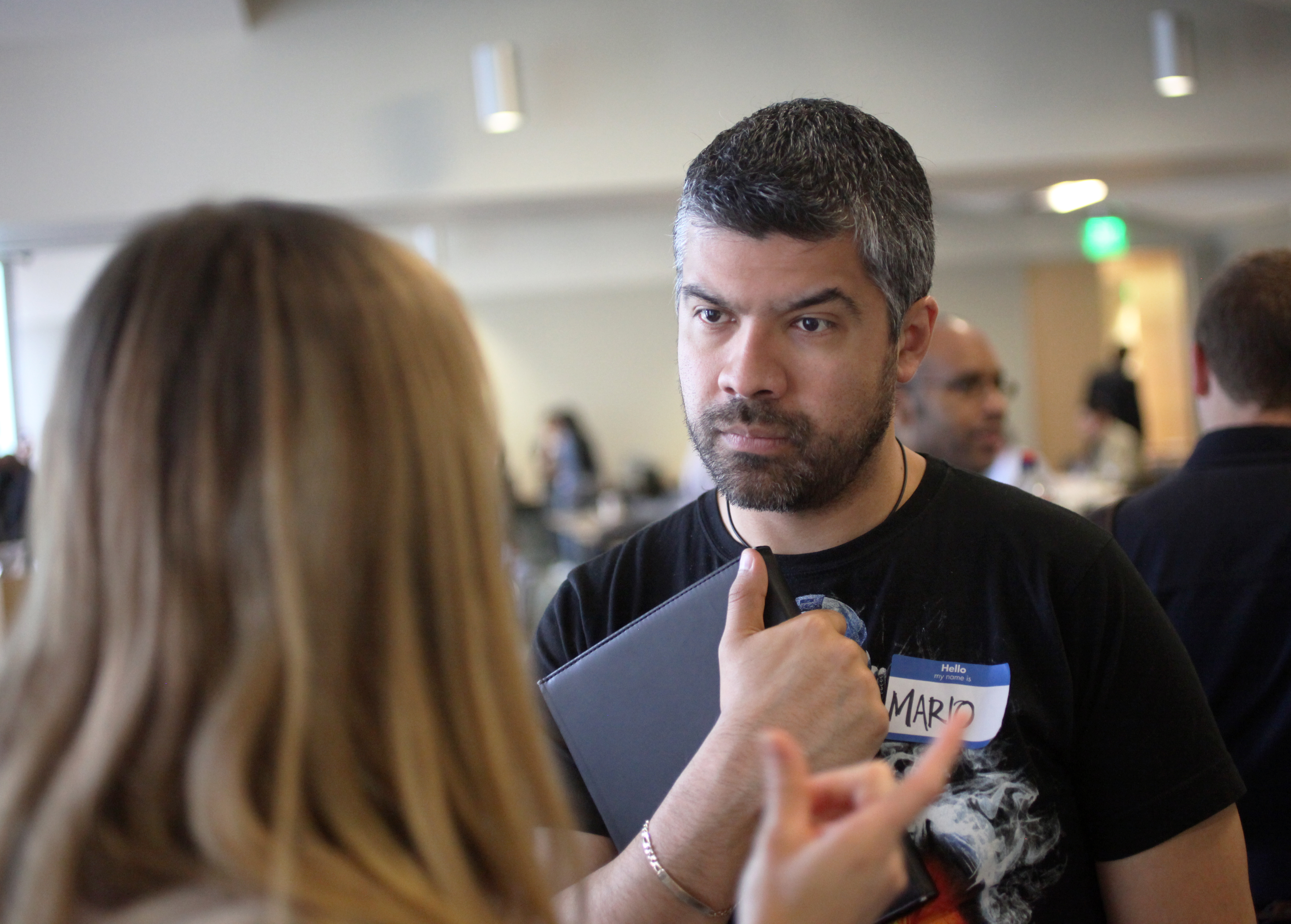
Mario Valle at Mexican VC Demo Day, March 16, 2012
What mexican.vc says on its website about pikhub:
“We all know how important events are for our social needs, however it’s still very difficult to find all the memories and interactions of an event in a single place. Pikhub is the place to gather everyone’s experience within an event. People can share and find all the pictures, attendees and interactions that happened there through a beautiful mobile experience.”
My comments on pikhub:
pikhub wants to be your picture hub. Today people go to events and then post them to albums they create on Facebook and Flickr. This results in numerous disconnected albums scattered over the Internet for big events like weddings, concerts and parties. pikhub would like all the attendees of sizable events to use pikhub as the central focus point for comprehensive coverage of sizable events.
pikhub is not trying to replace media storage on Flickr, Facebook or YouTube. They still want and expect people to store their actual media at those sites. The magic happens when pikhub users link to all the third party storage locations in a spoke like fashion where the center of the spokes converge at pikhub. This is cool because the spokes can lead to locations your friends control or locations controlled by people you don’t know and might never know, in the case of larger events like concerts, parades and marches.
I don’t follow this kind of company closely, so I don’t know if there are already similar sites in existence. If there are, please leave a comment alerting me.
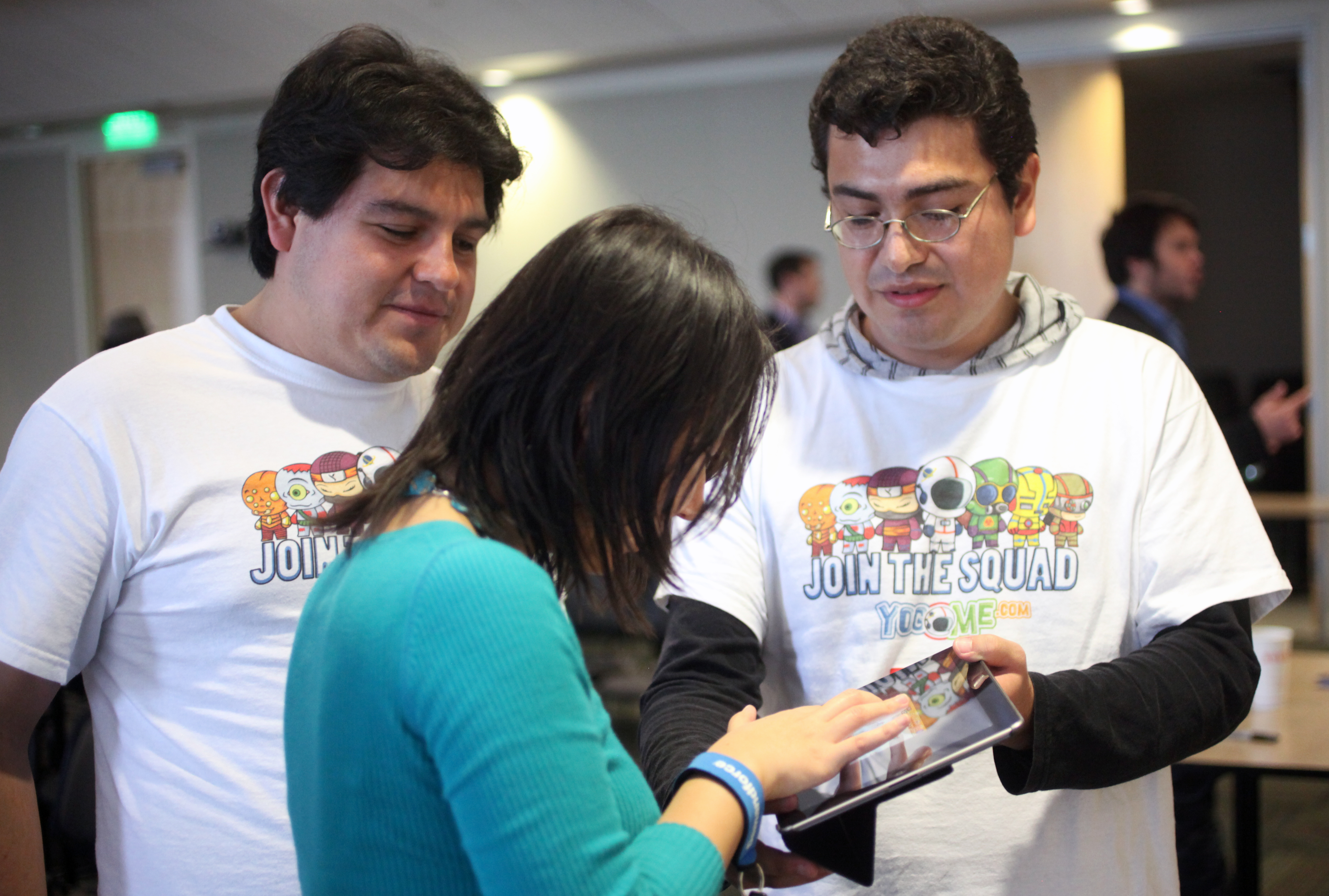
Manolo Diaz and Alberto Colín at Mexican VC Demo Day, March 16, 2012
Those are the seven companies that presented.
Impressive.
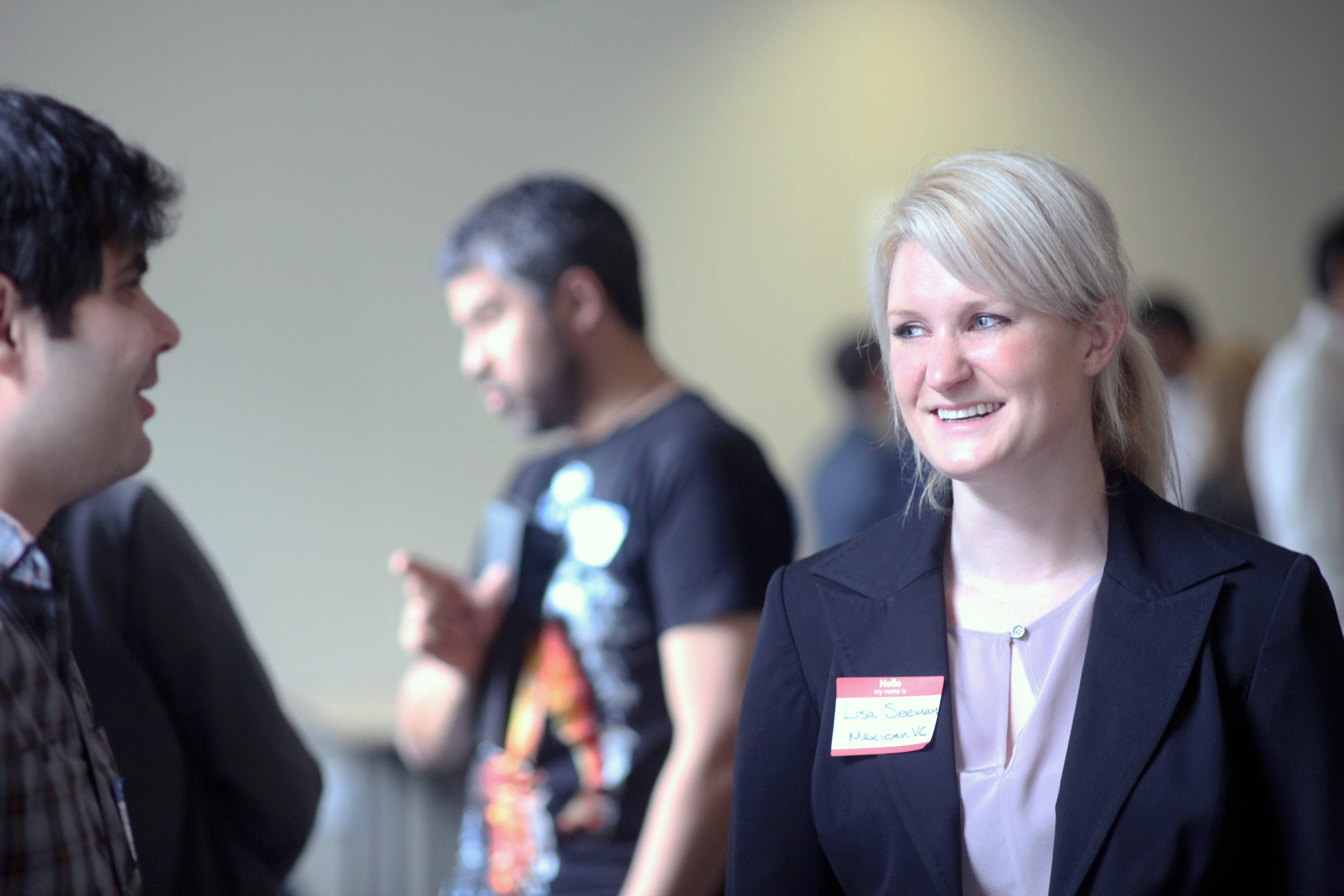
Lisa Seeman at Mexican VC Demo Day, March 16, 2012
Keep in mind that there are essentially no seed stage venture capital firms in Mexico, according to the people inside and outside of mexican.vc that I interviewed for this story today. So the entrepreneurs in this first class are breaking new ground. They didn’t have peers nearby that they could ask questions of about the process of raising money from professional investors. This had to be intimidating to come to San Francisco to present in the offices of software giant Microsoft. Microsoft was kind to donate use of their very nice conference room on Market Street for this event.

Yogome.com demo on iPad at Mexican VC Demo Day, March 16, 2012
I introduced myself to the three General Partners of mexican.vc that I hadn’t yet met. I had good conversations with all of them, and I came away feeling energized. These people are not your typical venture capitalists. They strike me as true entrepreneurs. I think they’ll be able to pull this off, because they seem to have a can do attitude for something I see as being very, very difficult — finding the gems in a huge, dispersed population in a country without a history in the Internet startup world.

David Weekly and Rebecca Lipon at Mexican VC Demo Day, March 16, 2012
For posterity, here are the biographies of the four General Partners in mexican.vc, which I copied from their exceptionally clean and understated website:
David Weekly — San Mateo, California USA
“David has been programming since he was five and has coded for MIT, Harvard, Stanford, There.com, atWeb, and Legato. David wrote the first layman’s description of MP3 in early 1997 and graduated in 2000 with a BS in Computer Science from Stanford, where he was a President Scholar and a finalist in the ACM International Programming Competition. David started the company that became PBworks in 2003. David cofounded SuperHappyDevHouse and HackerDojo. He has been a key promoter of hacker and startup culture in Silicon Valley and Mexico. He likes to throw hacker parties, fly helicopters, ride his motorcycle, and make useful things.”
Santiago Zavala — Mountain View, California USA
“Santiago has been programming and building stuff for a lifetime. He is a true hacker always trying to become a better hacker. Early in life he started an online community with thousands of users. After some years, we was a key player in the development of products such as Tikkia and DoingIt. Lately, he has been developing serious games at Innovations Games and not so serious game during his free time. Santiago is a cofounder of SuperHappyDevHouse Mexico City. He is also the editor of the weekly Hacker Digest newsletter.”
César Salazar — México, DF
“César has been a web developer and entrepreneur for almost 10 years now. During the last three years he has lead key efforts to empower the startup and hacker communities in Mexico. He specializes in User Experience Architecture and Product Engineering. He describes himself as a behavioralist, traveler and hacker culture practitioner, always interested in what makes people act the way we do. He is the original founder of 42 Claps. He is also one of the cofounders of SuperHappyDevHouse Mexico City and Hackspedition.”
Lisa Seeman — San Francisco, California USA
“Lisa is a born hacker and businesswoman. The daughter of two physicists, she received her BS with Honors in Electrical Engineering from the California Institute of Technology and was a National Science Foundation Graduate Research Fellow at Stanford University, earning her Masters in Electrical Engineering. Lisa was a management consultant at L.E.K. Consulting before becoming the first employee and Vice President of Engineering of IncentAlign, a sales optimization startup in Silicon Valley with business ties in China and Japan. Lisa has been a founder or team member of startups spanning the space of digital media, image recognition, sales optimization, and greentech.”
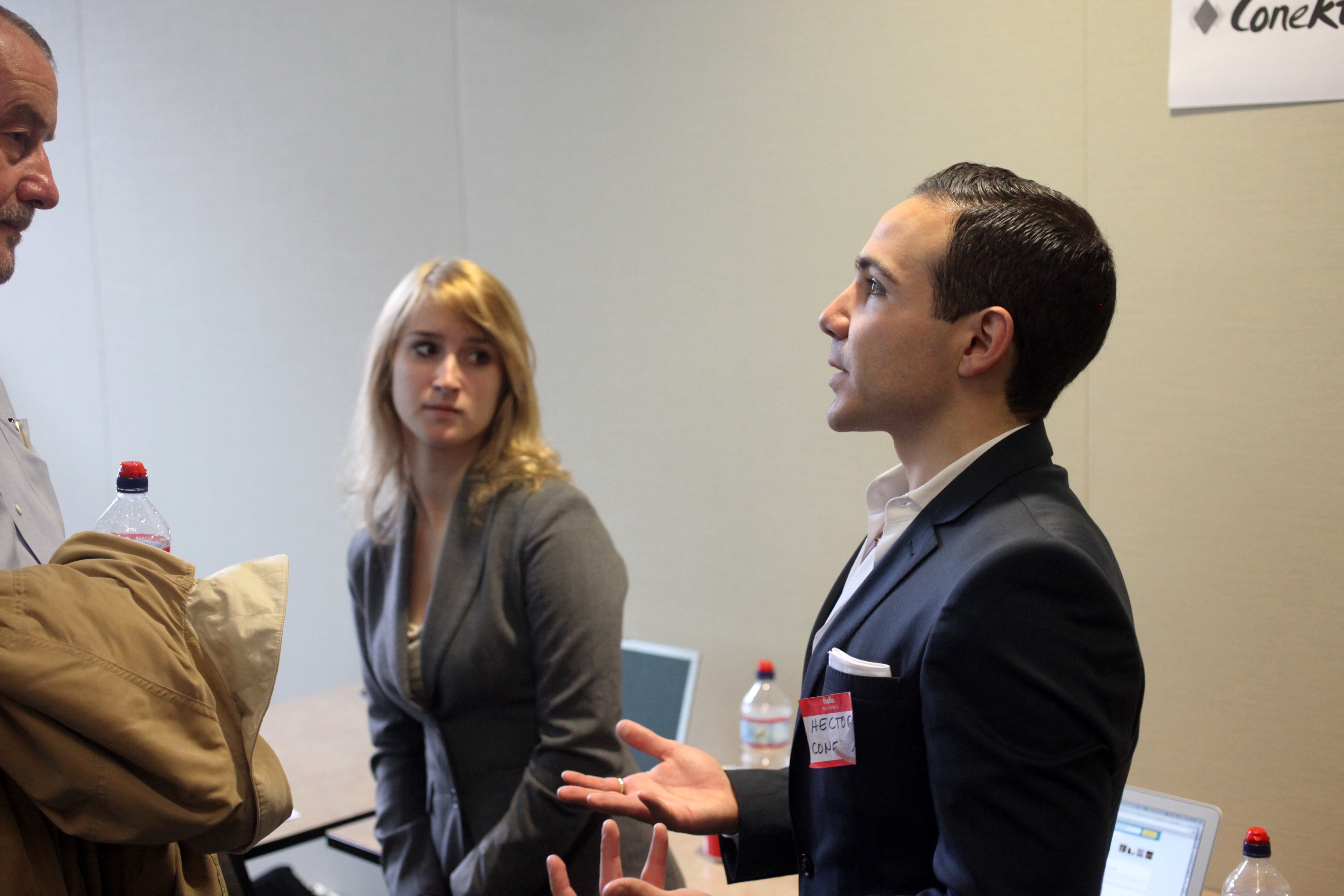
Cristina Randall and Hector Cardenas at Mexican VC Demo Day, March 16, 2012
The event began at 2pm and it is now 3am the next day. I got home from the event at 7pm and began writing this post and editing the pictures and video I captured.
I hope that I made some new friends today. It was exhilarating to talk with so many interesting entrepreneurs. I stayed up late because I know people want to see these pictures. I uploaded them at full camera resolution of 21 megapixels. To see the full size versions, click on the pictures, wait for the huge version to load, and then click on it again to bring it to full size, which is larger than your screen.
I invite everybody I met today to friend me on Facebook.
Say hello. I would like to stay in touch.
Jordan Schermerhorn wins New York Times trip to Africa with columnist and blogger Nicholas Kristof
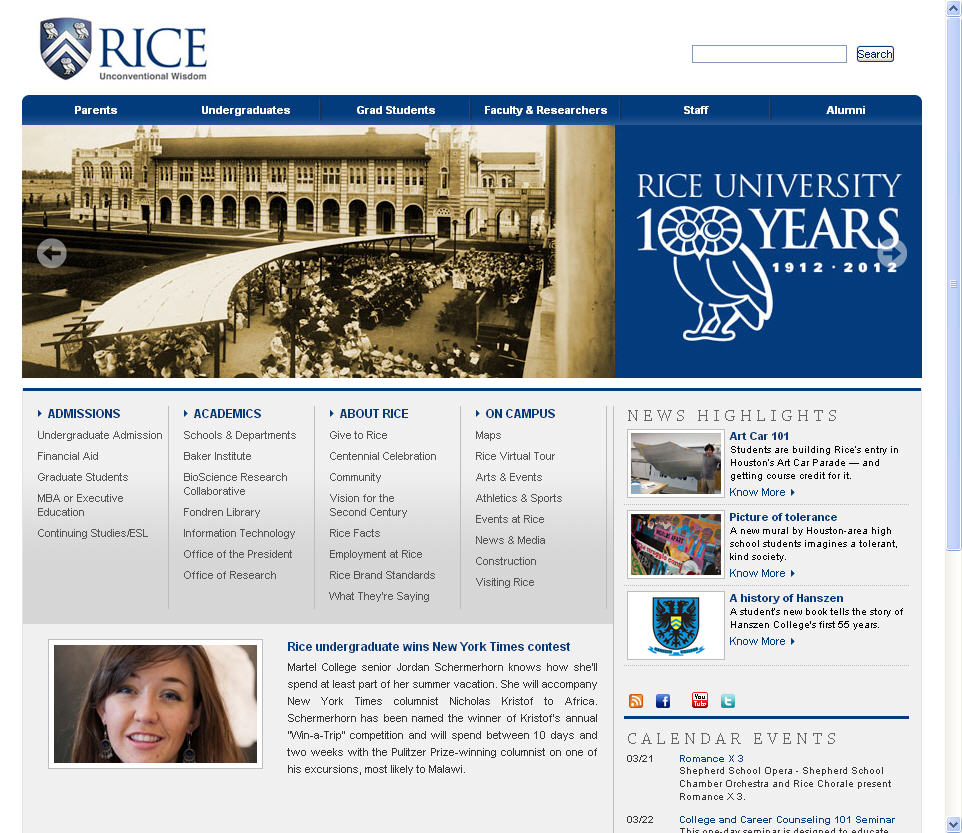
Jordan Schermerhorn on the front page of the Rice University website, March 15, 2012
Here’s a great essay by undergraduate Rice University student Jordan Schermerhorn.
Schermerhorn wrote this engaging piece to try win a trip with New York Times newspaper columnist Nicholas Kristof.
I follow Kristof on Facebook, and that’s how I found Schermerhorn’s essay.
I am reprinting Schermerhorn’s essay in its entirety here because I don’t think she will object, given she wrote this knowing it could receive widespread public attention. Furthermore, this is not New York Times text, but Schermerhorn’s personal text. Of course I’ll remove this text if asked by Schermerhorn or The New York Times.

Jordan Schermerhorn. Photo from The New York TImes, March 15, 2012.
As you can see above, Rice University devoted prime space on the front of their website telling the world of Schermerhorn’s win.
According to the Rice story about Schermerhorn’s win, she will travel with Kristof to Africa and will blog for The New York Times during her trip. How exciting! I am really happy for her.
What Scermerhorn has written is inspiring and powerful. She’s a good writer. I predict she will do great things in life. Her heart is in the right place.
I identify strongly with what Schermerhorn has written.
I plan to tour the US and world in my super green 4 cylinder bus conversion to advance the idea that we can tread far more lightly on the planet with existing technologies if we would only change our perspective on what it means to be happy. I am exchanging heaps of easy cash I could make by writing code for established companies to pursue my desire to help save the world. I can get by just fine on the more modest cash I make working for myself and managing my investments. I can do this and write at the same time.
Scermerhorn says she wants to help her fellow classmates pursue their desires to change the world. She plans to help them by writing. She plans to show them how to avoid going to work for oil companies and consulting firms. She’s already on her way by winning this New York Times prize. Congratulations Jordan!
By Jordan Schermerhorn
Text appeared in The New York Times March 15, 2012
I remember, as most people probably do, the instant I realized the world was bigger than my hometown.
It’s all the fault of a high school science teacher. After having rarely left San Antonio, I ventured few horizon-shattering hours out to West Texas for an academic competition my senior year. The long roads and desert panoramas struck something in me, and I decided that it would be a good idea – or, at the very least, a good story – to repeat the adventure alone. A few weeks before leaving for university, with recklessness that only an eighteen year-old can manage, I took an early-morning drive out to Big Bend National Park, across from the Mexican border.
Wading knee-deep in the banks of the Rio Grande, I could see the village of Boquillas on the other side. The border within the park – formerly open to all travelers who dared to chance a makeshift gondola – closed after 9/11, and the town’s decay from lack of tourist revenue was evident even from such a distance. Cardboard with chicken-scratch Spanglish scattered the ground in strategic locations near signposts, beckoning those passing by to examine decorative walking sticks and tiny creatures of the desert sculpted from wire. “Please take,” they read. “Suggested donation $5.”
As I slept in my car that night, I couldn’t shake the feeling that I wasn’t doing enough: putting a few dollars under a rock was a way I could help, but it wasn’t the way for me to help. Leaving the next day I noticed my money was gone, and the wire scorpions had been replenished.
I arrived at Rice University shortly thereafter by the grace of a scholarship, hesitant but motivated, and eager to explore further. New friends from Indonesia and Pakistan threw me for a loop from which I’m still recovering. I chose to study bioengineering, a vague term that shifts in definition from institution to institution, but my passion for the past three years has been my minor: global health technologies.
I had been looking for years for a way to marry my feuding passions of science and policy, of writing and action. I feel extraordinarily lucky to have found a field that combines all of these things seamlessly: to participate in both diagnostic research and Model Arab League, and to grasp at the common ground between the two. For the past four months, I’ve been hard at work developing a low-cost monitoring system for apnea in premature infants. It’s rewarding – I’m not an electrical engineer, and I by no means knew how to program this time last year, but I’ve managed to help build a tool that can save lives. This kind of tinkering isn’t too complex, and it’s not out of reach.
But I still feel limited. I see my fellow students invest thousands of hours in capstone projects that can provide real and immediate help to those in need, only to abandon them in favor of more traditional pursuits after walking the stage. Medical school, graduate school, “real jobs” with oil companies and consulting firms: these are where many of my peers end up, and I don’t blame them. I know several who wish it were easier and less risky to drive forward with their makeshift syringe pumps, their diagnostic smartphone applications. They just don’t know how.
I’m looking for a way to communicate the potential for these ventures. I’d love to help demonstrate to students and budding entrepreneurs that there IS a vast set of untapped opportunities here to build, create, and implement solutions to complicated problems in the developing world. And I could help reach a nontraditional audience whose potential to improve lives remains largely untapped.
Engineers can’t write? It’s a classic stereotype, and one I hope I defy. I contribute articles for two student publications; I blog and tweet rampantly, receiving ironic in-person compliments on my Facebook posts. I love making things – but I love talking about them more, and getting people excited about making progress in global health.
Standing near the border four years ago is still the closest I’ve been to leaving the U.S. I’d like to cross it, this time, and use writing to bring others with me.
