Four time bombs that will blow up Wall Street
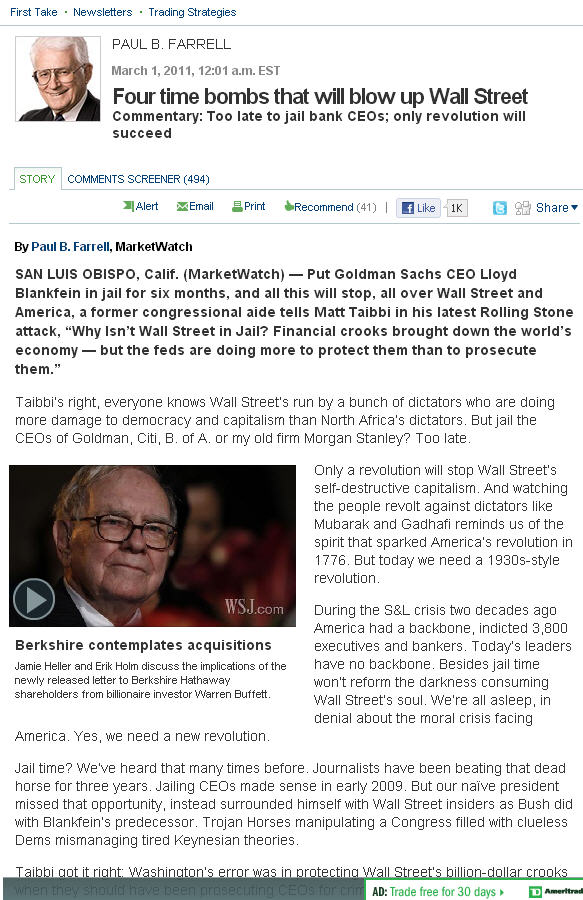
Four Time Bombs That Will Blow Up Wall Street
Four time bombs that will blow up Wall Street – This is one of the more forcefully worded predictions I’ve read of really big trouble coming in the United States. This is published by MarketWatch, which is owned by Dow Jones, which is owned by News Corporation.
I saw Charles Ferguson speak at the Commonwealth Club of California this week. He’s the director behind the Academy Award winning Inside Job movie. He believes many Wall Street players should be jailed.
I agree.
Something tells me Michael Milken would agree as well. I wonder if Milken would have been jailed if he had done what he was alleged to have done recently instead of in the 1980s.
The Four time bombs article I link to here says that during the US Savings and Loan Crisis of about 20 years ago, the US actually indicted 3,800 bankers and executives! I didn’t know that. I remember the S & L crisis… I worked at Cooley LLP during that time, and Cooley did a lot of work for FSLIC, which was the government insurance fund that was made insolvent by the crisis. The agency no longer exists as its responsibilities were added to those of the FDIC.
(As a funny aside, I recall one of the word processor staff members who didn’t know about the FSLIC typed ‘fizz lick’ when she heard FSLIC on one of the dictation cassette tapes she was transcribing. This caused the attorney to burst out laughing when he read the transcript…)
I find it appalling that today’s bank executives are receiving record bonuses when the economy is still in a shambles. Ideally, they would have their pay docked and receive no bonuses while things are so bad. I haven’t seen the movie Inside Job yet, but it’s on my Netflix queue.
CloudFlare – what do you think?

CloudFlare logo
I learned about an interesting company called CloudFlare yesterday, and I wonder what people think about their service. On first look, it seems great. But it also seems almost too good to be true, so I’d thought I’d write about it and see what kind of comments surface.

CloudFlare illustration from CloudFlare.com
Here’s a recent article written by the CEO and co-founder of CloudFlare. This appeared on TechCrunch, and the article generated a lot of comments, many of them suspicious that CloudFlare’s business model is unworkable.
Before I describe CloudFlare, here’s how the company describes its service on its overview page:
CloudFlare protects and accelerates any website online. Once your website is a part of the CloudFlare community, its web traffic is routed through our intelligent global network. We automatically optimize the delivery of your web pages so your visitors get the fastest page load times and best performance. We also block threats and limit abusive bots and crawlers from wasting your bandwidth and server resources. The result: CloudFlare-powered websites see a significant improvement in performance and a decrease in spam and other attacks.
CloudFlare’s system gets faster and smarter as our community of users grows larger. We have designed the system to scale with our goal in mind: helping power and protect the entire Internet.
CloudFlare can be used by anyone with a website and their own domain, regardless of your choice in platform. From start to finish, setup takes most website owners less than 5 minutes. Adding your website requires only a simple change your domain’s DNS settings. There is no hardware or software to install or maintain and you do not need to change any of your site’s existing code. If you are ever unhappy you can turn CloudFlare off as easily as you turned it on. Our core service is free and we offer enhanced services for websites who need extra features like real time reporting or SSL.
Here’s my summary on what CloudFlare does:
Let CloudFlare take over your DNS. They will then copy the static parts of your site to their servers in 5 geographically diverse data centers, and when web visitors try to visit your site, CloudFlare will serve the static parts of your site from their mirror copy that is closest to the web visitor. This will make your website load faster, pleasing your visitors. Since all your traffic is seen by CloudFlare, they can also do some security analysis, and block traffic they deem to be unwanted, saving you from having to do this security analysis yourself. CloudFlare provides this service for free to most users, and makes money by charging $20 a month to some sites that want more features.
I asked one of their engineers how they figure out what parts of your site are suitable for mirroring, and he said they watch how Google caches your site and mimick what Google is doing. If this is cool with Google, I’m impressed with this technique, since CloudFlare doesn’t have to develop, maintain and improve code to figure this problem out itself.
The big issue I see is that $20 a month is a tiny amount of money, and if a big site signed up, I worry that site could bleed CloudFlare to death with bandwidth costs, which CloudFlare apparently is paying itself from the $20 a month.
This reminds me of a story I heard years ago about Purple Communications, the company I sold my first Internet startup to to in the first dot com bubble. Purple was then offering unlimited Blackberry airtime for $59.95 a month, but they had to purchase the actual airtime from actual wireless carriers, since they were a value added reseller. This was viable with modest Blackberry users, but sadly, a few customers were using their devices way too much, and were costing Purple thousands of dollars a month per device! They solved this by changing their terms of service and kicking these unprofitable customers to the curb, but it was a tough lesson to learn and respond to.
I hope CloudFlare doesn’t have to relearn much the same lesson.
I briefly met the CloudFlare founders last night, and they all seem quite sharp, so I think there’s a good chance they won’t fall into this trap without a way out. This company is one I will watch, and I wish them the best of success.
I started my company Silveroffice, Inc. 8 years ago today
I started my company Silveroffice, Inc. on 3/3/03 at 3:33pm.
Today is the 8th anniversary of its founding.
Silveroffice, Inc. developed and launched the first true online office suite in 2004.
SF Made – developing San Francisco’s manufacturing sector

sfmade logo
On a recent visit to TechShop, I encountered a flyer for an organization called SF Made.
Founded just last year, in 2010, SF Made posts the following mission statement on its website:
SFMade’s mission is to build and support a vibrant manufacturing sector in San Francisco, that sustains companies producing locally-made products, encourages entrepreneurship and innovation, and creates employment opportunities for a diverse local workforce.
Here’s the rest of their blurb about themselves from their website’s about us page:
Our vision is a more diverse and sustainable local economy, where companies who design and manufacture products locally thrive, in turn, creating quality jobs for people from all walks of life and contributing to the overall economic and social vibrancy of our City.
SFMade engages directly with entrepreneurs and growing small companies, all of whom are headquartered in and manufacture within San Francisco, offering industry-specific education, networking opportunities, and connecting these companies to powerful local resources. By building strong companies, SFMade helps sustain and create job opportunities for the City’s low-income communities and individuals with less typical education, experience, or skills. We also work with manufacturers directly on workforce issues, including connecting companies to local hiring resources and job training programs and connecting their workers to relevant local resources and assistance.
In addition to working with manufacturers and their employees, SFMade engages with the larger San Francisco community, offering educational workshops, factory tours, and other programs designed to heighten the public awareness of manufacturing, the craftspeople they employ, and their collective role in the local economy. SFMade also collaborates with both the public and private sectors to define and enhance the local infrastructure -from access to capital to industrial land use policy -required to support a vibrant manufacturing sector. In our work, SFMade seeks to develop and share a model for manufacturing incubation that other major US cities can use to catalyze their own local manufacturing sectors.
I am writing about SF Made because I think it’s great there’s an organization encouraging manufacturing in San Francisco. I think San Francisco is a vibrant, fantastic and richly diverse city, and I am thrilled to live here. I believe lots of people think it’s not possible to cost effectively make physical products in San Francisco. I don’t know about the cost effective part, but people certainly make desirable products in the City, like the famous McRoskey mattress, which has been made in San Francisco for 111 years.
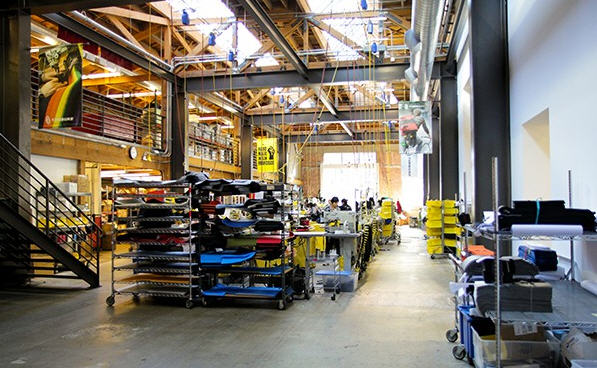
Timbuk2 factory floor
I learned that Timbuk2 bike messenger bags are made in San Francisco. I grabbed the Timbuk2 factory floor picture above from the SF Made website.
One of the best beers I’ve ever tasted is made in San Francisco – Anchor Steam Beer.
SF Made is run by Kate Sofis and Janet Lees. They’re on the list of people I hope to meet this year.
If I start the shipping container eco house business I’ve been plotting, I’ll make them in San Francisco. Why not? I’m making an eco bus conversion in my driveway at home!
An .edu inbound link for this blog, but I’m not Overstock.com!
I was a contestant in the first UC Berkeley Business Plan Competition, which happened in 1999. My company didn’t win anything, but it was still a remarkable experience that changed my life. Because I am so grateful, I have sponsored the competition yearly for the dozen years since. Usually the competition just lists the sponsors, but doesn’t link to them. This year all the sponsors got links! And, to make it even better, all the sponsors are listed on the front page of the bplan.berkeley.edu website. I’m getting daily traffic to this blog from that link… not enough to get me in hot water with Google like what recently happened to Overstock.
I’m happy to be recognized, and I’m happy to help the competition help others move their ideas forward. This year over 200 teams applied, a record. I encourage you to attend the public awards ceremony at 6pm on April 28, 2011 at the Haas School of Business in the Anderson Auditorium.
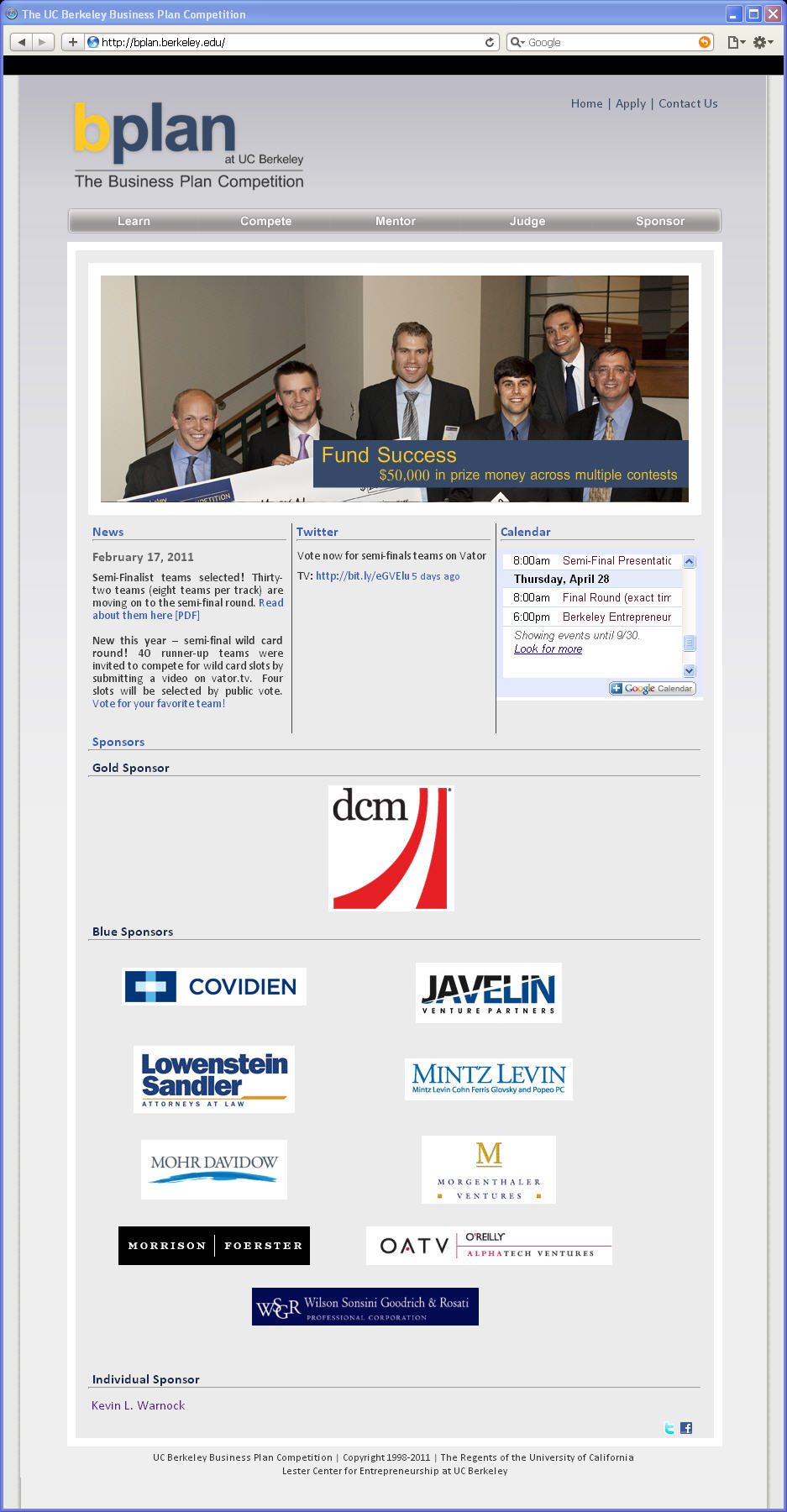
UC Berkeley Business Plan Competition website, Feb 27, 2011
It’s a small world after all

LinkedIn logo
Eric Jensen has been my corporate attorney since 1999. I’ve known him since 1989 when we both worked at Cooley LLP. He still works there. I left in 1994 to become a software entrepreneur. Eric was a newly minted associate when I met him. Now he’s Chair of Cooley’s business department, which last I heard accounts for over half of the 650 attorneys at Cooley. When I was at Cooley the Chair was Tony Gilbert, who was instrumental to my rapid advancement at Cooley. Tony was a powerful guy who got things accomplished. His San Francisco office was directly across the hall from my office on the 19th floor of One Maritime Plaza, so I got to hear him on the phone for hours and hours. I felt like I knew more about his demeanor and work style than many, even though I didn’t work for Tony directly. To this day, whenever I hear Maxim Integrated Products I think of Tony, since that was one of his big clients he spoke with all the time back then. Tony has since retired, and I’ve lost touch with him. Eric and I worked together on the document assembly software I was building while I was at Cooley, and he used to return my pesky numerous phone calls within 30 minutes on average. I’m not surprised he’s risen to such a position of influence, as he worked smart and fast 20 years ago.
I was checking out the Cooley website yesterday and saw that Eric is advising the underwriters in the planned upcoming LinkedIn public offering.
Erika Rottenberg is another attorney now involved with the LinkedIn IPO that I worked with while I was at Cooley. She worked for Frederick Baron while at Cooley, and I sought advice and assistance from Baron on my document drafting software project Eric had also helped me with. I got to know Erika a little bit during that process, and I remember taking an off-site training class with her and a few dozen others one weekend.
Erika is now VP, General Counsel and Secretary at LinkedIn. Erika rode her bike 4,200 miles in 2002!
I am confident the LinkedIn IPO will be a success.
For those who arrived at this post via a search engine and were hoping to see a video of Disneyland’s It’s a Small World ride, I present this high def clip I shot last year with my Canon 5D Mark II SLR camera. The camera is simply world class in low light, so this video turned out pretty well I think.
What should I be doing to increase my readership?

Kevin Warnock, December 25, 2009
I want lots of people to read this blog this year. This blog is moving up in the http://Alexa.com rankings. It was at 12,000,000 or so last year. Yesterday it was at 4,700,000. I’d like to crack the top million this year, but still be able to write about my interests as I do now. I am here to better myself and better the lives of my readers. I want to make new friends, have bigger parties at my house, talk on the phone with more friends more often and generally have a richer and more rewarding life.
This is already starting to happen, and I haven’t even written 100 posts yet, so I am incredible enthusiastic about the future of this blog.
I am not a blogging expert, and I read almost nothing about how to blog to get to where I am today, with about 100 visitors per day on average, without spending any money on advertising.
What should I be doing to increase my readership and increase the number of sites that link to mine?
I only have 2 inbound links, per WordPress, the software I use to host this blog. My work site gOffice has hundreds of inbound links, so I know that I can get that many eventually.
I admire the personal blog by Rick Segal, a former VC and current entrepreneur. He doesn’t post that frequently, but his posts are worth reading. He’s got an Alexa rank of about 1,300,000, which I consider good considering his posting frequency. I’ve met Rick in person about five years back, and he’s a good guy. I wish him great success with his current startup.
For now I am just going to keep writing about my life and my interests, with the aim to write something at least five days a week. I am not going to put out filler though to keep to a schedule. If I really can’t think of something to say, I’ll just be silent that day.
If you have a website and like my blog, please consider linking to it. Introduce yourself and if I like your site or blog, I’ll consider linking back. I’m not going to just do unthinking link swaps, as that’s not helpful to either of us. If I link to you it’s because I think it’s the right thing to do, and I only ask you to link to my blog if you similarly think it’s the right thing to do.
Thanks for reading!
Make refrigeration super efficient worldwide by switching to top loading models
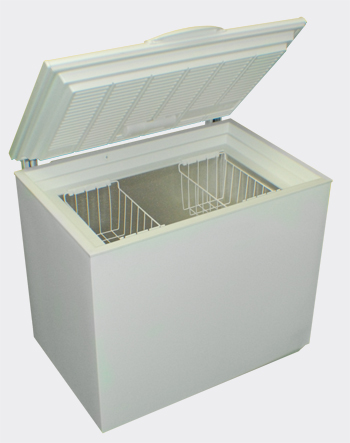
Did you know that you can convert a common chest freezer into an exceptionally energy efficient chest refrigerator? The electricity savings are so great that I think the entire world should make it a top priority to legislate all new refrigerators must be top loading. Why has the world standardized on a system where the cold air falls to the ground every time the door is opened?
Something tells me that if all the world’s refrigerators were top loading it would save more power than all the photovoltaic solar panels ever manufactured. Since chest freezers are cheap, there’s no economic reason not to do this. A chest refrigerator only costs $5 a year in grid electricity to operate.
Yes, kitchens would have to be redesigned to accomodate top loading refrigerators, but the collective power savings probably amount to dozens of full size nuclear power plants.
The appliance industry has been pushing in counter drawer refrigerators at the high end for years now. What I suggest is that chest refrigerators be designed to look like kitchen base cabinets from the front, and that the top be surfaced in the same material used for the kitchen cabinet countertop. This would mean the refrigerator would be accessed by flipping up the countertop, which would be perfectly counterbalanced with a weight on a rope behind the refrigerator, so that the contents could be accessed with just one finger. I’m sure the appliance industry could figure out how to make a combined chest refrigerator/freezer, and each compartment could have its own section of hinged countertop. Note that even granite counter tops can still be used since the counterweight could be made of cement in a flat plate shape. It might be even more efficient to put three or four hinged lids on a horizontal refrigerator/freezer. While the world waits for the appliance makers to construct a horizontal refrigerator/freezer, we can just install separate refrigerators and freezers, side by side, just like we do today with laundry washers and dryers.
To make the contents easy to access, there could be lift out racks, perhaps even motorized for high end units. Yes, there will be challenges to get people used to this kind of food storage, but this technology has been here for decades and the savings are so great that I believe this is among the lowest hanging fruit for efficiency savings in home energy usage. I am nearly certain switching a home to horizontal refrigeration would save more than switching all the incadescent bulbs to flourescent.
Another big benefit is I believe food lasts longer if not subjected to constant temperature fluctuations that result from the vertical refrigerator door being opened throughout the day. Since a vast amount of food is thrown out due to spoilage, switching to horizontal refrigeration might well save food and reduce hunger worldwide.
Yes, I haven’t run the numbers to support these bold claims, but I have a hunch I’m entirely correct. Anyone care to run the numbers and post them in the comments?
I didn’t think up horizontal refrigeration, and I’m not sure who did, but here’s a thoughtful PDF describing the process, written by Dr. Tom Chalko, MSc, PhD.
Chalko maintains a fascinating website about his advanced energy self-sufficient home in Australia. Dr. Chalko inspired me to incorporate a horizontal solar powered 24 volt refrigerator in the RTS bus conversion I am building.
While it’s easy to convert a common chest freezer from Sears or Home Depot into a chest refrigerator, some people want to just buy a finished product. Thankfully, there are already commercially available low power chest refrigerators for sale, including these models by SunDanzer. The prices start at $699 and top out at $1,249 , which are high compared to chest freezers from big retailers, but not out of the question considering that some people spend thousands on wasteful vertical refrigerator/freezers today. Even at their current prices, a SunDanzer chest refrigerator is a bargain since you’ll save dozens of dollars per year in electricity costs. SunDanzer is a tiny niche appliance maker. If Kenmore or General Electric were to start making energy efficient chest refrigerators, I suspect their prices would be lower than their chest freezers today, as people need more refrigerator space than freezer space, so more chest refrigerators could be sold than chest freezers.
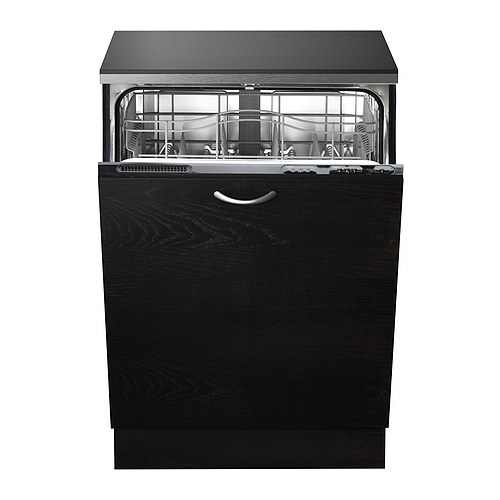
Ikea Dishwasher that may be customized with matching cabinet facing
What’s really needed to make all the above work is that top loading refrigerators must be made sexy and hot, like drawer refrigerators and freezers are today. If you’ve seen the Ikea dishwasher that can be customized with any of the Ikea kitchen cabinet styles, you can envision how attractively top loading refrigerators and freezers could be installed into kitchens. A kitchen would not even appear to contain a refrigerator if installed with matching cabinet facing. If you see a cabinet clad Ikea dishwasher, you can’t tell it’s a dishwasher until you look very closely. Ikea gets a premium price for this dishwasher. I would hope that manufacturers would not overprice their horizontal refrigerators, to speed adoption, but even if they do, that might help get this plan moving, as it will help persuade people this is the next big kitchen innovation they really, really want. Big change happens when people really want it, not because it’s good for the planet.
My new roommates moved in today

Roommates moving In Feb 12 2011
Today my new roommates moved into my house in San Francisco. The picture shows the colorful ‘artists moving’ truck one of my new roommates hired off Craigslist.
It took me two months of work to rent out my three spare bedrooms. I am beginning a grand adventure in sustainable urban homesteading in the heart of San Francisco, and I believe I have found four outstanding individuals to share in this quest.
I rented the master bedroom to a married couple. The husband is a graduate student at San Francisco State University and the wife is completing her residency at a local hospital.
I rented one of the guest bedrooms to a small business owner, and the other guest bedroom to an undergraduate student at San Francisco City College. There are now 3 women and 2 men living here.
All four roommates have a strong interest in growing and raising food. We are planning to cook dinners together two nights a week, which I think will improve all of our cooking skills. I specialize in Chinese and Indian cooking, so I am eager to learn more about preparing other cuisines. Already one of my new roommates has revealed her extensive cook book collection, which she will store in the living room alongside my extensive cookbook collection. I am thrilled because I love cookbooks.
Each rented room has a pet. The house now has 1 cat and 2 dogs. One dog is a Cattle Dog and the other is a Great Dane! I never dreamed I would agree to have a Great Dane live in my house, but this is the nicest large dog I have ever known, and so calm and sweet. I liked the couple, and was particularly happy the husband is studying the molecular biology of fish in graduate school, so he knows vast amounts more about fish than I do. Since the center point for the garden is going to be an aquaponics system, I thought he brought a valuable skill to the table. He also once tried to convert a bus into a motorhome, but had to abandon the project when it got to be too difficult. It was just too perfect to run into a fellow busnut who knows and loves fish, so I had to say yes to the Great Dane. But from what I’ve seen of the great dane so far, she’s very lovable and sweet, and I genuinely look forward to having her here in my home.
The cat and other dog are lovely as well.
I spent today cleaning out the refrigerator and the kitchen cabinets, as I had taken over all the available space during the few months I had the whole house to myself. It was lonely here during that time, and I am really happy to have people living here again. For those who have not heard the sad news, I have decided to divorce my wife, and I have had a process server serve her a lawsuit summons and a divorce petition. We separated on October 25th, 2010, and not long thereafter our roommates Kim and Denise moved out. They were close to my wife, and it made for an awkward situation to continue to have them here. Thankfully, they each decided on their own to find new accommodations. I enjoyed having them as roommates, and I wish them all the best. I loved Denise’s dog Abigail, the nicest dog I have ever known.
I once loved my wife with all my heart, and she was once the most important person in my life. It’s sad that part of my life has passed.
Today is an exciting day with all the moving activity. I am planning to post dozens of blog entries this year about our urban homestead, so please subscribe to this blog if want to learn what happens. If you have experience with aquaponics or urban homesteading, please leave me a comment.
I’m a judge again this year for the University of California at Berkeley Business Plan Competition

I received word this week that I’ve been invited back to be a semi-final round judge for the Business Plan Competition at the University of California at Berkeley.
I can’t remember what year I started being a judge for this competition, but I strongly suspect it was 2005, plus or minus a year or two.
Judging is generally a day long affair in the Faculty Club at Berkeley. I consider it one of the most exciting days of the year. I get to meet 6 to 8 startups, and I get to see them under the pressure of one of their most important presentations they’ve likely given. It’s a really fascinating process, and I am thankful to be included by the student organizers.
I am generally the only judge that’s a practicing tech entrepreneur. The large majority of the other judges are venture capitalists. A few of of the judges are startup lawyers. I’ve made friends with a lot of VCs over the years as a result of the business plan competition. They’re not scary to me anymore.

Auto TB team - Dr. Christopher Rumball, Kelly Karns, Mathieu Michalet and Milena Lazarevska
This year I am judging teams competing in the Products and Services track. I particularly enjoy judging tracks that are not Internet tracks, because I learn more. Two years ago I judged the medical device teams, and had the priviledge to meet the AutoTB team that’s seeking to make a low cost automated digital microscope that can diagnose teberculosis in minutes. I’ve exchanged many emails over the last two years with Kelly Karns, answering her questions, and we’ve become friends. I would likely have never met her if not for the business plan competition. AutoTB won the competition in 2009. Here’s a nice article about AutoTB on CNN.com.
I read the business plans word for word before the judging day, and I take it very seriously. I competed in this same competition in 1999 and I credit it with my later success in selling the venture that competed. I have first hand knowledge of the stakes for the competitors, and I put forth a lot of effort to identify the best plans.
I love helping students, and I think I benefit from helping as much as the students benefit from my help.
