Hacking neighbor from hell
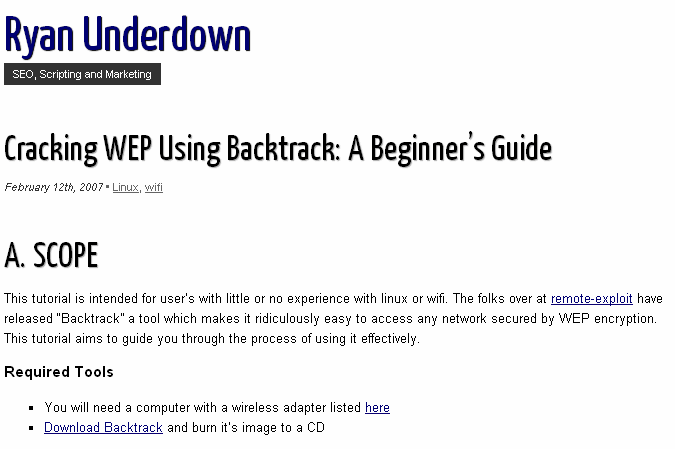
Cracking WEB using Backtrack (image from http://ryanunderdown.com/)
I have four roommates. I love having roommates, especially since we are all interested in urban homesteading.
One of the first things new roommates ask for when they move into my house is ‘what’s the wi-fi password?’
I have to write it down and hand it to them, because I use a complicated password dozens of characters long.
Am I being silly?
I don’t think so.
Have a look at this Wired article entitled Hacking neighbor from hell.
Here’s the first few paragraphs that sumarize this crazy story rather well:
“A Minnesota hacker prosecutors described as a “depraved criminal” was handed an 18-year prison term Tuesday for unleashing a vendetta of cyberterror that turned his neighbors’ lives into a living nightmare.
Barry Ardolf, 46, repeatedly hacked into his next-door neighbors’ Wi-Fi network in 2009, and used it to try and frame them for child pornography, sexual harassment, various kinds of professional misconduct and to send threatening e-mail to politicians, including Vice President Joe Biden.
His motive was to get back at his new neighbors after they told the police he’d kissed their 4-year-old son on the lips.”
Fortunately, one of the victims is a lawyer, and his firm had access to a network specialist that installed a packet sniffer to figure out what was happening. The sniffer logs led the FBI to raid the home of the neighbor, where lots of incriminating evidence was found, including the child pornography the criminal posted in the name of the victim.
This episode reminds me of the 1990 Melanie Griffith and Michael Keaton movie Pacific Heights, where a tenant terrorizes his landlord in an effort to get the landlord to sell the duplex at a low price to the tenant. The tenant stops at nothing, I recall, and even deposited a big box full of large cockroaches into the landlord’s unit via gaps around common water pipes that connected the units. Pacific Heights is one of those movies you remember a lot about even years after seeing it.
Hummer hits school bus

Hummer hits school bus (photographer unknown)
I found this picture years ago. Sadly, I can’t remember where I found it, or I would give the publication credit.
This photo appears to show what happens when you drive your Hummer sports utility vehicle into a school bus.
It sure looks like the Hummer driver was severely injured or killed. I hope I am mistaken.
It sure looks like there were no injuries to the bus driver or any of his or her passengers.
Steve Blank’s Philadelphia University commencement address
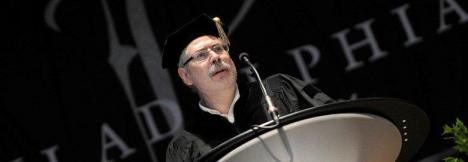
Steve Blank's commencement address May 15, 2011 at Philadelphia University
Here is the best commencement address I have ever heard or read. It’s by Steve Blank. I’ve written about Steve Blank and his writing before.
I consider his Four Steps to the Epiphany book to be the most important book for entrepreneurs to read.
Blank gave this speech May 15, 2011 at the commencement for Philadelphia University.
Here’s one story from the speech that particularly resonates with me. When Blank was a young man he was in the United States military. He volunteered to go to Thailand and he kept volunteering once he got there. His enthusiasm and curiosity paid off, as you’ll see:
“Once again, I was going to see where the road would take me. Volunteering for the unknown…which meant leaving the security of what I knew…would continually change my life.
Two weeks later I was lugging heavy boxes across the runway under the broiling Thailand sun. My job was to replace failed electronic warfare equipment in fighter planes as they returned from bombing missions over North Vietnam.
As I faced yet another 110-degree day, I did consider that perhaps my decision to leave Miami might have been a bit hasty. Yet every day I would ask, “Where does our equipment come from… and how do we know it’s protecting our airplanes?”
The answer I got was, “Don’t you know there’s a war on? Shut up and keep doing what you’re told.”
Still I was forever curious. At times continually asking questions got me in trouble…
once it almost sent me to jail…
but mostly it made me smarter.
I wanted to know more. I had found something I loved to do.. …and I wanted to get better at it.
When my shift on the flightline was over, my friends would go downtown drinking. Instead, I’d often head into the shop and volunteer to help repair broken jammers and receivers. Eventually, the shop chief who ran this 150-person shop approached me and asked, “You’re really interested in this stuff, aren’t you?” He listened to me babble for a while, and then walked me to a stack of broken electronic equipment and challenged me troubleshoot and fix them.
Hours later when I was finished, he looked at my work and told me, “We need another pair of hands repairing this equipment. As of tomorrow you no longer work on the flightline.” He had just given me a small part of the electronic warfare shop to run.
People talk about getting lucky breaks in their careers. I’m living proof that the “lucky breaks” theory is simply wrong. You get to make your own luck. 80% of success in your career will come from just showing up. The world is run by those who show up…not those who wait to be asked.
Eighteen months after arriving in Thailand, I was managing a group of 15 electronics technicians.
I had just turned 20 years old.”
I think most success people have is the result of them doing more than is expected, and I admire Blank for selecting such a concrete example from his past to illustrate this point.
While I’m mentioning important books, the book I consider the second most important for entrepreneurs to read is The Entrepreneurs Guide to Business Law, by Craig E. Dauchy and Constance E. Bagley. I used to work with Dauchy at Cooley LLP. He’s one of the most respected members of that firm, so I place a lot of faith in what this book has to say.
Time lapse movie of the final Space Shuttle launch
Here’s an interesting video of the final United States NASA Space Shuttle being moved from inside to the launch pad and then being launched. The launch took place July 8, 2011.
Here is the accompanying webpage from The Houston Chronicle newspaper.
Canon and Nikon lenses on the Apple iPhone 4 smart phone
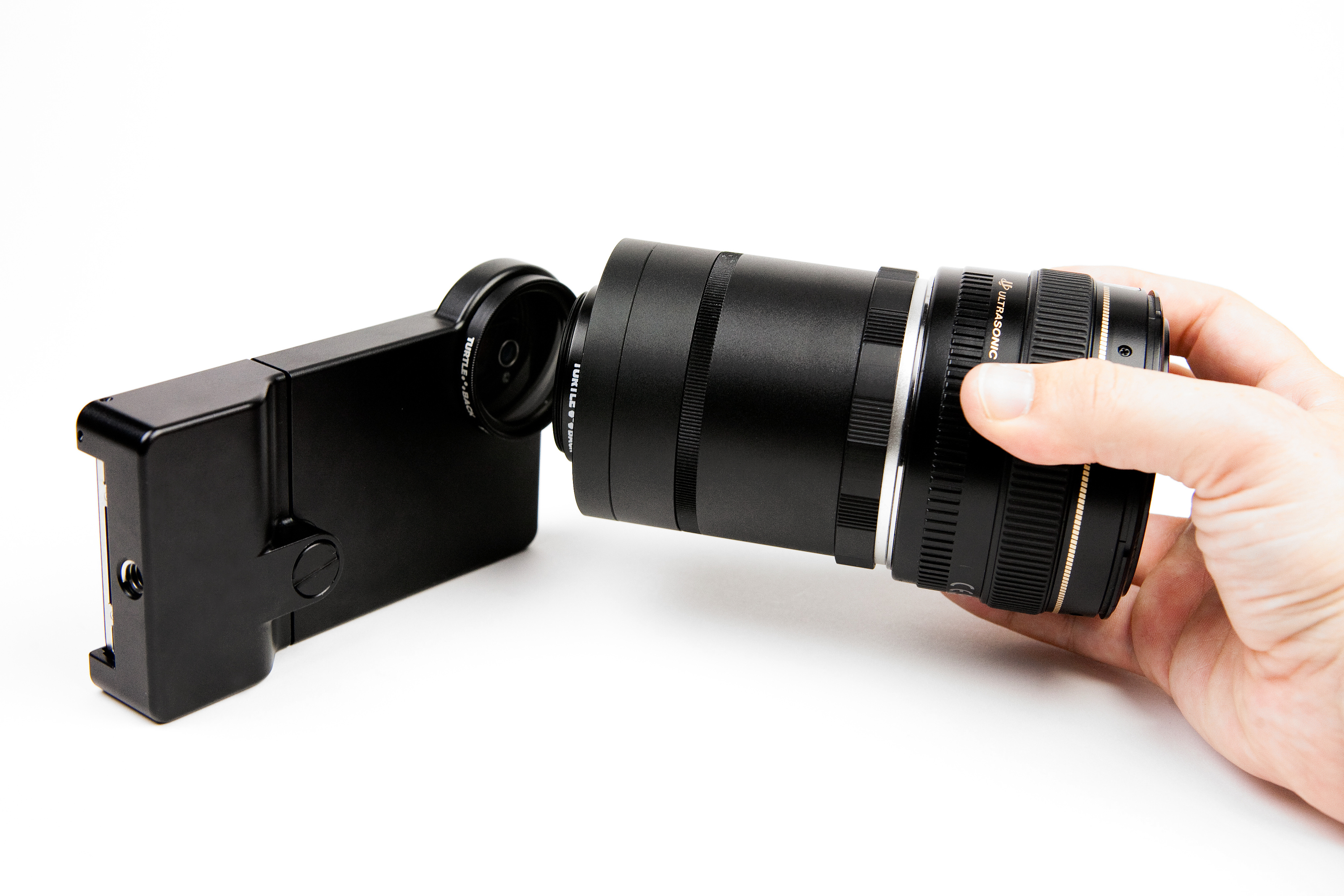
Photojojo iPhone SLR lens mount case
I take a lot of pictures, and I have some nice Canon and Nikon SLR camera lenses.
Here is an Apple iPhone case by Photojojo that will let me attach my SLR lenses to an iPhone 4. The big lens is positioned in front of the small iPhone camera lens, and the two lenses work together to allow the iPhone to take advantage of the capabilities of the larger lens.
This iPhone gadget should be just the thing for iPhone cinematographers that want to promote that they are using an iPhone for all the attention that will grab.
I suspect such cinematographers will downplay that they are using exotic SLR lenses that weigh and cost much more than the entire phone.
I learned about this gadget on TechCrunch.
I will not buy this case since I have a Canon 5D Mark II, which takes better video than I’ve seen except on high definition television stations. But it’s a cool product, and I’m charmed by it, which is why I’m writing about it today. I hope Photojojo sells a lot of these cases.
Here’s a closeup picture taken with an iPhone 4 and an SLR macro lens.

Apple iPhone photo taken with Photojojo case and SLR macro lens
Tilapia in San Francisco?
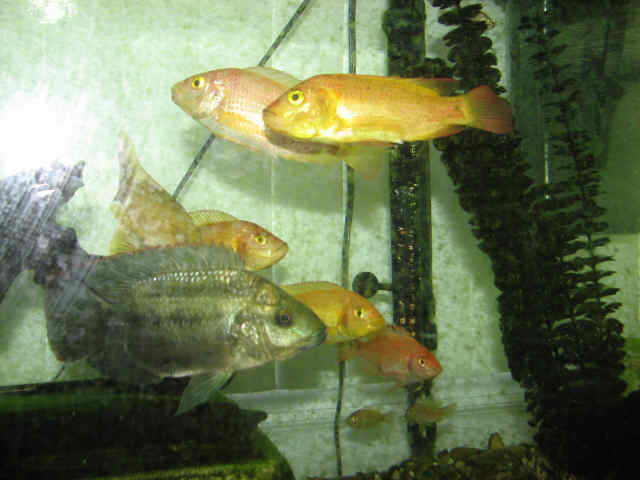
Tilapia in an aquaponics system (photo by http://tilapiafarmingathome.com)
I am finding it difficult to learn for certain if I may raise Tilapia fish in my aquaponics system in my backyard in San Francisco, California.
The California Department of Fish and Game website is not helpful, because it doesn’t appear to address aquaponics, where the fish are kept in an enclosed aquarium, not in a pond, wetland, river, lake or ocean.
I have found websites that suggest I may raise Tilapia anywhere in California provided I select the correct type of Tilapia. One such website, Tilapia farming at home is clear on this subject, but even so, I want to be sure I comply with the law.
Governments can hand out severe punishments for raising Tilapia where not allowed. I watched a DVD about aquaponics in Australia, and the fine for having a dead or alive Tilapia fish in the wrong part of Australia is over $100,000 Australian dollars!
The World’s greatest light bulb
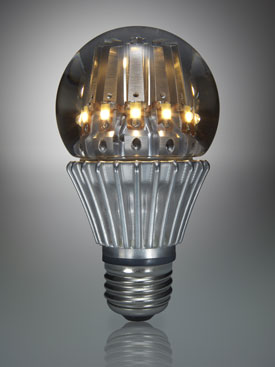
Switch LED lightbulb
I just read a Slate article that was so enthusiastic about a product I thought I was reading the Hammacher Schlemmer catalog.
The World’s greatest light bulb — Dump your fluorescents and incancesdents for this amazing new LED bulb reads the article title.
Wow, that’s a powerful endorsement.
Here’s the key paragraph from the story:
“Switch Lighting claims to have solved all of those problems. When I arrived at Switch, Brett Sharenow, the company’s chief strategy officer, showed me two lamps. Inside one was a standard 75-watt incandescent bulb. Switch’s 75-watt replacement bulb, which uses only 16 watts of power, was plugged into the other. The lampshades prevented me from seeing the bulbs directly—I couldn’t tell which lamp contained which bulb. When Sharenow turned on the lamps, the light from each lamp looked identical. The moment was completely undramatic, and that was the point. Switch has spent years developing bulbs that produce something thoroughly unexceptional—light that looks exactly like what we’re used to.”
Very sadly, there are no pictures of these two side by side shaded bulbs to prove the writer’s point. Perhaps there’s a photo embargo until the bulbs hit stores later this year, in the Fall of 2011.
According the the story, each bulb will cost about USD $20 or so and last 20,000 hours.
The bulbs are made by Switch Bulb Company, and are called SwitchXX where XX is the wattage of an incandescent bulb that puts out the same amount of light as the LED bulb. For example, a Switch100 puts out the same amount of light as a conventional 100 watt incandescent bulb.
I’ve installed dimmable fluorescents in all the can lights in my ceiling, and they are far better than incandescent bulbs, and use far less power. I pay about USD $13 for each bulb, so I can see spending USD $20 a bulb for these LED bulbs, which should last much longer than a CFL bulb.
I hope Switch Bulb Company later offers a reflector flood version of its LED bulb so I can replace my existing ceiling installed reflector CFL bulbs.
I love the last name of the Chief Strategy Officer of Switch — ‘Sharenow.’
Bicycle conversion to bicycle-home
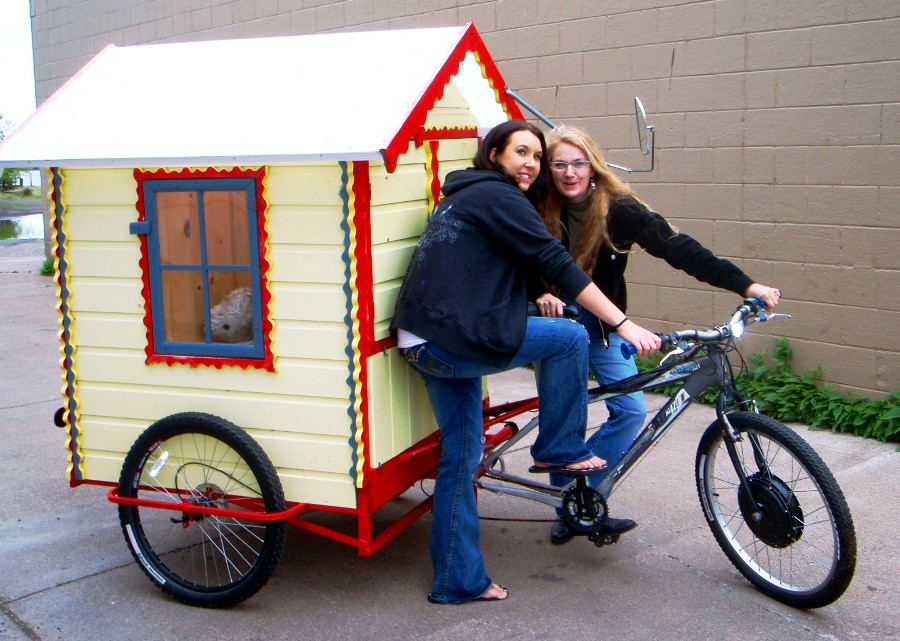
Bicycle house with Mandy and Anna from the Grand Marais Visitor Info Center
As you know, I’m a big fan of bus conversions, that is, commercial buses that are outfitted with living quarters and retitled as motor homes.
One of the downsides of bus conversions is they consume diesel fuel. Yes, if you travel with a group and avoid hotels, restaurants and convenience stores, they are probably the most efficient form of travel and on the road sustenance.
Here’s a greener solution I discovered today, a ‘bicycle conversion.’ It sure is cute, don’t you think?
It appears to have an electric motor in the front wheel hub, and I presume there are batteries in the house. I’m surprised there aren’t solar panels on the roof to charge the batteries.
This bike was custom built by Superior North Outdoor Center & Bike Shop, of Grand Marais. MN. The house was built by Ken & Molly Hoffman. Here’s a video of Anna Klobuchar briefly riding the bike house, courtesty of the Velomarais bike shop website.
While this looks too small to sleep in, I don’t see why the house couldn’t be lengthened. Yes, it would get heavier, but perhaps more batteries could be included, and perhaps two of the wheels could be motorized. I’ve seen some extremely long two person bikes with solar panels at Maker Faire, bikes that are longer than this house would need to be even if made long enough to sleep in. What a conversation starter this would be for someone to bike across a country in. The rider could blog the entire way, and I suspect he or she could find unlimited front or backyards to camp in free of charge, just by soliciting invitations on their blog. A few choice ads on the outside of the house and bike might even pay for the incidentals required along the way. I love it!
Apple patent pending for technology to block live event video capture
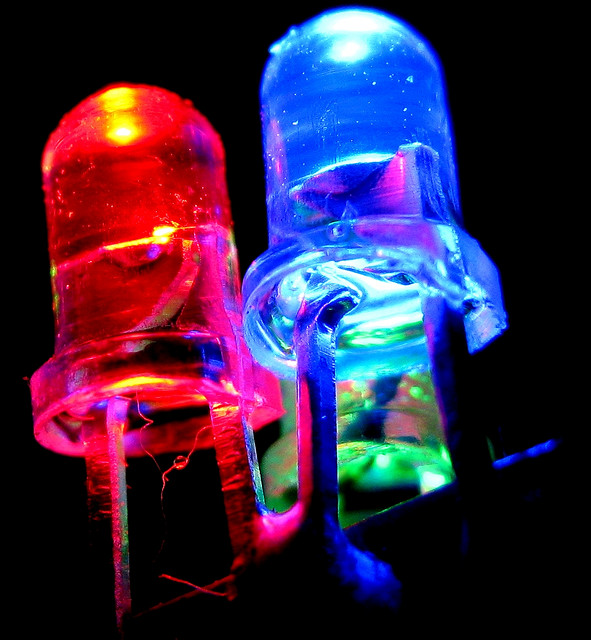
LEDs by Flickr user flakeparadigm
According to this Fox News story New Apple Technology Stops iPhones From Filming Live Events, Apple has filed a patent on technology to make it impossible to capture live video at protected live events.
The Fox News article explains the technology in a way that doesn’t make sense to me. I think what the article should have said is:
“A light emitting (LED) diode on stage at an event can blink in such a way as to alert the iPhone camera that recording is not allowed. The LED can emit invisible infrared radiation, so the audience won’t notice any difference in the event with their eyes.”
I am very suspicious of the Fox News technology explanation that says the iPhone will emit radiation that infrared sensors on stage will capture and react to. I think that’s implausible, because the iPhone would have to have a strong infrared LED in it, and over time that would diminish battery life. Also, it would mean the system would not work at long distances, such as stadium shows where the videographer might be a city block away. I don’t think LED remotes work over that distance. But a powerful infrared LED on stage could signal all the iPhones in the venue, and power usage wouldn’t be an issue because that LED could be plugged into AC power.
However it works, I applaud Apple for thinking their idea up. It’s a good and clever idea. I wish I had thought of it.
I think Apple could and should take this idea a few logical steps forward. Perhaps they have developed these plans but have not yet publicized them. I will detail my plans here, and if Apple should want to use them and they haven’t thought of them already, they can credit me and send me a new iPhone for life, as compensation.
1. Apple should not disable the capture of video. Instead it should offer to sell the user the ability to capture that event for a price, charged right there using Apple’s ‘in app’ purchase mechanism. This fee can be split with the venue and performer(s), using the same 70%/30% split people hate and love, respectively. The artists hate it and Apple loves it, I suspect. The video recorded should contain the serial number of the phone embedded into the video image in a way that is not visible to the eye but can be easily read by software. Then, if the video is posted online publicly, that user can be tracked down and charged more, perhaps even a lot more, to discourage them from doing it again. To make the serial number unremovable, it could float around the image from frame to frame, and change size and font. To take it out would take so much work as to be impractical.
2. Apple should apply this feature to all controlled access events, not just live events. Thus, this technology could be used in movie theatres to make it impossible to bootleg a movie being projected on screen. The phone could display a message offering the user the chance to buy the DVD and have it delivered the day it goes on sale, for example. It could offer the eager potential bootlegger the opportunity to ‘Like’ the movie on Facebook, building on the fan’s just demonstrated enthusiasm for the movie. Apple should resist any temptation to use the video attempt to turn the person over to the police, which it could do by having that phone call the police and use a recorded message to alert them that a Federal crime is in progress. Convicting fans is not good policy. Selling movies and related merchandise to avid fans is good policy.
3. Building on the last point, this technology could be used to prohibit video recording in airports, on nude beaches (with really bright LEDs on posts?), in bathrooms, locker rooms and even in private homes. If Apple’s technology could get incorporated into all video cameras, celebrities might worry a little less about being surreptitiously recorded in a compromising position.
While writing this post, it occurred to me that all audio recorders could incorporate similar technology, with similar benefits, as follows:
The audio feed for an event could contain an inaudible signal that the recorder could decode and act upon. The device could offer to permit recording for a fee, and the serial number of the device could be embedded inaudibly into the stream, to guard against public distribution. Or, for simpler devices like dictation recorders, the device could simply refuse to record.
This is generally how the old MacroVision anti piracy technology for VHS video tapes worked. A signal on the original didn’t disturb the picture when played back. But if you tried to record the signal to another VCR, that VCR would react to the signal and degrade the copy so much it was valueless.
http://nasa.gov doesn’t resolve!
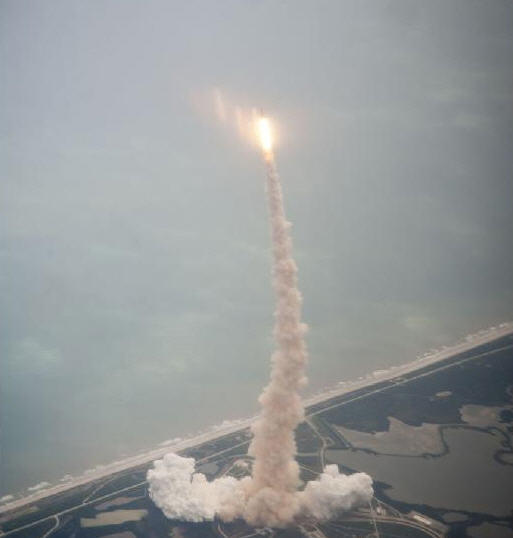
Final shuttle launch from above, July 8, 2011
Earlier today while writing my blog post about the final Space Shuttle launch, I discovered that NASA, for all its space age technology, apparently hasn’t set up its website correctly as most organizations do.
In some browsers if you leave the http://www. off the front of nasa.gov, you won’t get to the website.
I tried this in disbelief in FireFox, Internet Explorer and Opera, and they all failed, so I think it’s a website configuration error.
In Safari, you can type just nasa.gov in the address bar and reach the website. But if you type http://nasa.gov, it won’t work, whether on a PC, a Mac or an iPhone.
In FireFox, Opera and Internet Explorer, you can’t type either nasa.gov or http://nasa.gov into the browser address bar to get to the site.
http://www.nasa.gov works in all the browsers I tried.
Try it yourself with these links:
I haven’t encountered this kind of misconfiguration on such a major website in many years. Hopefully NASA will see this post and make the fix as soon as possible.
