Aquaponics
I learned a new word today: Aquaponics
Aquaponics is a way to grow vegetables with very little water in very little space in a very short amount of time.
The key element that makes this possible is that the vegetables are grown in harmony with a tank of edible fish. The fish tank water is used to flood the vegetable growing containers multiple times per day. The growing containers then drain slowly back into the fish tank. The plants take up the rich nutrients in the fish tank water, and they grow really well and really quickly as a result. The process also cleanses and aerates the water, so the fish are happy they have clean water to live in.
No outside inputs are needed besides water to top off the system for the water lost to evaporation, and fish food to feed the fish. The fish tank density is high, at about a pound of fish to each gallon of water. The fish grow quickly as well in this system.
I found a website dedicated to home aquaponics installations at BackyardAquaponics. There is also a magazine called Backyard Aquaponics Magazine. Their first issue is free as a PDF file here.
I never knew that you could farm your own fish at home, and in large enough quantities that you would be eating fish pretty often with a medium sized system.
I’ve now added this to my long list of projects I’d like to pursue.
I am selling my 2001 BMW 525i sedan
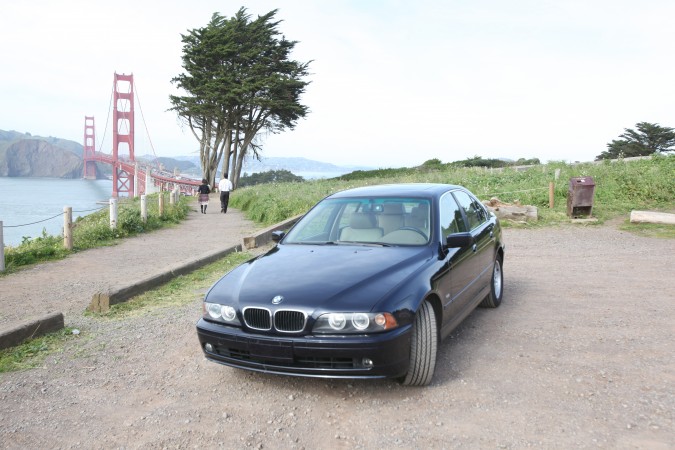
Kevin's BMW 525i in front of Golden Gate Bridge
My 2001 BMW 525i is up for sale on Craigslist. Here are some pictures I took of it yesterday by the Golden Gate Bridge in San Francisco, California. I paid my mechanic to do a pre-sale inspection, and it needs brake pads, a $5 seal and a new lens for the driver’s side front parking light. The car has 89,890 miles on it and is in very nice shape. It runs very well, and cosmetically I would rate it very good. The tires are Michelin, and appear to have 80% of their tread life remaining. The full size spare has never been used as far as I can tell. The car is in my garage at my home, and is available for viewing. I have the service records since I bought the car, and I always take it in to be serviced at a specialist shop that works only on German cars and comes well regarded on Yelp.com.
This is the best car I have ever owned, and I will be sorry to see it go. My wife wants a new car.
With regard to price, I am asking $8,995, to reflect the outstanding condition of this car.
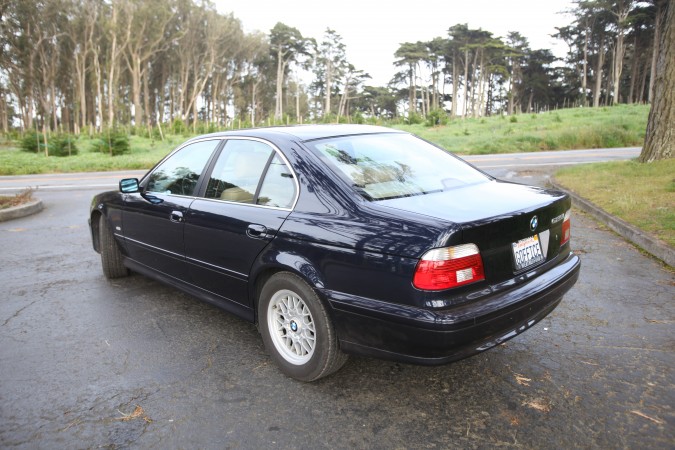
Kevin's BMW 525i in San Francisco Presidio
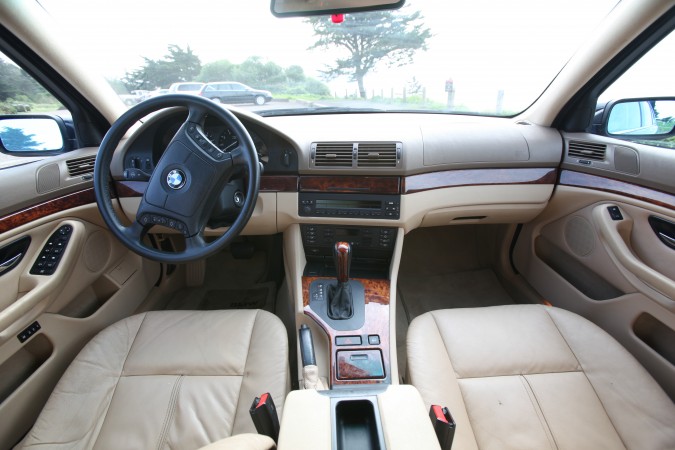
Interior of Kevin's BMW 525i
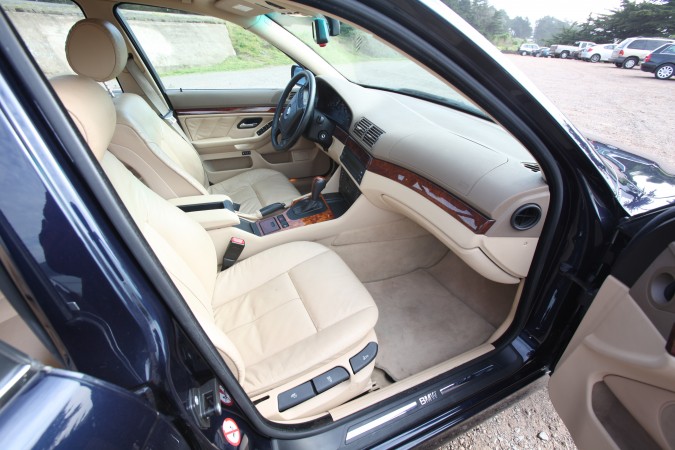
Interior of Kevin's BMW from passenger door
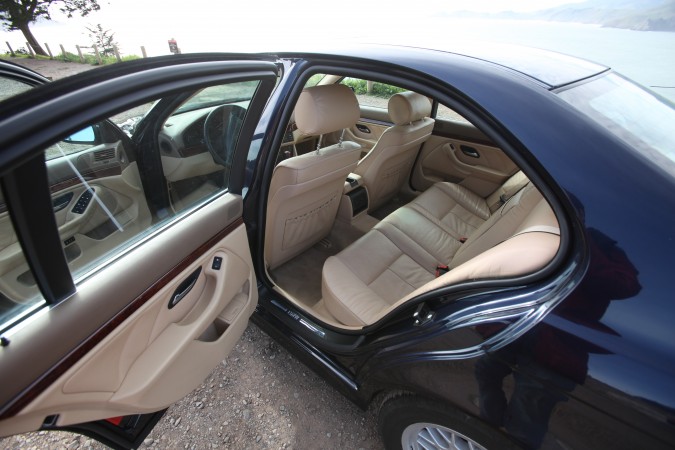
Interior of Kevin's BMW 525i from rear driver's side door
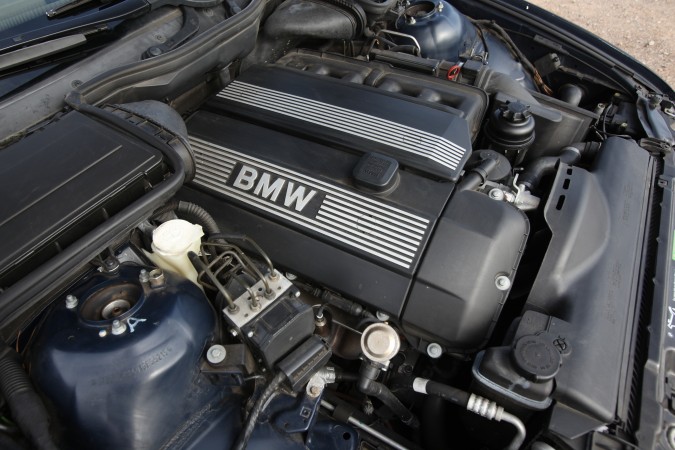
Engine compartment of Kevin's BMW 525i
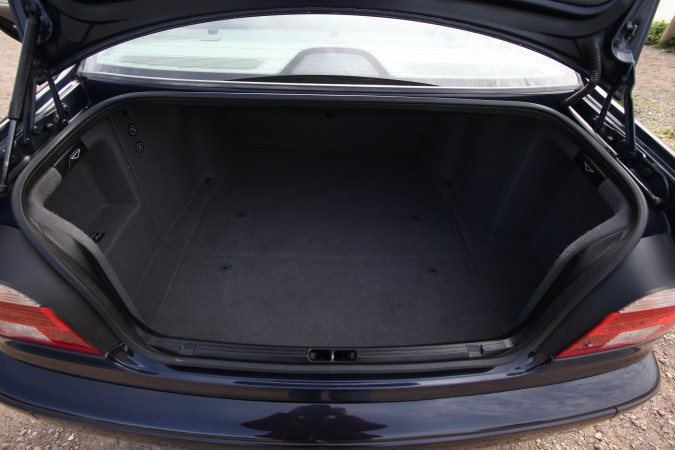
Trunk of Kevin's BMW 525i
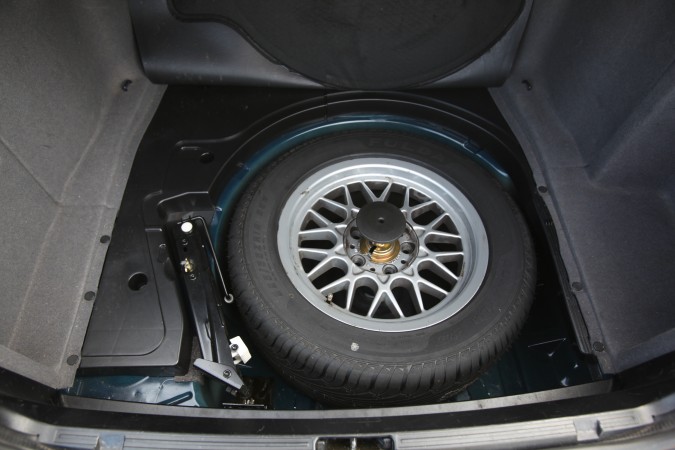
Spare tire for BMW 525i
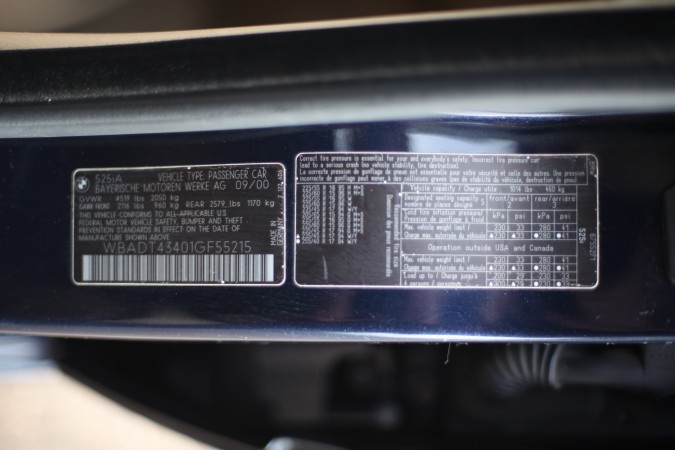
VIN plate for Kevin's BMW 525i
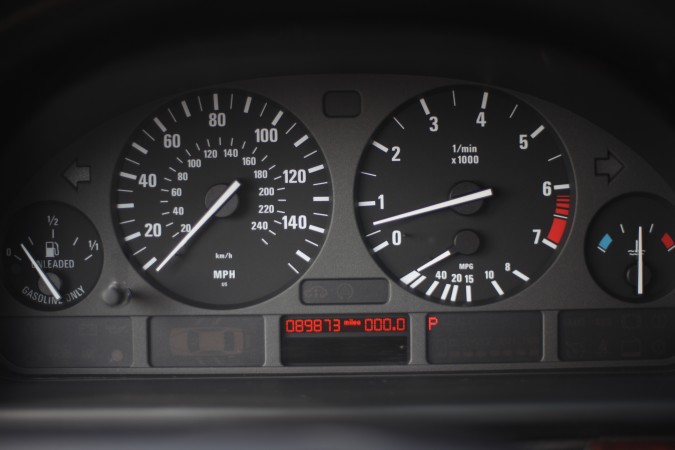
Odometer for Kevin's BMW 525i
Exterior rear view mirror for BMW 525i
Interior door latch for BMW 525i
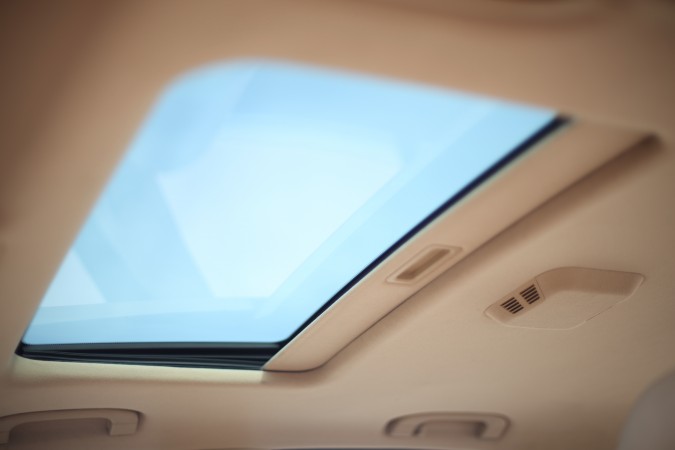
Sunroof for BMW 525i
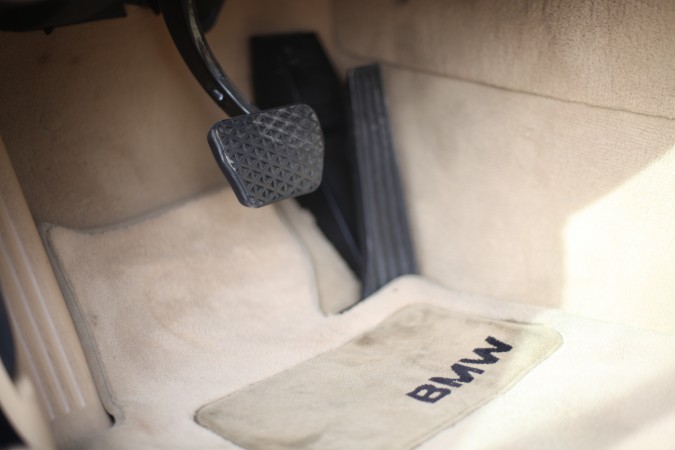
Brake and gas pedals for BMW 525i

BMW 525i audio system
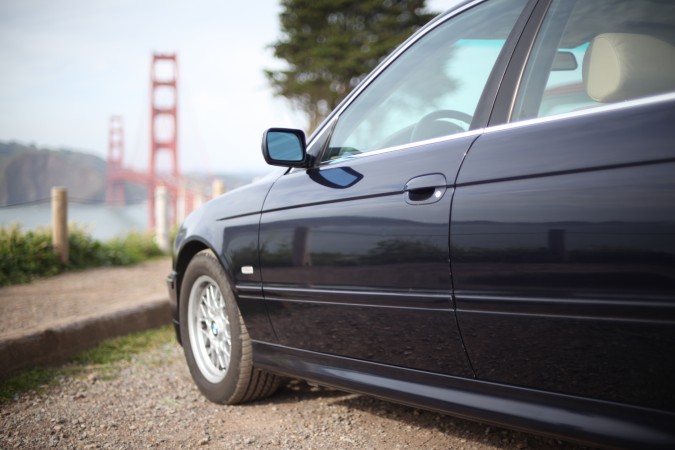
BMW 525i close-up with Golden Gate Bridge in the distance
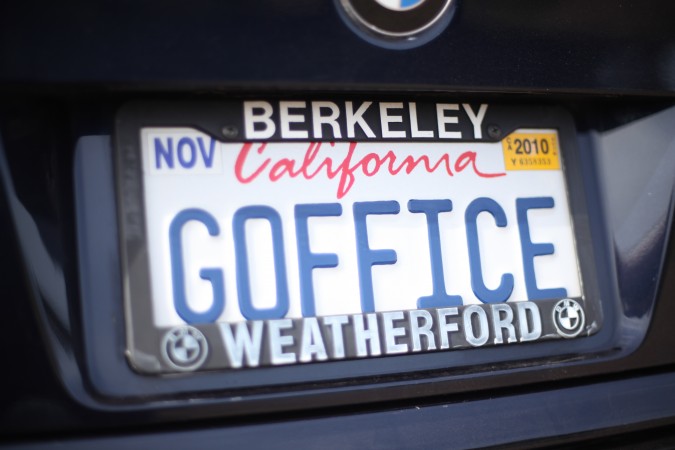
Kevin Warnock's gOffice license plate
Canon DSLRs are serious tools for video
I was looking at videos tagged with 5DM2 on Vimeo today. Vimeo hosts the videos on this blog, and can be thought of as a high end YouTube without ads. 5DM2 is short for Canon 5D Mark II, the digital still camera that shoots outstanding video as well. It’s the camera I use for the stills and video on this blog.
I came across a thought provoking video tonight that shows a Canon 7D matched up with Panavision lenses. Panavision lenses are for Hollywood style movie cameras. Panavision rents rather than sells their cameras, and the lenses can’t be rented without a camera, so it’s unclear how likely it will be for anyone to actually use a Panavision lens with a Canon camera. Also, if one were able to buy a Panavision lens, I suspect they would cost as much as a new car each.
The Canon 7D shoots at a lower resolution than my camera, but it shoots at 24P, while my camera only shoots at the video rate of 30P. Serious film fans mostly prefer 24P, which is the rate film motion picture cameras shoot at. The video from the 7D thus looks more film like than video from the 5D Mark II. I prefer the later, as I also shoot stills, and the 5D Mark II shoots at 21 megapixels and has a full frame sensor, while the 7D has a cropped sensor with a lower number of pixels.
This 7D/Panavision experiment was conducted by Zacuto USA, which rents and sells professional motion picture equipment.
Here is a simply outstanding clip of the results that were obtained with the 7D/Panavision rig. This clip has all the quality of a major Hollywood blockbuster from what I can see on my laptop. The low light capability of the Canon DSLRs are amazing.
My secret hobby of converting a bus to a motorhome
I have a hobby that I’ve been shy about disclosing. But, I have come to regard this hobby as vital research for a venture I would love to start, low cost housing built from ocean shipping containers. Such housing is available in Europe and many other parts of the world, but it’s rare in the United States.
My ‘secret hobby’ is converting commercial buses to self-contained residential dwellings on wheels, commonly referred to as bus conversions.
The link between bus conversions and shipping container homes is that both domiciles are long narrow boxes made of metal. A bus conversion is the more demanding housing type, because on a bus, one has to install all the utilities that a fixed dwelling can outsource to the city or town. So if I can build a bus conversion, I can build shipping container housing. This turns my interest in buses into legitimate research.
When I was a kid, I dreamed about camping in a motor home or trailer. My parents didn’t care for this idea, and as a family, we only went camping in tents.
One of the first motor homes I remember was the Winnebago Brave. This model had a distinctive silhouette unique to this model.
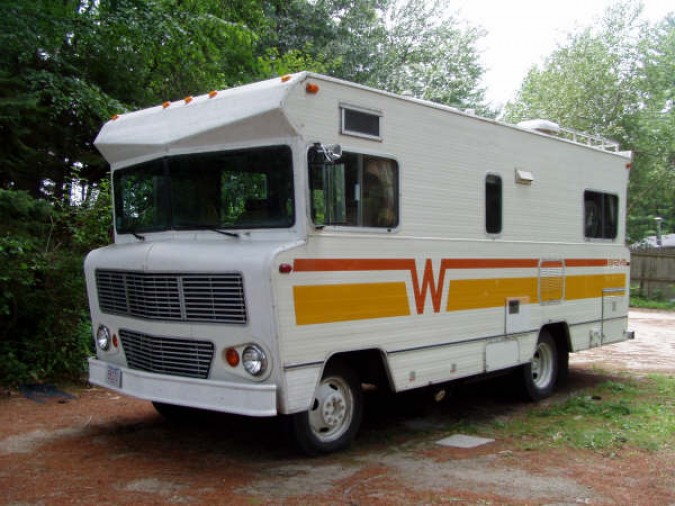
Winnebago Brave motorhome from the 1970s
The next motor home I remember was the GMC motorhome. Years ago, my grandmother Elsie Battaglia owned a beach front house in Seal Rock, Oregon. Her next door neighbor bought a brand new GMC motor home, and I fell in love with it. I recall the price of $30,000 vividly, because when grandma sold her house a few years later, she got $25,000 for it. So this motor home cost more than a beachfront house did. The GMC motor home was very expensive when new, and today, restored models from that time also cost about $30,000 and can sell for over three times that if in really fine condition. What I liked about the GMC was its curvy and unified look. It was as far from a rolling box as anything other than an Airstream trailer. The GMC also had three axles, which made it look very serious, like a Greyhound bus. Very few other motor homes had or have three axles, and I know of no other motor homes as small as the GMC that have three axles. Although the GMC seemed huge to me when I was a kid, today it would be classified as a small motor home, at just 23 to 26 feet long, depending on the version.
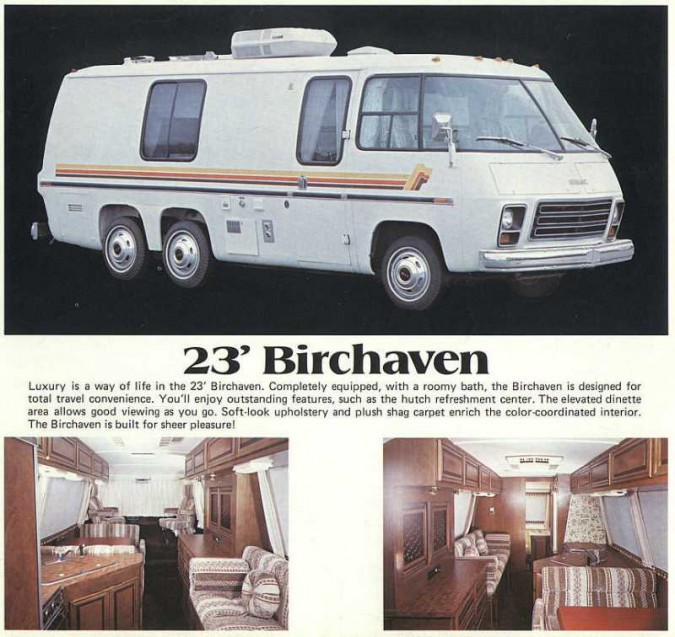
GMC Motorhome from 1970s. This is the 23 foot long Birchaven model.
I have a bus conversion that I bought already converted. It’s a 1967 MC-5a model from Motor Coach Industries, currently the largest manufacturer of commercial highway busses in the United States. I bought my conversion in 2001 from John Ridly of Santa Rosa, California. My dream at that time was to drive to New York City over a period of months to really see the country first hand. In 2002 I made the trip. I made the significant mistake of traveling in July and August, when it was just too hot to be traveling in the particular conversion I had bought. But I still enjoyed the trip, and I’m glad I took it. Fuel was only about $1.75 a gallon then, thankfully.
I videotaped the entire drive from San Francisco to New York City using a video camera I mounted in the passenger window. I stopped hourly to replace the Mini DV tape in my camcorder. I brought a global positioning receiver with me, and I videotaped the screen showing my location at the start and end of each video tape. I did this so I could plot the trip on a map one day.
I mounted the camera on a shock mount that I made to smooth out the image. I plan to edit the 90 hours of footage into a 91 hour movie I will post on this blog. This is a big project, and I’ve never watched the 90 hours of tape yet, so please don’t hold your breath waiting for the movie to appear here. I kept the camera rolling every minute I was driving, with the thinking that the tape may be very boring now, but very interesting far in the future, where people could see all the funny stores, price signs and driving habits of the day.
I was drained of energy when I returned from my two and a half month cross-country journey. It was just so hot that I couldn’t sleep some nights, as I could not run the generator through the night because it was not sound proofed, and it was located under the bed in the back of the conversion. I also did not have a ceiling fan, which would have helped a lot. I put the bus into storage for a couple of years after I got home, and it was covered with green moss when I finally took it out of storage and re-registered and insured it. It took two days to scrub clean. I moved it out from under the tree I had parked under, and now it does not get moss on it when parked for long periods.
When I met Monika, the woman I would later marry, I hesitated for a couple of months before I told her about my bus. I told her when we were staying at her parent’s vacation cabin three hours east of the Bay Area. I told Monika I had a ‘vacation home’ as well, but that it was on wheels. Thankfully, she wasn’t freaked out, and she agreed to go on trips with me. We went to Monterey, California and Yosemite National Park in California, among other destinations.
Fuel prices rose, and I felt guilty about driving a 40+ year old bus that gets just 6.4 miles to the gallon. Old buses have two-stroke engines, which are dirtier than modern four-stroke engines found in all current trucks and buses outside of the military, which still uses two-stroke engines because they are supposed to be more dependable in wartime because they more frequently contain no electronic controls that could be damaged by electronic warfare.
I decided to upgrade to a modern four-stroke engine bus with modern emission controls, and will write about the choice I made in an upcoming blog post.
Disneyland Vacation
I just got back home from a weekend at Disneyland park in Anaheim, California. My wife Monika, her parents, her brother and her brother’s girlfriend were there too. This was my first time at Disneyland with Monika’s family. We stayed at the Candy Cane Inn, which is a five minute walk from the front gate of the park.
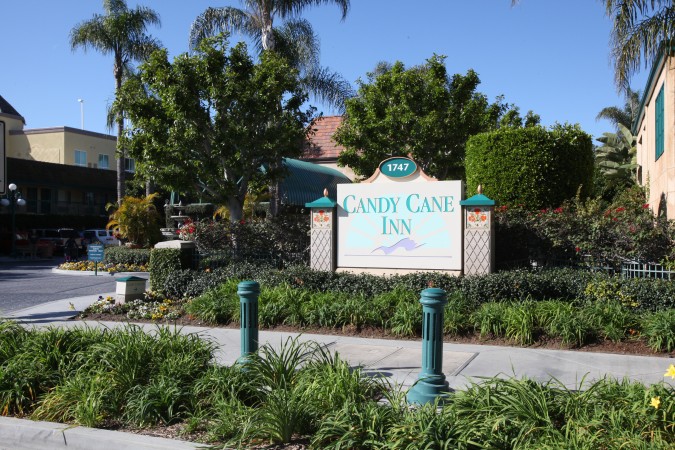
Candy Cane Inn, Anaheim, California USA, February 7, 2010
Monika and I have been to Disneyland before, just the two of us. We went there on our first vacation together in 2006, so it holds a special place in our hearts. I wasn’t a fan of Disneyland before I met Monika, but she has shown me its charms. In fact, Monika signed me up for an annual passport this trip, and I now have an ID card in my wallet with my picture on it, like a Costco card. Yikes.
I decided to bring my camera with me – not my point and shoot, but my good Canon 5D Mark II that shoots outstanding video. Here are a few of the videos I shot. The first one if of the “It’s a Small World” ride. Since this is a peaceful slow moving ride, I just kept the camera on for the entire ride. I used a wide angle lens, and the result was pretty good I thought.
This next video I shot on the large Carousel.
This next video is of a parade of sorts. It’s not really a parade, as the performers move into position and then perform an extended show. Then they move a block or so away and do the whole extended show again. I think there are three such shows in a row, and the sets of shows happen twice per day. The show is called Celebrate or something similar. It was entertaining. There is a segment where the performers are on stilts. Have a close look at the stilts, which have a large area of contact with the ground. They look much safer than traditional wooden stilts.
I got some good stills as well, including this one of the boarding area for the Space Mountain indoor roller coaster. This was a time exposure, since it’s dimly lit. Note how the roller coaster car is blurred as it was just coming to a stop when I took this.
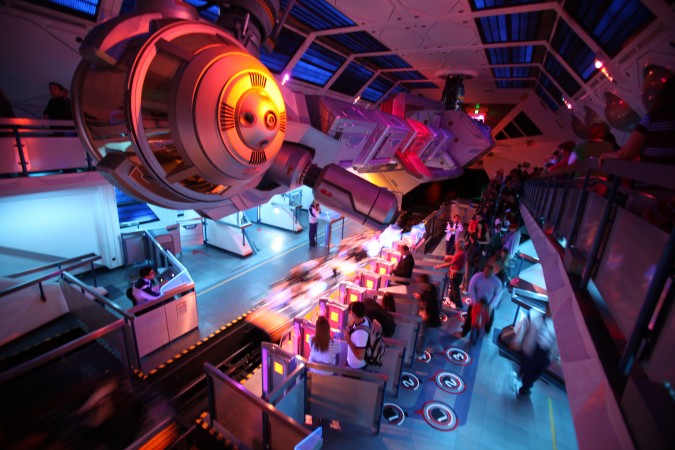
Disneyland Space Mountain roller coaster boarding area, February 6, 2010
I love buses, even Disneyland buses. I got to ride in the front seat right next to the driver, in the double decker Disneyland bus inside the park. This bus is just for fun, as it never goes faster than five miles per hour, so the lack of wind protection for the occupants upstairs is acceptable.
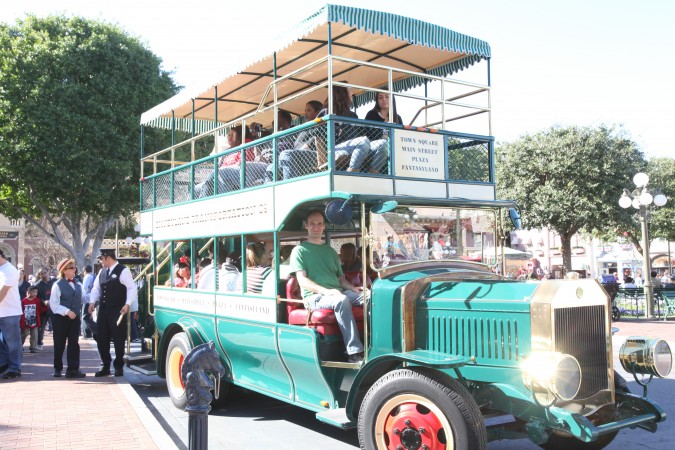
Disneyland double decker bus with Kevin Warnock in front passenger seat, February 7, 2010
Of course I shot video of my ride on the Omnibus, which you can see below.
Here’s a nice shot of me with my wife Monika, in a pink tea cup.
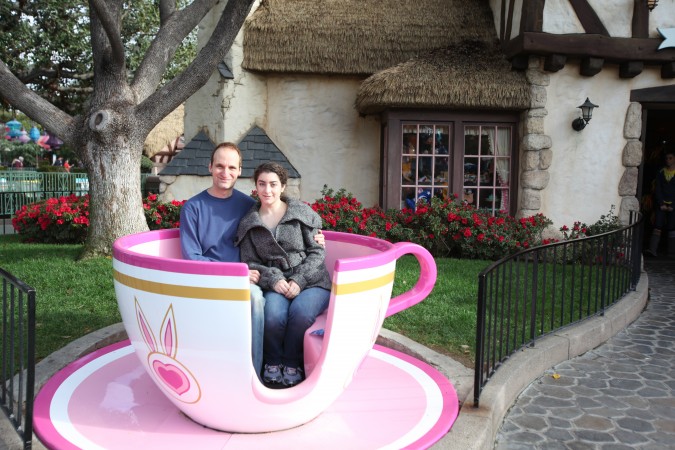
Kevin Warnock and Monika Varga in Disneyland tea cup, February 6, 2010
I’m looking forward to my next trip to Disneyland, which surprises me.
Dinner for Jerry Engel of The Lester Center at UC Berkeley
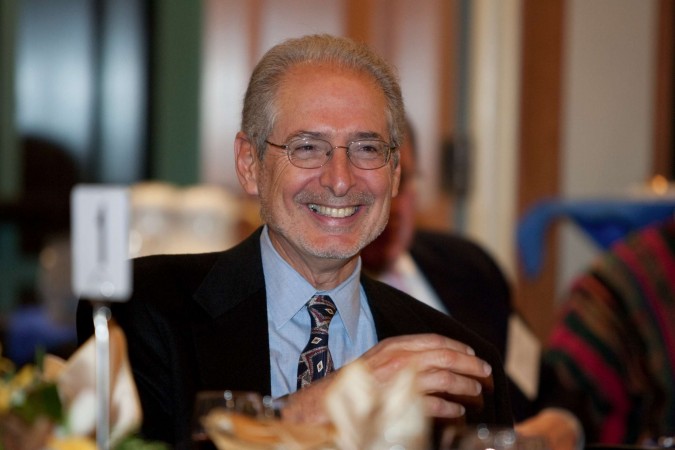
Jerry Engel, December 10, 2009, Wells Fargo Room at Haas School of Business. Photo by Bruce Cook.
On December 10, 2009 I attended a dinner at the Haas School of Business at University of California at Berkeley to thank Jerry Engel for his leadership of The Lester Center for Entrepreneurship and Innovation. There were a lot of people in attendance, including Jerry’s son and wife.
I’ve known Jerry since about 1992. I met him while I was working at Cooley Godward Kronish, which at the time was a sponsor of the the Lester Center. Cooley received ten passes per month to the Entrepreneurs Forum, which Jerry had started in about 1991. I didn’t introduce myself to Jerry right away, as I was pretty shy back then. Jerry probably didn’t know me until 1998 when I really started serious work to raise money for Hotpaper.com, my first Internet startup.
Jerry stepped aside as Executive Director of the Lester Center recently to assume the new role of Faculty Director. This dinner was to honor and recognize his leadership.
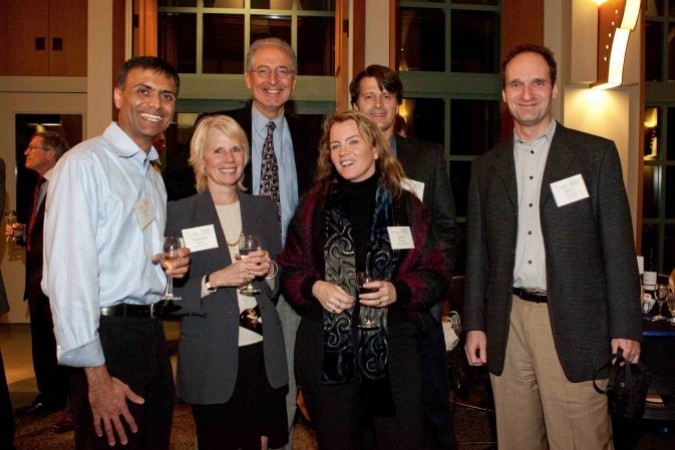
Keval Desai, Stephanie, Jerry Engel, Laura Oliphant, John Hanke and Kevin Warnock, December 10, 2009. Photo by Bruce Cook.
I am posting this today because I received the pictures from the event from Bruce Cook yesterday. I’ve also known Bruce for a long time, as he’s been a fixture at most every Entrepreneurs Forum that I’ve been to. He’s an independent professional photographer that covers many of the events at Haas. We talk shop about the latest cameras when he has a spare moment. Bruce is a real pro, and is particularly good at gathering people together for group shots when he only has a minute or less to get the shot. Bruce graciously gave me his permission to use these shots on my blog. Thank you Bruce.
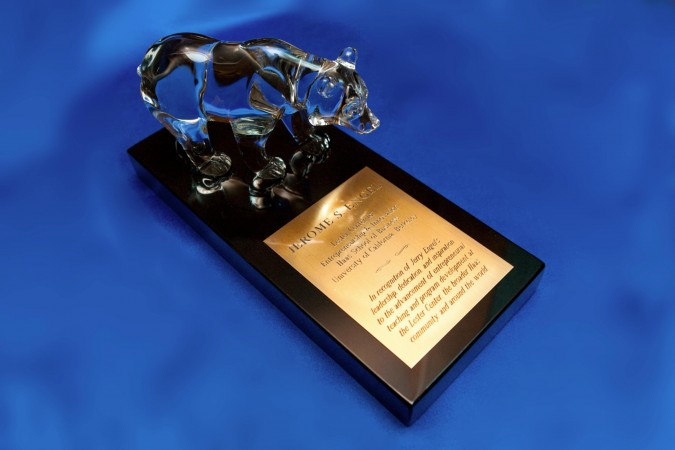
Award presented to Jerry Engel in recognition of his leadership of The Lester Center, December 10, 2009. Photo by Bruce Cook.
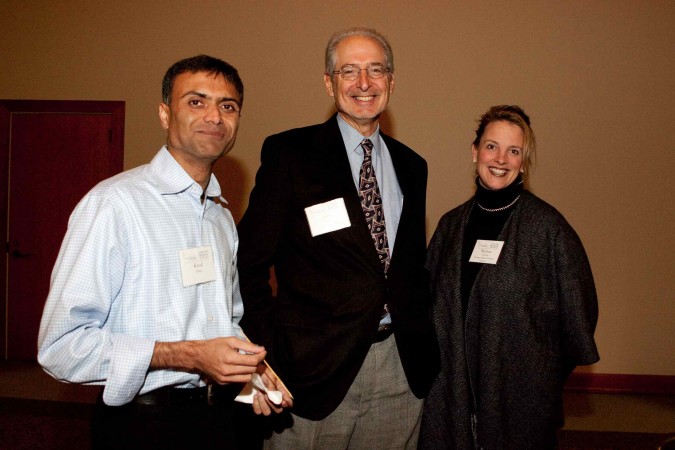
Keval Desai, Jerry Engel and Melissa Daniels, December 10, 2009, at Haas School of Business at UC Berkeley. Photo by Bruce Cook.
Keval Desai and Melissa Daniels were at the dinner. It was Keval who suggested to Jerry in 1999 that Haas stage a business plan competition. Jerry was cool to the idea, but Keval and Melissa convinced him, and the competition was born. I was a finalist in that first competition with my startup Hotpaper.com, and I firmly believe I would have not sold my company for as much as I did and when I did if not for Keval and Melissa.
Hotpaper, my first Internet startup, gets acquired
 This is ancient news. In August, 2000, I sold my first Internet startup, Hotpaper.com, Inc. I am writing about it now because I stumbled upon the public filing for the acquisition today on the Edgar website. The filing brought back old memories, and I wanted to say a few words about the experience of selling a company during an economic downturn.
It was an exhilarating experience. It was difficult. It was fun. It was heartbreaking. It was educational.
Here’s the SEC Form 8-K the acquirer filed in connection with the acquisition. I’ve embedded it into this post via the cool document site Scribd, which thinks of itself as the YouTube of documents.
Hotpaper Aquisition Public Filing
Hotpaper made document assembly software that was well suited for the Internet and Intranet. The premise was that it’s difficult to write complicated documents from scratch. It’s much easier to start with a template. It’s sometimes easier yet to use document assembly software that prompts you for answers to questions, and then uses your answers to automatically fill in a template. This is the core idea behind Turbo Tax, the tax preparation document assembly software that is perhaps the most popular document assembly software in the US.
Hotpaper didn’t have anything to do with tax forms – they’re far too complicated for a tiny startup to automate, especially when you consider you have to make dozens of versions per year for all the states with an income tax.
Hotpaper concentrated on business and legal documents. Customers would send us their documents and Hotpaper would build a question front end and host them on the Internet for a monthly fee. One of our large customers was Salesforce.com. We built a private API for them so their CRM users could automate their own custom documents. Their customers could even write the questions and build the templates themselves, without having to work with any of our employees.
We were approached in May 2000 about selling Hotpaper. The acquirer, GoAmerica, which is now named Purple Communications, at the time was a nationwide aggregator of wireless connectivity for Blackberry and Palm, the two big handheld assistant makers of the day. Purple had competition in this agregation business from companies with much higher market capitalizations. Purple wanted to differentiate their connectivity offering, and they identified Hotpaper as one way to accomplish that goal.
Since it’s tough to type a long document on a Blackberry, the idea was to make it possible for users to just have to answer the questions that drive an automated template filler that would run on the Hotpaper web server. The user would just need a web browser on their handheld, and having this, they could generate very complex documents, provided there was a template on the server for them.
Purple built this system after they bought my company. They called the service Mobile Office. It won top honors from CNet.com two years in a row — best enterprise application if I recall correctly. CNet was the TechCrunch of the day, and had a multi-billion dollar market value.
I was fortunate to sell Hotpaper to Purple. They had completed a public offering in April, 2000, just after the stock market began its long collapse. They raised $160,000,000 and had the money in the bank when they met us the next month. They offered us $10,000,000 and agreed to assume the stock option obligations to my team, so the overall consideration approached $11,000,000. We accepted their offer with almost no changes, as there was outright panic in the air, since the stock market had dropped dramatically from its recent all time high. Remember, the Nasdaq was in the 5,000 territory, much higher than it’s ever been since, a decade later. I also liked the Purple plan for Hotpaper, and was a believer in the future of mobile devices. I was on board and enthusiastic, though I did have a few anguished thoughts along the way since I was selling my baby I had been working day and night on for six years.
One of the reasons I was so enthusiastic is that I had been dreaming of mobile document creation for years, before there were handheld wireless devices on the market. I even built a prototype where I attached a Ricochet wireless modem to the bottom of a non-wireless Palm handheld and connected it to the palm via a serial cable. Ricochet built a wireless network in San Francisco in the 1990s that offered speeds similar to a 28K phone modem. It offered an unlimited data plan for $29.95 a month. The modem was hefty, about a pound and about the size of two iPhones stacked up. But it gave the Palm wireless capability in the San Francisco Bay Area. There was a third party web browser for the Palm on the market called Hand Web. I bought it, and then I was on the web wirelessly in about 1998. I proudly showed the contraption to Jerry Engel, then Executive Director of the Lester Center for Entrepreneurship and Innovation at the Haas School of Business at the University of California at Berkeley. It didn’t work since there was poor wireless reception in the sturdy concrete building at Haas. But Jerry got the idea and agreed to help me. He joined the board of advisors at Hotpaper, and he years later agreed to join my board of advisors at my current company, Silveroffice, Inc.
Sadly, the world changed for Purple. The big wireless carriers came out with their own nationwide wireless plans, which limited the role for Purple. The eventually abandoned Hotpaper and their own business of selling connectivity for general use. They remain in business today as leaders in the small but vital field of providing wireless communications solutions for the deaf. My hat is off to them for their sheer tenacity to stay in business and help people communicate. I wish them all the best success, and I want to thank them for adding Hotpaper to their offerings, if only temporarily. The acquisition forever changed my life, and I am extremely grateful. I wouldn’t have the life I have now if not for Purple Communications.
A question about Entrepreneurs Exchange Funds
I was reading a story on TechCrunch.com today, the influential technology blog based in Silicon Valley. The story says First Round Capital has set up an echange fund for their portfolio companies to use to diversify their risk. The idea is founders will put some of their stock in this fund, and if they go out of business, they will share in the results of the companies in the fund that have successful exits.
I think this is a great concept, and it’s particularly great that a venture firm is sponsoring it, since to participate you have to have received an investment from this firm. So participating startups are already going through a tough screening process to get in. I hope more venture firms set up funds like this.
I do have a question: Would it be possible for the entrepreneurs to hold their ‘exhange shares’ of the other companies in the fund within their Roth IRAs? To my knowledge, you can’t have your own Roth IRA buy stock in your own startup. But it is OK to have your Roth IRA buy stock in tiny private startups, provided you don’t work on them at all. So I suspect there is a way to get these exchange shares into your own Roth IRA. Maybe by segregating the shares in your own startup from the shares in all the other member companies.
The beauty of having your Roth IRA hold startup stock is that if there’s a big exit, you pay no capital gains tax, even if there is a Google sized exit. Then you could have your Roth IRA sell the stock and diversify. The downside is if there is a loss, you can’t deduct your losses on your taxes, as far as I know.
I’m not a lawyer, so don’t act on this without consulting with one. I have had my Roth IRA buy private company stock several times, so I know that can be done. Not many financial institutions will handle this transaction. For example, Fidelity won’t. But T Rowe Price will, and their fees are reasonable. I pay $35/year for them to hold private stock in my Roth IRA. I think there was a $100 fee to set everything up in the beginning.
Here’s the link to the TechCrunch story that inspired this post: http://www.techcrunch.com/2010/01/29/first-round-capital-entrepreneur-exchange-fund/
Michael Pollan speaks on In Defense of Food: An Eater’s Manifesto
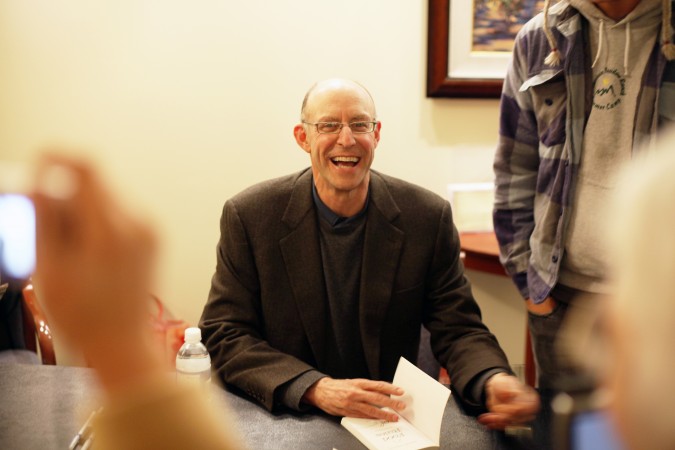
Michael Pollan signing books, January 27, 2010, Campbell, California
Earlier this evening, my wife, some of my friends and I attended a fascinating interview of Michael Pollan. The event was the annual kick-off of Silicon Valley Reads. Silicon Valley Reads is designed to promote reading and literacy, broaden the exposure to and appreciation of good literature, and build community. So reads the blurb about them from their website at siliconvalleyreads.org.
Columnist Mike Cassidy from the San Jose Mercury News newspaper did a television worthy job of interviewing Michael.
Michael Pollan is the best selling author of a trilogy of books about food and eating. Earlier today I finished reading his 2006 volume The Omnivore’s Dilemma: A Natural History of Four Meals
Now, after reading Omnivore’s Dilemma, my wife and I shop mostly at three special stores in San Francisco, Rainbow Grocery, Bi Rite Market and Guerra Meats. Rainbow Grocery doesn’t sell any meat or fish. This is a large supermarket, similar in size to a small Safeway. I have never seen a supermarket that sells no meat or fish. This means no meat or fish in cans either, so no chicken noodle soup. But even without the meat, Rainbow is the most magical food market I have ever visited. Bi Rite is much smaller, almost as small as a corner convenience store, but it’s packed with beautiful food. To get an idea of what it’s like, imagine a store smaller, more delightful, compassionate and thoughtful than a Whole Foods, but with the same type of vibe. Guerra Meats is a family owned butcher shop near our house that sells free-range organic poultry and grass fed beef from local farms. We bought our Thanksgiving turkey there last year.
These stores cost a fortune compared to Safeway. But I am happily and even eagerly shopping at my new favorite three stores because of Michael’s book. I plan to start right in on his latest book, which he was plugging tonight, In Defense of Food: An Eater’s Manifesto
I used to snack all day and night. For about a month now, I’ve eaten three moderate meals a day, with no snacks in between. I’ve lost weight and feel better. Yes, I’m sometimes hungry between meals, but I’m getting used to it, and it’s not unpleasant. I find that when I do eat, I enjoy it more because this higher quality food tastes substantially better.
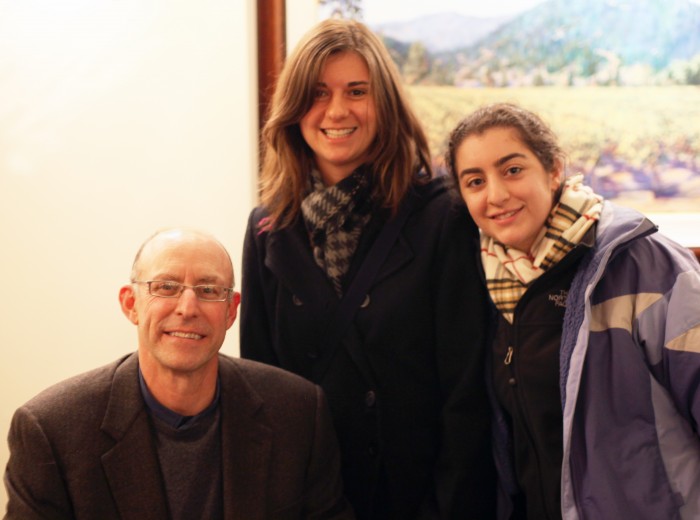
Michael Pollan seated next to my housemate Denise D'Amico and my wife Monika Varga, January 27, 2010
Michael Pollan is a journalist by profession, and according to the liner notes for Omnivore’s Dilemma, he got his start writing books about food when his editor at The New York Times Magazine asked him to write about food for the magazine. Michael is an engaging writer, and he researches his subject like one would expect a journalist to do. The references section of Omnivore’s Dilemma is pages in length. If he read all those books cover to cover, he was a busy man for an extended period. He also rolled up his sleeves and for a week worked on PolyFace Farms in Swoope, Virginia, perhaps the most sustainable farm in operation from the sound of it.
When my wife’s friend Aimee Epstein emailed us about the Pollan talk, I knew I was going to write a long blog post about it, as I’ve been reading his book with surprising relish for a few weeks now. I decided to try to shoot video of the interview, and I’m happy to report I was successful. This event was a free event, and there were no prohibitions posted or announced about recording. Furthermore, the event was broadcast on the radio. The event was held in the Heritage Theatre at 1 West Campbell Avenue, and every one of its 800 seats was occupied, and people had to be turned away at the door. The mayor of Campbell was on hand to welcome Pollan.
I am so happy to be able to share Pollan’s interview with you here by video. I hope this video will open a discussion about the interesting subject of food. To comment, click the comments link above just below the title of this post.
There were some funny moments in the interview. Mike from the Mercury News started things off of a humorous note when he began by saying he was running late and was hungry, so he stopped by the McDonald’s drive through window and picked some items from the dollar menu for himself and Michael. Mike handed Michael a bag of McDonald’s products, and Michael pulled out a cheeseburger wrapped in yellow paper and waved it around, to great effect judging by the audience response. I would guess most everyone there had read Omnivore’s Dilemma based on how they reacted to seeing Michael wave a cheeseburger on stage. I had earlier been joking with my wife Monika that I was going to bring Michael a bouquet of corn dogs and put them on stage like they were flowers. Pollan is particularly hard on corn in Omnivore’s Dilemma, blaming it for many of the ills of the country’s industrial food system, in ways that I found surprising and frankly disgusting. I thought it was funny that the interviewer made much the same joke I had thought would be funny, but would never have done.

Chinese food recipe I created tonight
For about two years now I have been learning to cook Chinese food. The cookbook I got to learn from wasn’t helpful, and the recipes were lackluster. As a result, I have just experimented by buying anything that looked interesting at the local Chinese market at 22nd and Irving Streets in San Francisco.
I’ve been planning to make a cooking channel on Vimeo.com, the video hosting community site similar to YouTube. I got a turkey fryer for Christmas two years ago. I asked for it because I hoped to use the burner as a high heat wok burner, not to deep fry a turkey. I have used the turkey burner once, at full heat. It was so hot it burned the dish, so I need to conduct more experiments. I suspect half of the maximum flame will be ideal.
It’s a big project to video tape cooking, and I’m not there yet. But I made a dish tonight that I particularly like, so I thought I would just write up the recipe here. It will be tough for me to lose it once it’s on my blog, an added benefit.
My wife Monika is vegetarian, and is our housemate Denise, so this is a vegetarian dish. But I also made a variation with chicken and cashew nuts that was also good.
So, this is my first published recipe. I did not borrow any of this from a cookbook, so all the blame or credit for how it tastes rests with me.
I call this recipe Zucchini and Pepper with Peanut and Garlic Sauce
Ingredients
1 tablespoon butter, melted
1 medium white onion
3 cm piece whole ginger
1/2 small red bell pepper
1/2 small yellow bell pepper
1 tablespoon minced garlic
1 tablespoon ground bean sauce
1 teaspoon Chinese barbecue sauce
1 teaspoon sea salt
1 ripe Roma tomato
1 green onion
1 teaspoon brown sugar
Instructions
Dice the onion. Fine chop the ginger. Dice the bell peppers. Chop the green onion into 1 cm sections.
1. In a wok over a high flame, add the butter and heat for 30 seconds
2. Add all the ingredients at once except for the tomato. Stir with a spatula until the onions are translucent and the zucchini is still not yet translucent, about 6 minutes.
3. Add the tomato, and stir for 2 more minutes.
Serve immediately over rice.
I went shopping today at Rainbow Grocery, a most amazing grocery store unlike any other I’ve been to. It’s at 1745 Folsom Street in San Francisco. The web address is Rainbow.coop. I had never seen a site with the .coop extension before today. It’s a fitting address as the store is a worker owned cooperative.
This store has more variety than even the largest Safeway or Whole Foods Market, in my estimation. There is a bulk foods section where you bag your own ingredients, and it’s this section I most enjoyed today. They have perhaps 20 kinds of rice for sale. I bought two varieties today: Lotus brand Volcano rice and a different brand of rice called Wehani rice. The Wehani rice was the standout, though both were delicious. The Volcano rice is light brown, and the Wehani rice is dark brown. When the Wehani is cooking in the rice cooker, it sort of looks like melted chocolate cooking.
The prices are higher than Safeway, but lower than Whole Foods, I estimate. There is only one Rainbow, so it’s not a chain. The staff really seems happy to be there, and so do the customers. It’s actually an adventure just walking the isles, as there are few national brands for sale.
I’ll need to return with my video camera to do a short walk through so you can see what an unusual store this is. Highly recommended.
If you try the recipe above, please let me know and provide feedback, as I know nothing about writing recipes. I hope you like it.
