Archive for the ‘Home’ Category
False 911 call apparently due to scratchy phone line at my house

ATT logo
I had a strange visit from the San Francisco Police Department today. The nice officer said she was replying to a 911 call from my land line phone. She said nobody spoke during the 911 call, but the dispatcher heard a scratchy noisy line. My phone line did have a loud scratchy hum on it the few times I tried to use it last week. I didn’t investigate at the time, as I had my cell phone and just used that instead.
I showed the officer around my room to convince her nothing was wrong, at her request. I told her about the scratchy line quality, but she didn’t ask to check it herself. She was quite pleasant and soon departed, but advised me to call ATT to find out what’s wrong.
I checked the line immediately, and it was still scratchy and noisy. I called ATT on that line, as it was still possible to speak and hear on the line. ATT said it was probably an issue on their end and advised sending a technician to investigate. They warned that if the problem was mine that they would charge me $55. I told them I wanted to do some more tests on my own before committing to a possible charge, and told them not to send a technician. I am glad I did, as I fixed the problem within minutes of ending that call.
I eliminated the scratchy line by removing from the circuit an adapter that converted 1 phone jack into 2 phone jacks! This adapter was plugged directly into the ATT access box in my inside garage. When I plugged my phone directly into the access box without the adapter, the line was suddenly ‘like new.’ Had ATT made that test, they would have likely charged me $55, because I don’t think anything was wrong with their circuitry.
I did a search online to see if a noisy line could trigger a call to 911, and I found accounts written by others that said that it could. I didn’t know that until today.
We have been experiencing intermittent high speed Internet service, also from ATT over the same wire pair my phone uses, so I hope that by removing the faulty adapter that our Internet connection stability improves.
Note that my phone number is listed in the telephone book, so I am easy to reach.
We have four baby chicks nesting in an incubator in my bay window

Mill Valley Chickens, Mill Valley, California, USA, March 19, 2011
I have four housemates — Gina, Marie, Megan and Jesse. They all responded to my Craigslist ad where I proposed starting an urban homestead at my San Francisco house. One of the plans I outlined was to raise chickens for eggs. Today I went with Gina, Marie and Jesse to Mill Valley, California to Mill Valley Chickens where we selected four adorable tiny chicks to come live with us.
Marie provided a portable dog cage to make into an incubator. I supplied the light fixture and the hardware cloth to narrow the gaps in the dog cage to make them too small for the chicks to be able to escape through.
In just a few hours the chicks were eating voraciously in my dining room. We’ve decided to keep them in the dining room for now so we can enjoy their cuteness as much as possible since they grow so fast. Three of our chicks were born March 16, 2011, just 3 days ago. The other was born about 3 weeks ago and is about 3 times the size of the newborns.
I took some pictures of our new babies and have posted the best ones below. Enjoy!

Kevin's Americana chick, center, which produces green and blue eggs, 1.15oz, 3 days old, March 19, 2011

Kuma, the Great Dane, with 3 week old chick. March 19, 2011.

3 week old chick, making noise, March 19, 2011

3 week old chick looking serious, March 19, 2011
Make refrigeration super efficient worldwide by switching to top loading models
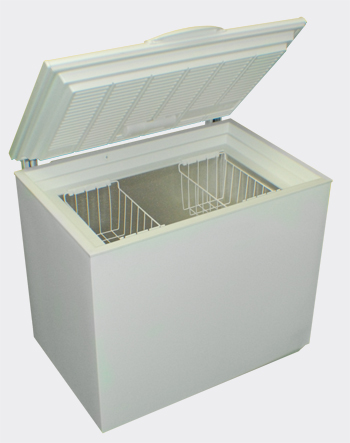
Did you know that you can convert a common chest freezer into an exceptionally energy efficient chest refrigerator? The electricity savings are so great that I think the entire world should make it a top priority to legislate all new refrigerators must be top loading. Why has the world standardized on a system where the cold air falls to the ground every time the door is opened?
Something tells me that if all the world’s refrigerators were top loading it would save more power than all the photovoltaic solar panels ever manufactured. Since chest freezers are cheap, there’s no economic reason not to do this. A chest refrigerator only costs $5 a year in grid electricity to operate.
Yes, kitchens would have to be redesigned to accomodate top loading refrigerators, but the collective power savings probably amount to dozens of full size nuclear power plants.
The appliance industry has been pushing in counter drawer refrigerators at the high end for years now. What I suggest is that chest refrigerators be designed to look like kitchen base cabinets from the front, and that the top be surfaced in the same material used for the kitchen cabinet countertop. This would mean the refrigerator would be accessed by flipping up the countertop, which would be perfectly counterbalanced with a weight on a rope behind the refrigerator, so that the contents could be accessed with just one finger. I’m sure the appliance industry could figure out how to make a combined chest refrigerator/freezer, and each compartment could have its own section of hinged countertop. Note that even granite counter tops can still be used since the counterweight could be made of cement in a flat plate shape. It might be even more efficient to put three or four hinged lids on a horizontal refrigerator/freezer. While the world waits for the appliance makers to construct a horizontal refrigerator/freezer, we can just install separate refrigerators and freezers, side by side, just like we do today with laundry washers and dryers.
To make the contents easy to access, there could be lift out racks, perhaps even motorized for high end units. Yes, there will be challenges to get people used to this kind of food storage, but this technology has been here for decades and the savings are so great that I believe this is among the lowest hanging fruit for efficiency savings in home energy usage. I am nearly certain switching a home to horizontal refrigeration would save more than switching all the incadescent bulbs to flourescent.
Another big benefit is I believe food lasts longer if not subjected to constant temperature fluctuations that result from the vertical refrigerator door being opened throughout the day. Since a vast amount of food is thrown out due to spoilage, switching to horizontal refrigeration might well save food and reduce hunger worldwide.
Yes, I haven’t run the numbers to support these bold claims, but I have a hunch I’m entirely correct. Anyone care to run the numbers and post them in the comments?
I didn’t think up horizontal refrigeration, and I’m not sure who did, but here’s a thoughtful PDF describing the process, written by Dr. Tom Chalko, MSc, PhD.
Chalko maintains a fascinating website about his advanced energy self-sufficient home in Australia. Dr. Chalko inspired me to incorporate a horizontal solar powered 24 volt refrigerator in the RTS bus conversion I am building.
While it’s easy to convert a common chest freezer from Sears or Home Depot into a chest refrigerator, some people want to just buy a finished product. Thankfully, there are already commercially available low power chest refrigerators for sale, including these models by SunDanzer. The prices start at $699 and top out at $1,249 , which are high compared to chest freezers from big retailers, but not out of the question considering that some people spend thousands on wasteful vertical refrigerator/freezers today. Even at their current prices, a SunDanzer chest refrigerator is a bargain since you’ll save dozens of dollars per year in electricity costs. SunDanzer is a tiny niche appliance maker. If Kenmore or General Electric were to start making energy efficient chest refrigerators, I suspect their prices would be lower than their chest freezers today, as people need more refrigerator space than freezer space, so more chest refrigerators could be sold than chest freezers.
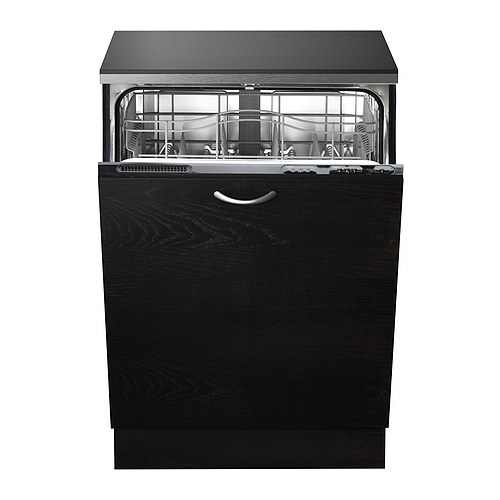
Ikea Dishwasher that may be customized with matching cabinet facing
What’s really needed to make all the above work is that top loading refrigerators must be made sexy and hot, like drawer refrigerators and freezers are today. If you’ve seen the Ikea dishwasher that can be customized with any of the Ikea kitchen cabinet styles, you can envision how attractively top loading refrigerators and freezers could be installed into kitchens. A kitchen would not even appear to contain a refrigerator if installed with matching cabinet facing. If you see a cabinet clad Ikea dishwasher, you can’t tell it’s a dishwasher until you look very closely. Ikea gets a premium price for this dishwasher. I would hope that manufacturers would not overprice their horizontal refrigerators, to speed adoption, but even if they do, that might help get this plan moving, as it will help persuade people this is the next big kitchen innovation they really, really want. Big change happens when people really want it, not because it’s good for the planet.
My new roommates moved in today

Roommates moving In Feb 12 2011
Today my new roommates moved into my house in San Francisco. The picture shows the colorful ‘artists moving’ truck one of my new roommates hired off Craigslist.
It took me two months of work to rent out my three spare bedrooms. I am beginning a grand adventure in sustainable urban homesteading in the heart of San Francisco, and I believe I have found four outstanding individuals to share in this quest.
I rented the master bedroom to a married couple. The husband is a graduate student at San Francisco State University and the wife is completing her residency at a local hospital.
I rented one of the guest bedrooms to a small business owner, and the other guest bedroom to an undergraduate student at San Francisco City College. There are now 3 women and 2 men living here.
All four roommates have a strong interest in growing and raising food. We are planning to cook dinners together two nights a week, which I think will improve all of our cooking skills. I specialize in Chinese and Indian cooking, so I am eager to learn more about preparing other cuisines. Already one of my new roommates has revealed her extensive cook book collection, which she will store in the living room alongside my extensive cookbook collection. I am thrilled because I love cookbooks.
Each rented room has a pet. The house now has 1 cat and 2 dogs. One dog is a Cattle Dog and the other is a Great Dane! I never dreamed I would agree to have a Great Dane live in my house, but this is the nicest large dog I have ever known, and so calm and sweet. I liked the couple, and was particularly happy the husband is studying the molecular biology of fish in graduate school, so he knows vast amounts more about fish than I do. Since the center point for the garden is going to be an aquaponics system, I thought he brought a valuable skill to the table. He also once tried to convert a bus into a motorhome, but had to abandon the project when it got to be too difficult. It was just too perfect to run into a fellow busnut who knows and loves fish, so I had to say yes to the Great Dane. But from what I’ve seen of the great dane so far, she’s very lovable and sweet, and I genuinely look forward to having her here in my home.
The cat and other dog are lovely as well.
I spent today cleaning out the refrigerator and the kitchen cabinets, as I had taken over all the available space during the few months I had the whole house to myself. It was lonely here during that time, and I am really happy to have people living here again. For those who have not heard the sad news, I have decided to divorce my wife, and I have had a process server serve her a lawsuit summons and a divorce petition. We separated on October 25th, 2010, and not long thereafter our roommates Kim and Denise moved out. They were close to my wife, and it made for an awkward situation to continue to have them here. Thankfully, they each decided on their own to find new accommodations. I enjoyed having them as roommates, and I wish them all the best. I loved Denise’s dog Abigail, the nicest dog I have ever known.
I once loved my wife with all my heart, and she was once the most important person in my life. It’s sad that part of my life has passed.
Today is an exciting day with all the moving activity. I am planning to post dozens of blog entries this year about our urban homestead, so please subscribe to this blog if want to learn what happens. If you have experience with aquaponics or urban homesteading, please leave me a comment.
I sold my king size monster futon
I’m happy to report I sold my huge king size futon yesterday, January 31, 2011. This was a beast, and I thought I would have to give it away on the free section of Craigslist or perhaps take it to the dump. Thankfully, a nice student at University of San Francisco brought a ZipCar pickup over last evening and paid me a fair $100 for the futon. I helped him move it into his apartment, as it’s so big one person can’t easily move it. When I moved it into my Nob Hill apartment years ago, it took me an hour to personally muscle it up the stairs, into the elevator and into my 6th floor apartment. It’s somewhat traumatic to see my futon go, as I’ve had it a long time. Does anyone else get attached to their bed?
Can a large roll of dental floss help you retire more comfortably?
In a recent post, I complained about the very high price of blank label stock for ‘cheap’ handheld label makers.
I concluded that the smart thing to do is use a computer to compose the labels, and print on tractor fed labels with an old-school dot matrix printer. The price differential is astounding. It costs about 25 cents per label to use a ‘cheap” handheld label maker. It costs about 1/2 cent per label to use a computer and dot matrix printer. I decided to use a 10 cent pen to handwrite headings on my manilla file folders, and skip both of the above options.
This crazy pricing for labels made me think of another example of crazy pricing for an even more commonly used product — dental floss.
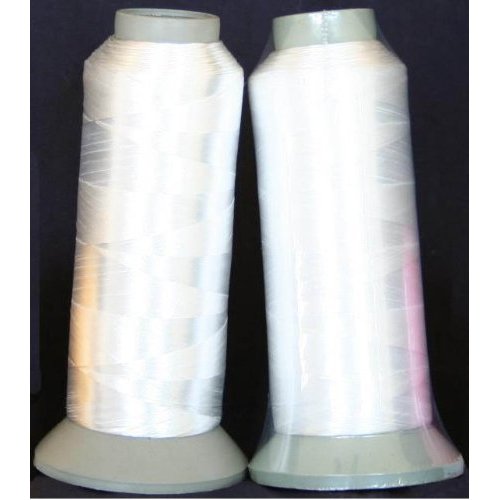
10,000 meters of white sewing thread for $10.45. If this were dental floss, the price would be nearly $300, but why?
Why does dental floss cost about 2.5 cents a foot in retail quantities? While it’s not the same thing, I can buy 10,000 meters of white sewing thread for $10.45, or roughly 1/10th of a cent per foot – about 1/25th the price.
Dental floss is not sewing thread, so floss probably costs more to make. For the sake of argument, let’s agree it costs twice as much as sewing thread to make. That should mean someone should be able to sell it for 2/10th of a cent per foot
Now, if I could just find a source for a spool of dental floss the size of commonly available large spools of sewing thread, I’d be thrilled.
Such a roll of dental floss would probably last for 5 years. It’s simply crazy that something everyone in the world should be using daily can only be bought in tiny little rolls that costs dollars for a few dozen yards. The price per inch is outrageous compared to bulk sewing thread like you see in dry cleaners on their industrial sewing machines.
If there were a facial tissue box sized roll of dental floss, it could be housed in a pretty box the size of those covers they make for facial tissue boxes. These boxes could have a hinged lid and could become an attractive bathroom accessory in every house in the developed world. A progressive company with real manufacturing connections should source the dental floss and make the decorative boxes. I’m thinking Ikea or Costco should take this project on.
I’ve read that each dollar one can take out of ones monthly budget, if saved and invested properly, turns into $700 at retirement! This country has a huge problem with people not having enough savings for retirement. If we could just stop fritering away money on overpriced essentials, we could collectively save enough for retirement, with no reduction in standard of living. Think how convenient it would be to buy dental floss twice a decade instead of once a month. Dental floss doesn’t go bad and you need it constantly. Why buy in tiny quantities when huge bulk quantities are still small in size.
Somehow Costco got us to buy dozens of rolls of toilet paper at once. I’ve read that toilet paper is the best selling product at Costco. I think some company can get us to buy a lot of dental floss at once as well. Who will it be?
The above thinking can be easily applied to dozens of household essentials we’ve been trained to buy in tiny packages. Why can I buy a gallon of liquid handsoap, but I can’t buy a gallon of gel underarm deodorant? I’m pretty sure deodorant doesn’t spoil, and if there were a way to refill the 3 ounce packages it’s now exclusively sold in, that plastic dispenser might get used for years instead of weeks. I haven’t done a rigorous analysis, but I suspect that if one were to alter how one buys necessities as described here that one could retire with at least a quarter million additional ‘free’ dollars, provided one started buying in bulk at age 18 and wisely invested the savings until age 67. Anybody want to run some numbers? Maybe there’s an online company to be started here where the huge waste of household essentials in tiny packages can be wrung from the system?
In a future article, I’ll get started on why we might be better off requiring the installation of bidets in all home bathrooms. Care to guess why?
Michael Milken speaks at The Commonwealth Club of California

Michael Milken at The Commonwealth Club January 13 2011
I saw Michael Milken speak yesterday evening at The Commonwealth Club of California. Milken invested in my first Internet company Hotpaper.com, Inc., by his participation as a limited partner in the Angel Investors I fund, the notorious and newsworthy Ron Conway fund from the late 1990s first dot com boom. I disclose this since it seems the right thing to do, since I’m starting to consider myself a journalist by these blog posts. In fact, a staff member from the Club asked me if I was with the press at this event, probably because he saw me taking pictures from the side isle with my professional looking camera and telephoto lens. I told him I wasn’t from the press and he said I couldn’t stand in the isle, which was fine since I already had some good shots. This was at the Mark Hopkins hotel on Nob Hill in San Francisco, California, so it was a lot more formal than events I’ve attended at the Club’s office on Market Street.
I wonder what kind of press credential bloggers can get, and I wonder how serious I would need to become to be able to get such a credential. I recognize these posts are pretty insubstantial, but I do try and I hope to improve my writing and analysis over time.
Milken is a convicted felon who served time in prison for securities fraud, for those of you who don’t know who he is. I vividly remember his rise to fame and his fall from grace in the 1980s. I bought and read the chronicle of his life, Den of Thieves by James Stewart, when it was published, which is noteworthy because back then I read few books, and it took a lot to get me to read a long book. I couldn’t put this book down, and I can still remember stories from it, such as when Ivan Boesky couldn’t decide what to order at a fancy restaurant, so he ordered one of each entrée, and walked around the table and took one bite from each. So when I had a chance to see Milken in person, I just had to go. I’m glad I did, for Milken is a smart guy that had interesting things to say. In fact, I think Milken would love my Green Homes housing idea, and I plan to talk with him about it when the project is further refined.
I believe the Club will post the full video of Milken’s speech, so I won’t try to recount all he said. What I will do is focus on the key part I found most moving… that Americans spend far too much on housing relative to their incomes. This is a point that is near and dear to me, and is part of what motivates me to think about advancing my green home plan I’ve written about on this blog.
Milken said residents in South Korea spend 22% of their income on education and just 13% of their income on housing.
Milken also said residents in China spend an average of 15% of their income on their children’s education but only 10% of their income on housing.
More generally, he said the first four highest consumer spending expenses of residents in the United States are:
- Housing – 32.7%
- Transportation – 18%
- Food – 12.8
- Insurance and pensions – 11.2%
In contrast, he said the first four highest consumer spending expenses of residents in Asia are:
- Food – 23%
- Education – 15%
- Housing – 10%
- Clothing – 8%
In Asia, transportation and housing account for just 16% of household income, while in the United States, these two items account for 50.7% of household income. In Asia, transportation ranks 6th on the list for consumer spending, while in the United States, transportation ranks 2nd.
Stated another way, in the United States people pay 317% more for housing and transportation than do people in Asia. This is an astonishing disparity, and I suspect it’s a disparity that’s ruining the United States and dramatically benefitting Asia. We just must ditch our jumbo sized residences and move into smaller homes. The country’s future may depend on it.
Milken really emphasized his point about how ridiculous it is to spend over half ones income on just housing and transportation. The average home size in the United States has doubled in not many years. My parents raised me in a house much smaller than the average new home size today in the the US. I turned out fine, and our parents turned out fine, even though their houses were half the size or less of today’s average US home.
Milken had other shocking facts to deliver, such as the US spends more each year to buy potato chips than it spends each year to research heart disease. I can’t recall the exact numbers, but $3.5B for heart disease and $5B for potato chips is probably about right.
Milken also pointed out Americans have gained a lot of weight since 1991, and that the US could save something approaching a trillion dollars if its inhabitants did nothing more than return to the average weight in 1991. I wish I could remember the period of time over which that trillion dollars could be saved, but I can’t, I’m sorry. If someone has access to the Milken slide deck, please send it to me, as I could write another dozen blog posts if I could review those slides again.
I’m not vouching for Michael Milken by this post. I don’t know much about him, and a lot of what I know is from years ago. But I do know he speaks well and delivers an engaging message that big changes need to happen in the United States. His heart seems to be in the right place, and if what he says he’s done is true, it seems he’s more than made up for the 6 crimes he was convicted of and spent time in prison for. However, if you disagree, I welcome your comments. I got a long and detailed comment on my post about Tim Ferriss, and while the comment was highly critical of my review of Ferriss’ interview, I was still happy to have the comment. I hope that I can spark vigorous dialog in the comment sections of this blog.
My Healthy Check health checkup screening results
I just got back from my Healthy Check annual checkup through Anthem Blue Cross, and the results were pretty good I think. I’m posting them here to demonstrate how healthy eating and exercise can influence health. I ride my bicycle about 6 days a week and eat three balanced organic, mostly home cooked meals a day. I don’t drink or smoke or take drugs. I take no medications on a regular basis. When I have a cold, I take plain generic aspirin and perhaps a cold capsule and some cough syrup. I consider my health to be excellent. I am truly grateful for my health. I wear 110 SPF sunscreen on my face, neck, ears and hands nearly every time I leave the house, even if it’s overcast out. I’m also posting this information here for my own benefit, so I don’t lose the results in my file cabinet. If I post the results here each year, I’ll always be able to find them from anywhere. I also got a flu shot today, included at no extra charge in my checkup.
- Blood pressure: left arm 107/70; right arm 105/65
- Total cholesterol: 148
- Triglycerides: 95
- HDL: 58
- LDL: 70
- TC/HDL ratio: 2.5
- Glucose (fasting): 90
- Weight: 163lbs
- Height: 6’2″
- Waist: 31″
- Hip: 37″
- Ratio waist/hip: .84
- BMI: 20.9
- Body fat analysis: 18.4%
New Avenue, Inc. featured in today’s San Francisco Chronicle newspaper

San Francisco Chronicle New Avenue Article Jan 11 2011
My friend Kevin Casey’s New Avenue, Inc. house that I’ve been writing about here was written about in today’s San Francisco Chronicle newspaper. This is the primary newspaper for San Francisco.
The story appears in the print edition and on the front page of the online edition in a story entitled Berkeley zero net energy cottage deserves study. Since the front page changes all the time, I made a screen capture SFGate_front_page_january_11_2011 so you may see the prominent coverage New Avenue received. I also made a screen capture of the article itself since the Chronicle may take down the article after some time, but I expect this blog will remain accessible indefinitely. Here’s the link to a PDF copy of the full article: SFGate Jan 11 2011 New Avenue article. Note that these PDFs have clickable links, so if you see something you like, you can click it and the link will take you to the same place the SFGate.com version will take you to.
Congratulations to Kevin and New Avenue!
Well done graphic describing dangers of drugs and alcohol

As you may have figured out by now, I live a healthy life and don’t take drugs or drink alcohol. I have seen too many people ruin their lives with drugs and alcohol, and it’s so sad to see people who were once full of promise do poorly because they were escaping reality through substance abuse.
An aquaintance of mine from my youth went on such an extreme bender about five years back that I heard he lost his wife and kids and now lives in San Francisco’s public Laguna Honda hospital and rehabilitation center, and will be there or somewhere similar for the rest of his life. He can’t remember his wife or kids or any of his friends, I’m told. I didn’t know him that well, but I’ve known him for 20 years or so. He was a charismatic artist and performer in his youth, with real magnetism. Now he apparently flirts with the nurses, but can’t recognize his own children. How sad. His name is Tony Chatham, and he was the lead singer for a band my friend was in. I photographed Tony’s band, and years later he told me a framed photograph from that shoot hung in his and his wife’s bedroom. He loved that band and that picture, and he always reminded me of that whenever he saw me. This, of course, was before his tragic overdose.
Here’s an attractively produced graphic that lists some of the horrors that can result from substance abuse. I found this today while looking at the website Digg where popular web pages are voted up by readers. If you’re in a position to influence people, you might want to display this poster sized graphic… it may help save someone the agony of what I’m sure Tony and his family went through and continue to go through.
